
Treasured Objects
Treasured Objects
National Museums NI: Bridges to China Collection
Treasured Objects
This archive brings together a selection of objects from the National Museums NI World Cultures Collection, hand selected by participants in the Bridges to China project. Each object reflects a personal connection, memory or point of cultural significance, offering insight into how museum collections can be re-interpreted through lived experience and community knowledge.
Explore the archive below, but also feel free to learn more about Chinese culture through National Museum NI’s Chinese Collection page.
Video also available on Panopto
Co-Production: How We Worked
Bridges to China is a co‑production project in which Chinese community members, museum staff, researchers and media partners shaped the work together from the start. Through object‑handling sessions, personal artefacts, and open conversations, participants applied their lived experience, cultural knowledge and art‑historical understanding to museum collections that had previously been sparsely documented.
Working together helped create new interpretations, showing how community insight can challenge gaps in museum records and offer new ways to understand collections. This approach builds on methods developed previously for the Many Memories, Many Voices and Global Voices, Local Choices projects.
The Objects
Chinese Ink Painting
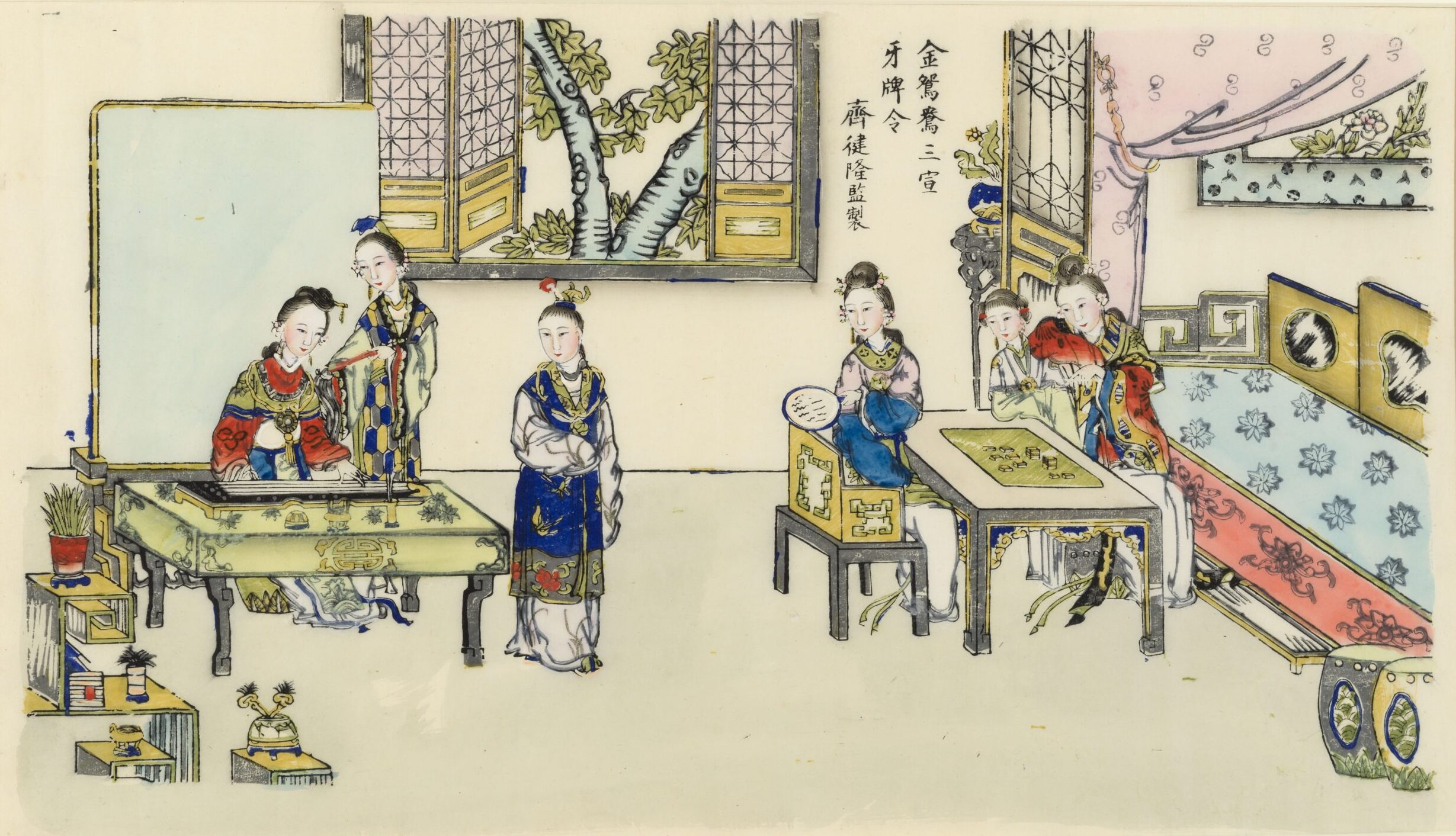
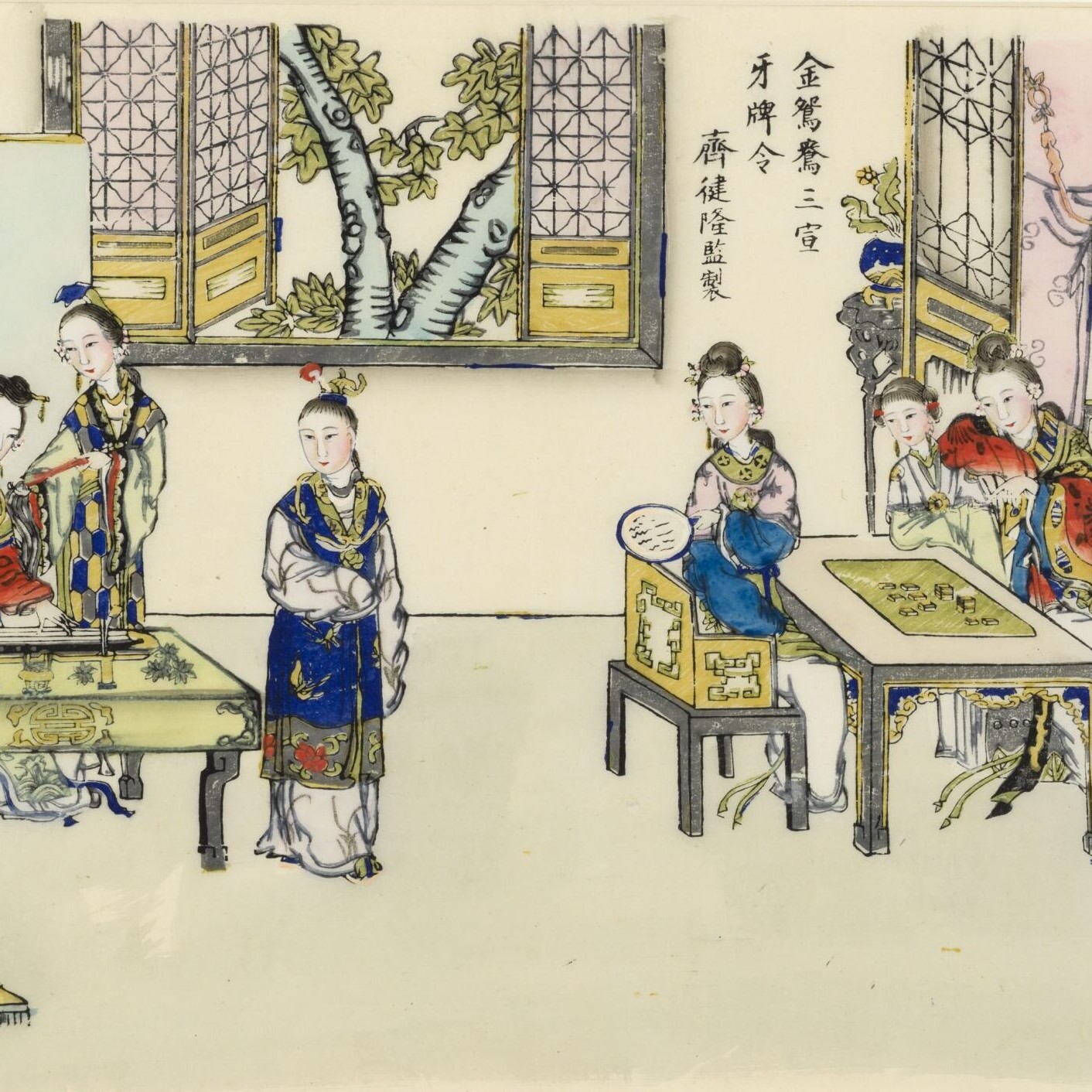
This watercolour painting on rice paper represents a court scene possibly ‘Poker Game Announced by Jin Yuanyang’ in Chapter 40 of ‘Dream of a Red Chamber’, a famous 18th-century Chinese novel authored by Cao Xueqin.
Ivory Chess Pieces
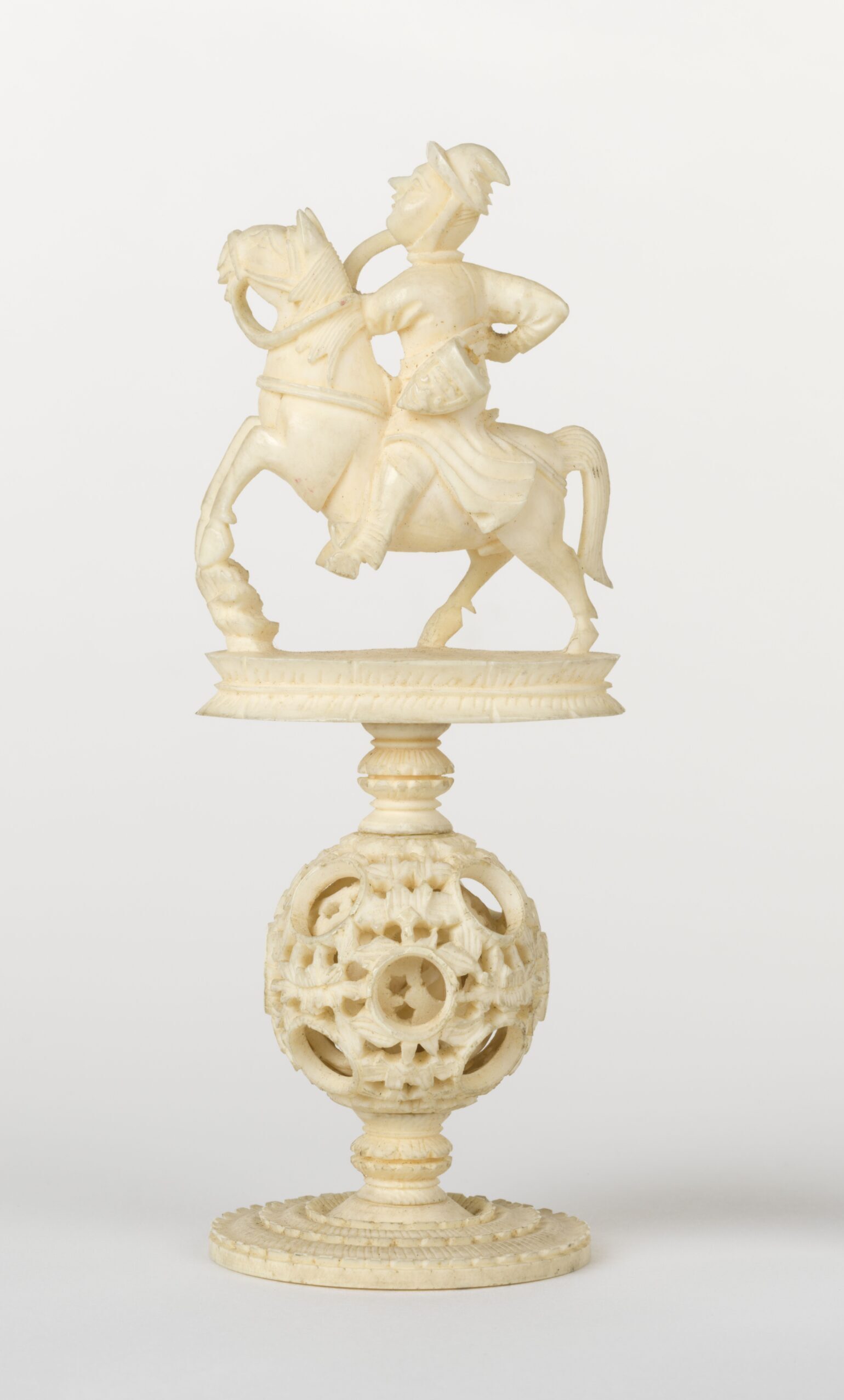
The chess pieces feature an intricately carved bowman / archer on horseback supported on flat circular lotus carved base with globular puzzle ball stem in ivory. The costume on the bowman may be Mongolian.
Solar-Lunar Compass
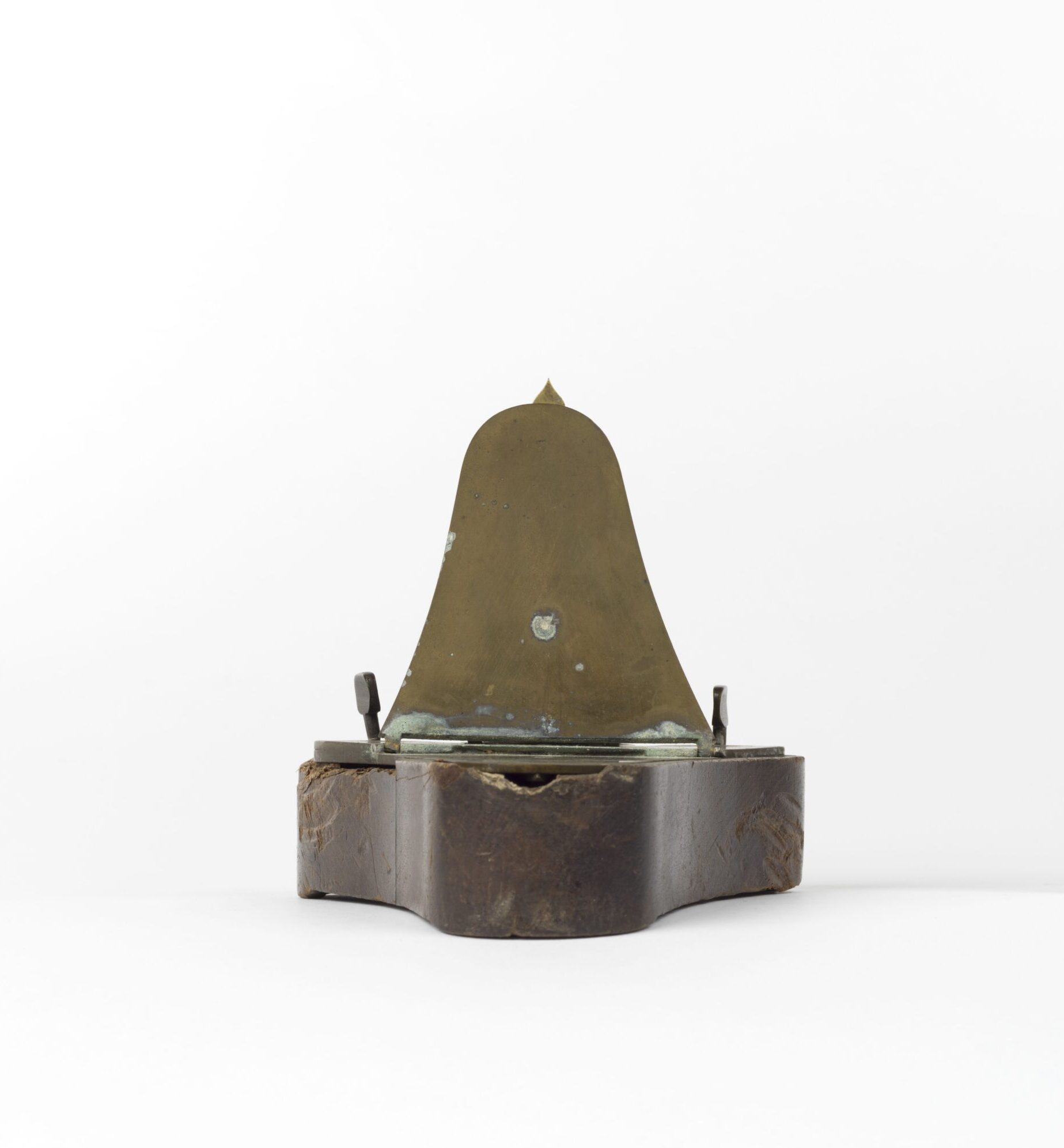
Chinese portable hybrid timekeeping device with sun dial (for reading time by the shadow cast by the sun during the day) and possible water clock (for reading the time made by water drips at night) made of wood and brass with moveable pieces including a gnomon.
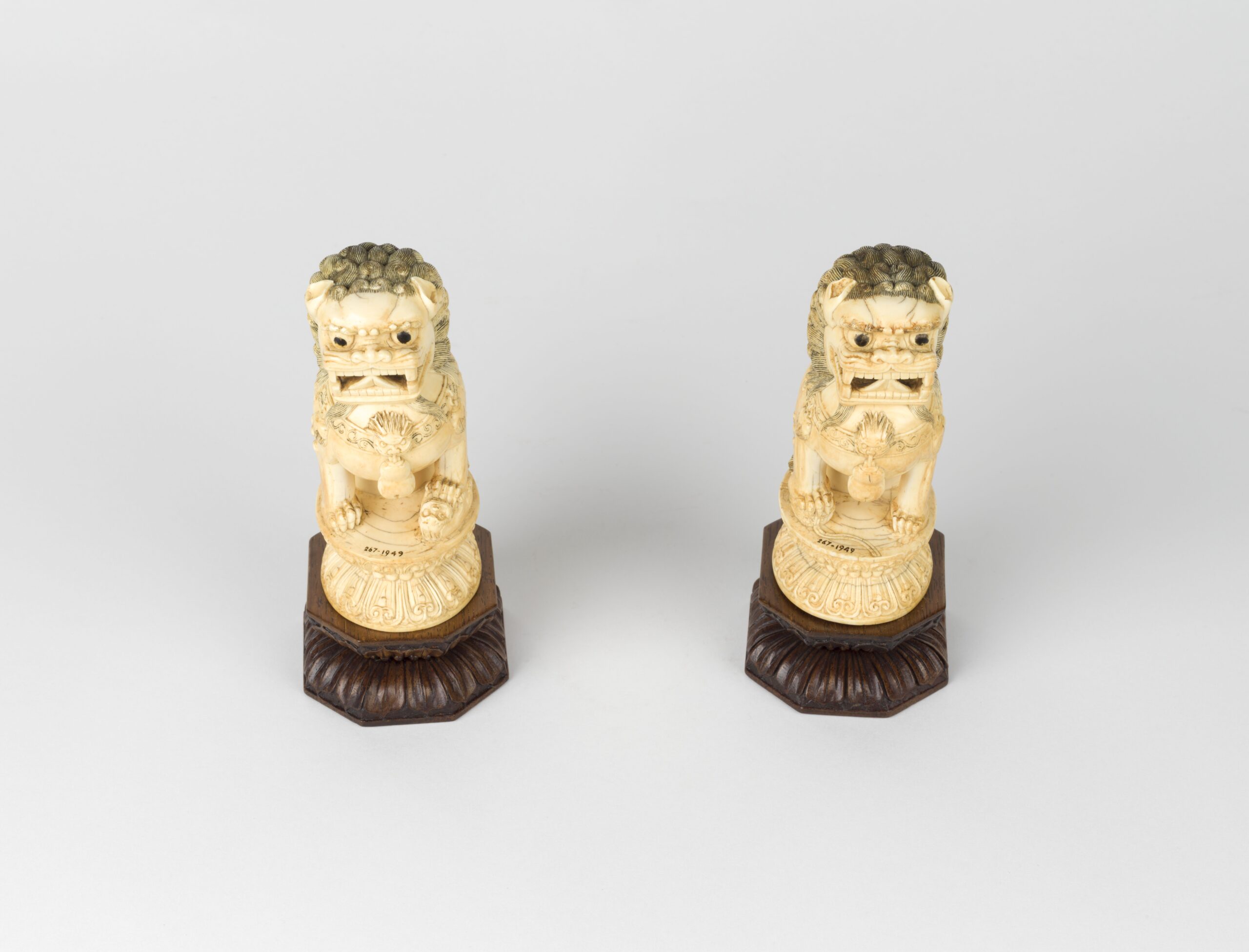
Imperial Stone Guardians
Pair of ivory guardian lions / lions of Fo / lion dogs (shi shi) on wooden lotus bases used to protect from evil spirits. The curly hair on the lions usually depicts a high rank in society.
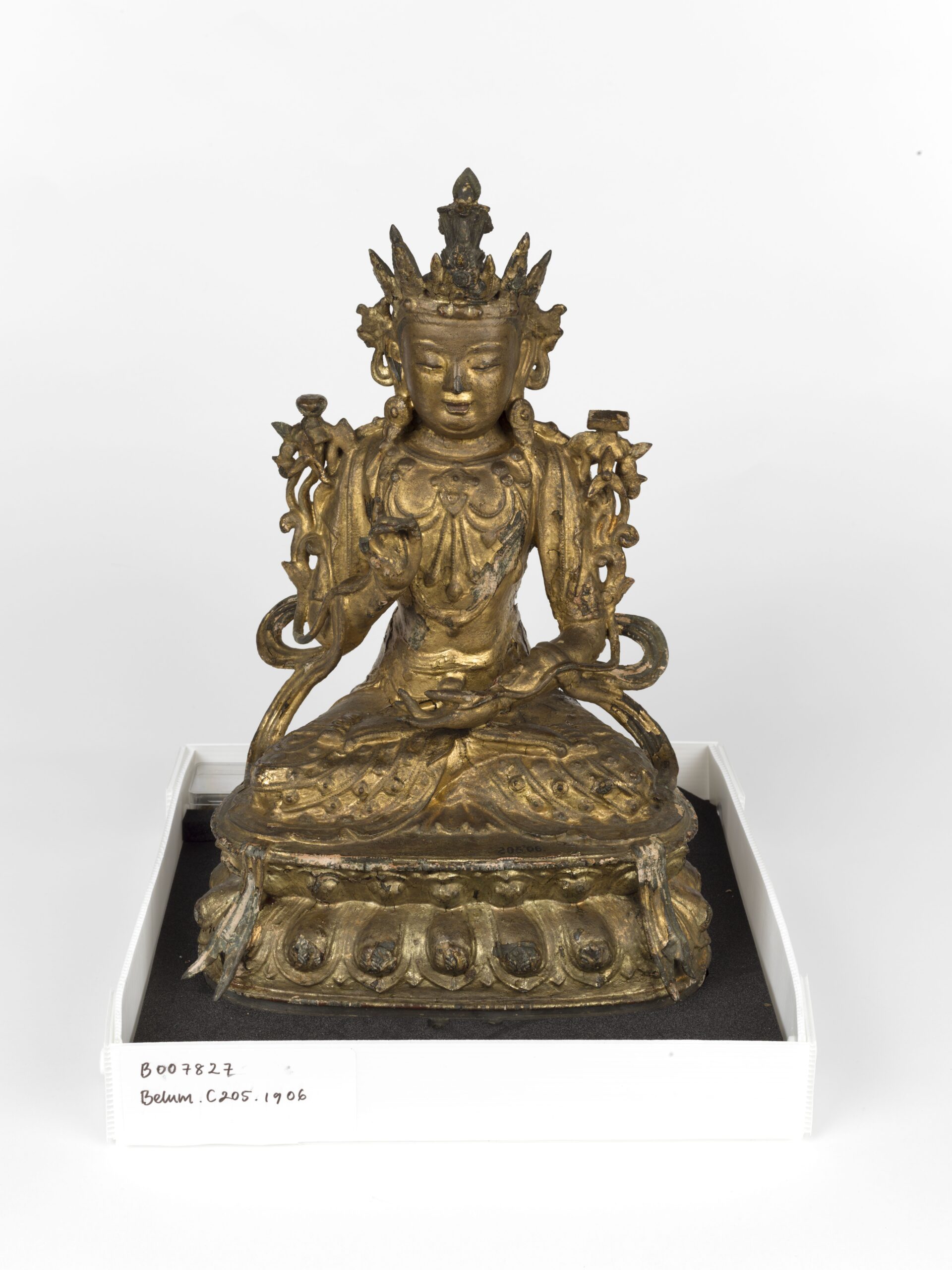
Gilt-Bronze Guanyin
Gilt bronze figure of Guanyin, the Bodhisattva of compassion, seated on double lotus base in padmasana, crossed legged position. The right hand gesture is called karana mudra and is used to ward off evil whilst the left hand holds a pearl, symbolising protection and wisdom.
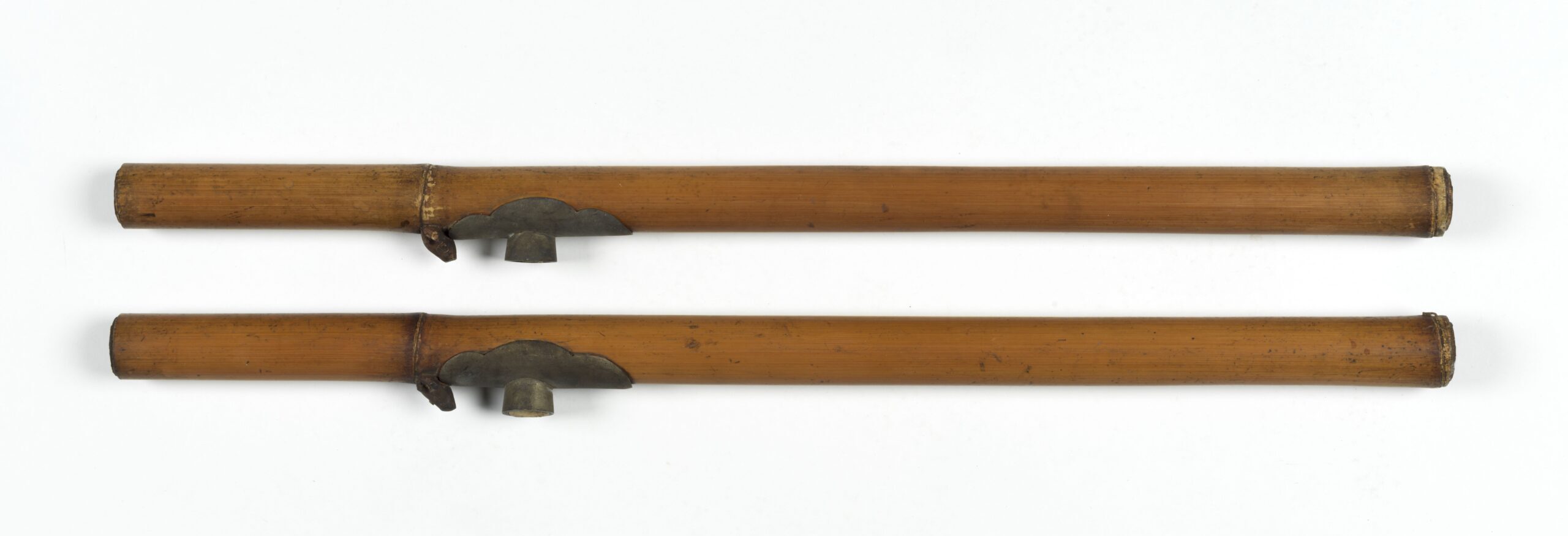
Opium Pipes
Two large opium pipes. The stem is made from wood, probably bamboo and has a metal saddle. One pipe has a Chinese character inscribed under the metal saddle. Opium had long been valued in China as a medicine that could ease pain, assist sleep and reduce stress.
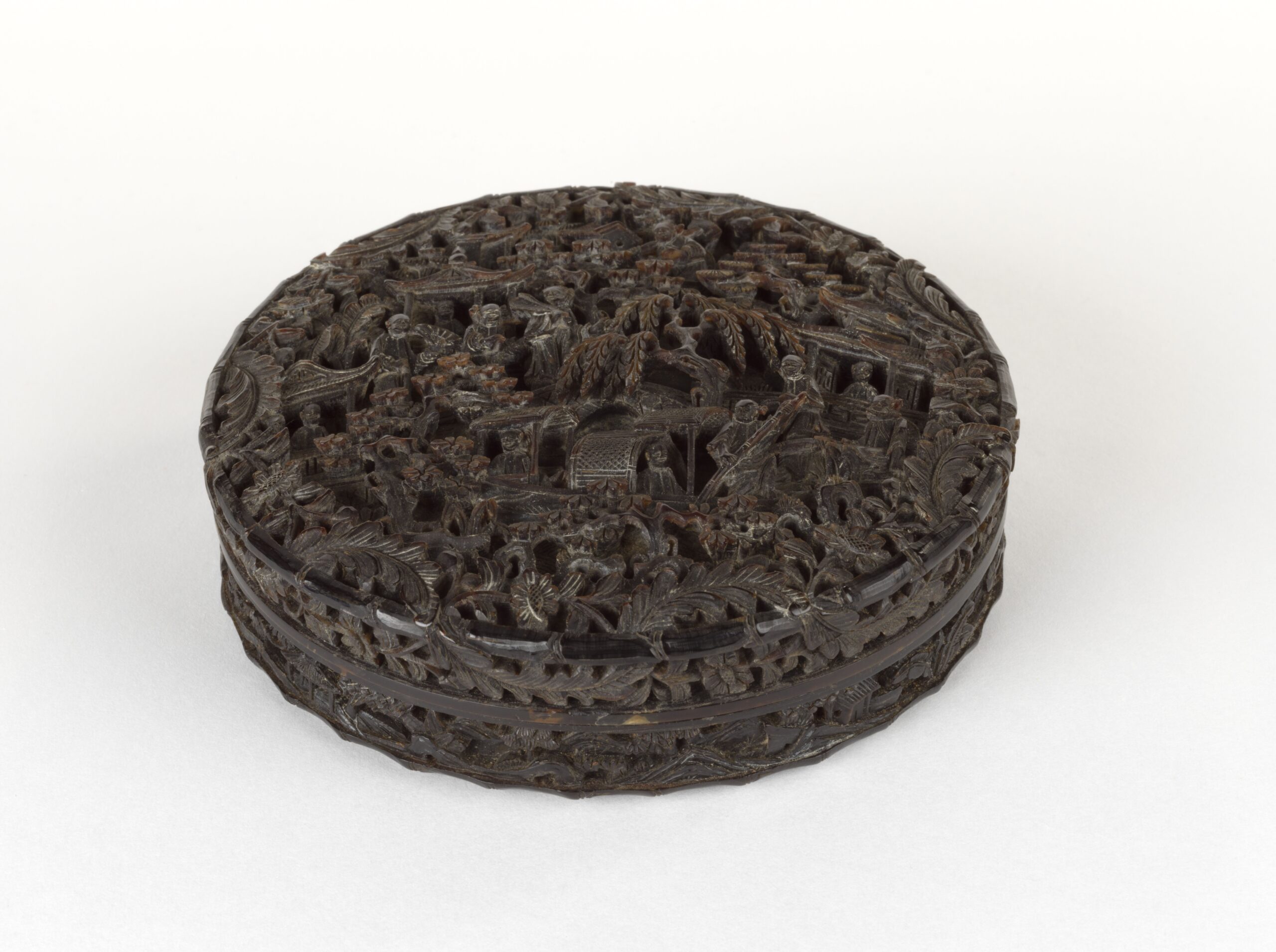
Carved Snuff Box
Tortoise shell snuff box with carved decoration in relief with figures, trees, plant life, boats, pagodas, and islands. The use of narrative landscapes on small luxury objects embodied an educated ideal, where portable objects like snuff boxes became vehicles for aesthetic appreciation and social distinction.
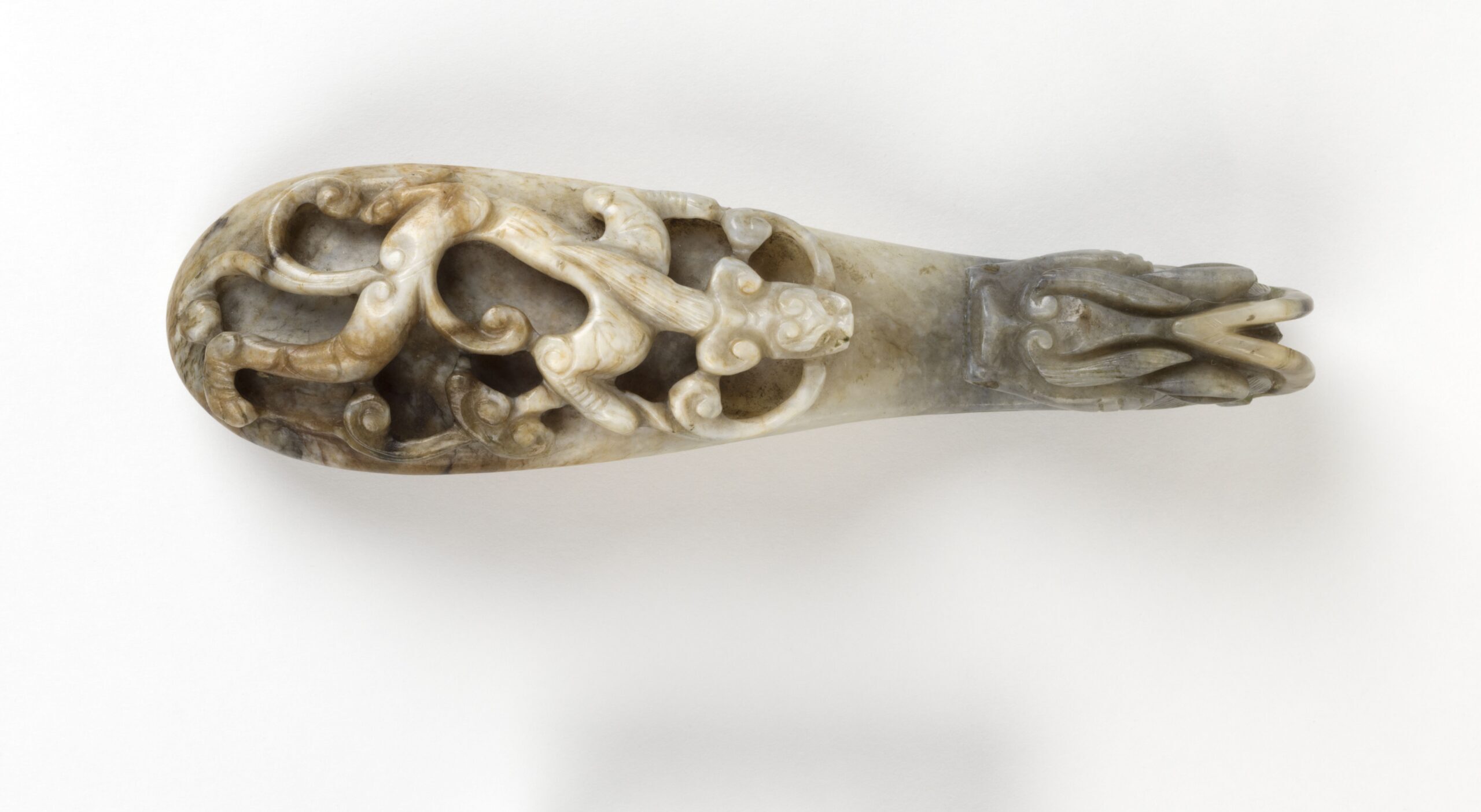
Jade Buckle
Grey jade carved ornament based on archaic belt hook design. It has a hook or protrusion on the back to attach a belt. Dragon motifs on the design. The hooked section depicts a mature dragon (long) and the relief on the shaft a ‘baby’ dragon (chi long), symbolising good fortune.
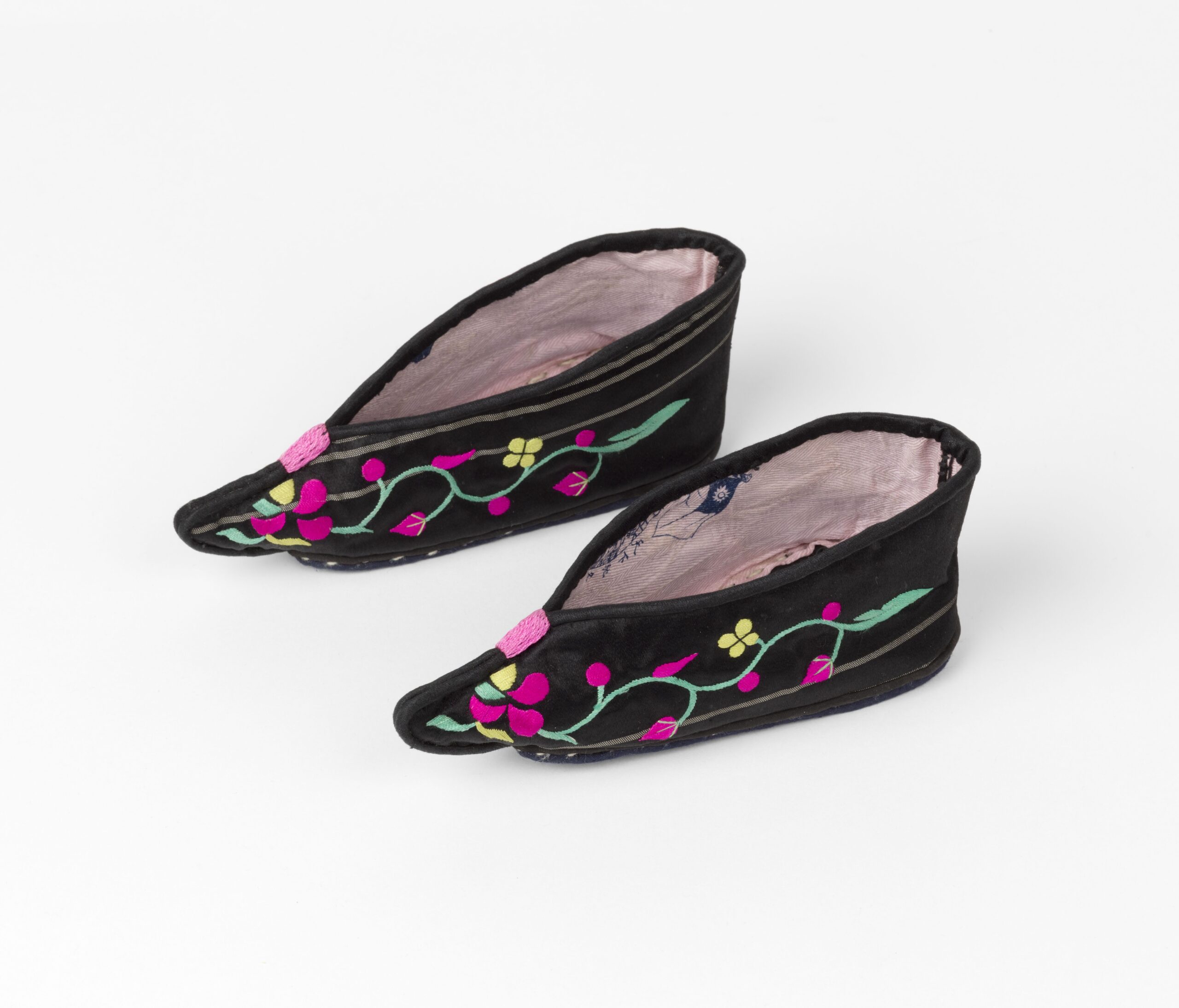
Lotus Shoes
Shoes for bound feet, gong xie (弓鞋). Small pair of black silk shoes for bound feet with bright pink, yellow and green embroidery of plants. The lining of the shoes indicate they were commercially made in the early 20th century, a time when foot binding was beginning to become controversial in China.
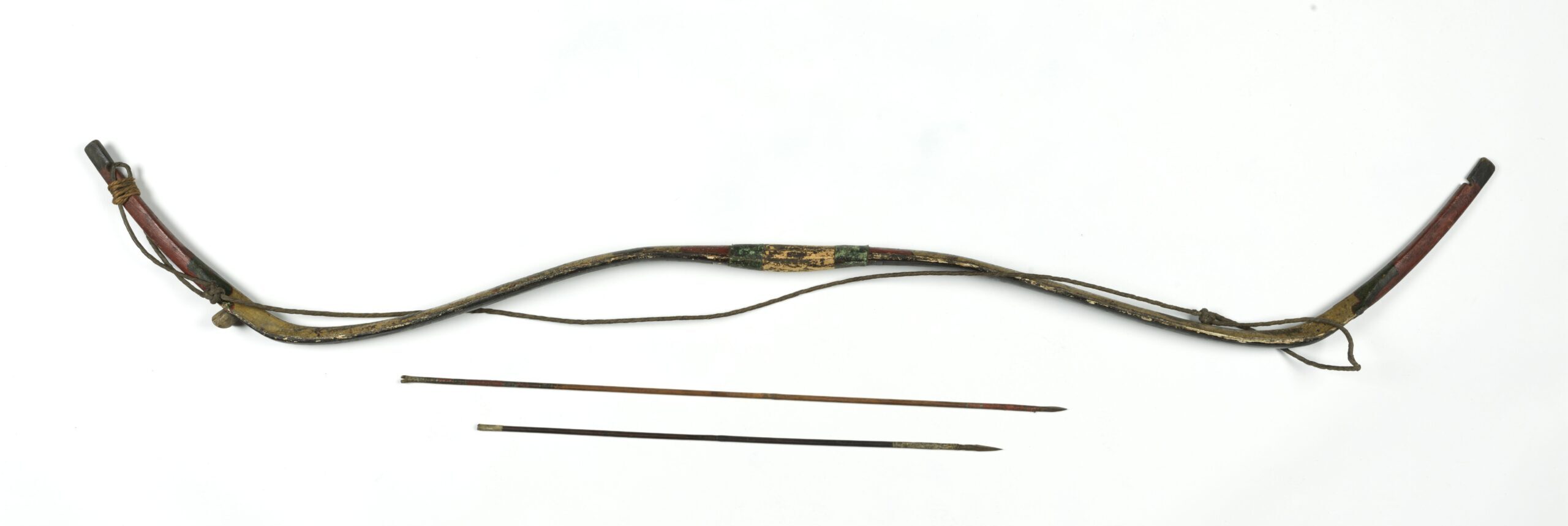
Bow & Arrows
Wooden bow covered in painted leather with a string. Decoration includes plant life as well as a swastika well-being symbol. The bow resembles those used by Manchu banner men and the size makes it quite easily identified as a Manchu bow.
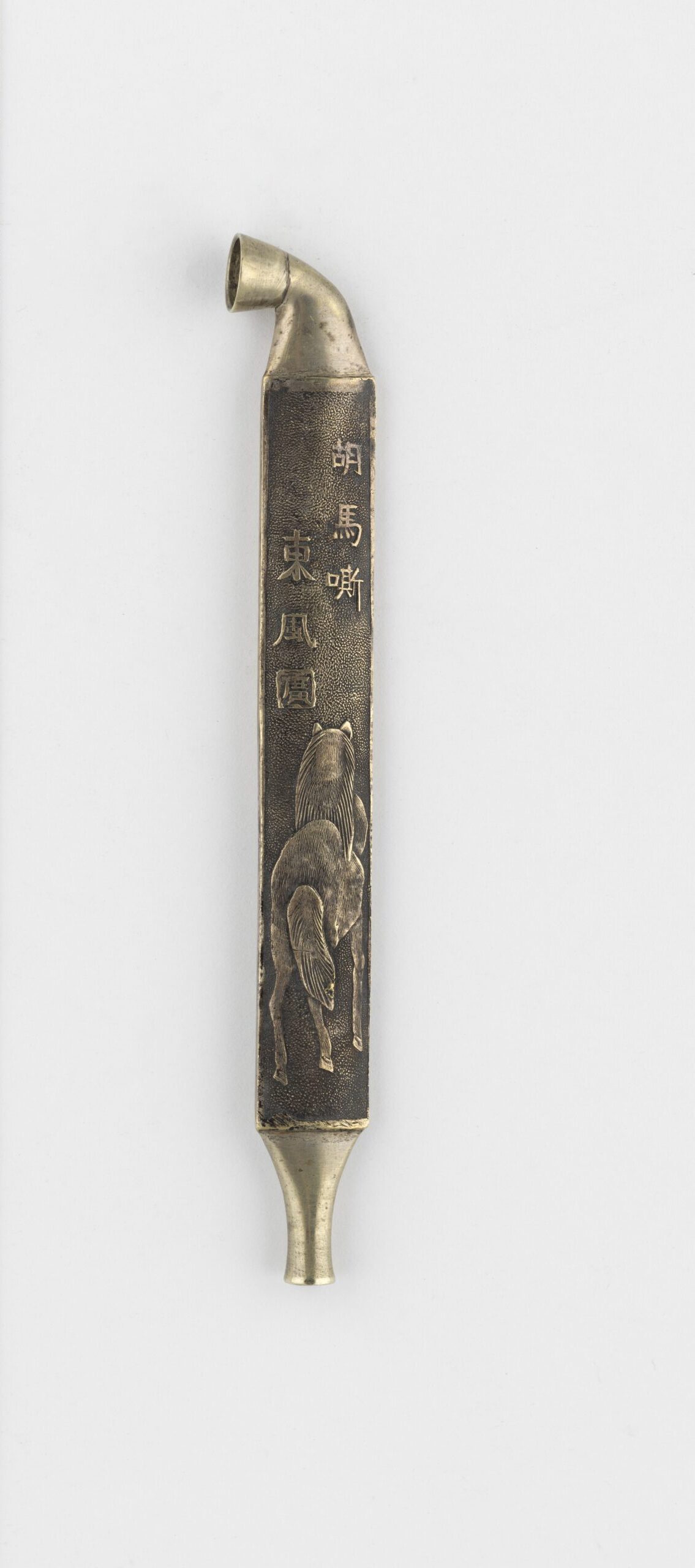
Horsehead Tobacco Pipe
Chinese metal tobacco pipe, referred to as a “horsehead pipe” (馬頭烟嘴/马头烟嘴) due to its distinctive curved end. The Chinese text on the side reads “胡馬嘶東風” (胡马嘶东风), followed by an unidentified sixth character. The text means “The nomadic horse neighs at the east wind."

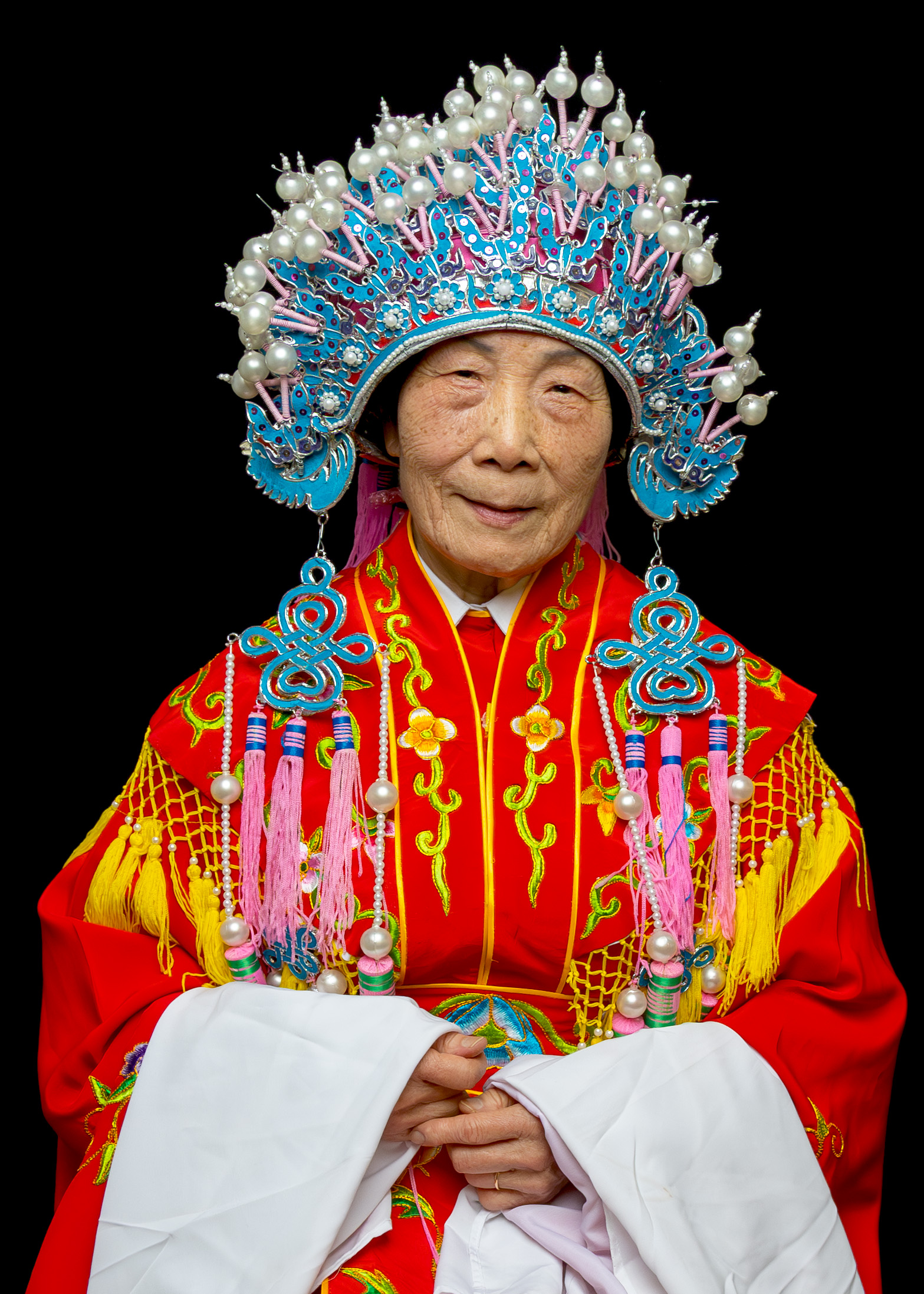
Precious Stories
Bridges to China
Precious Stories
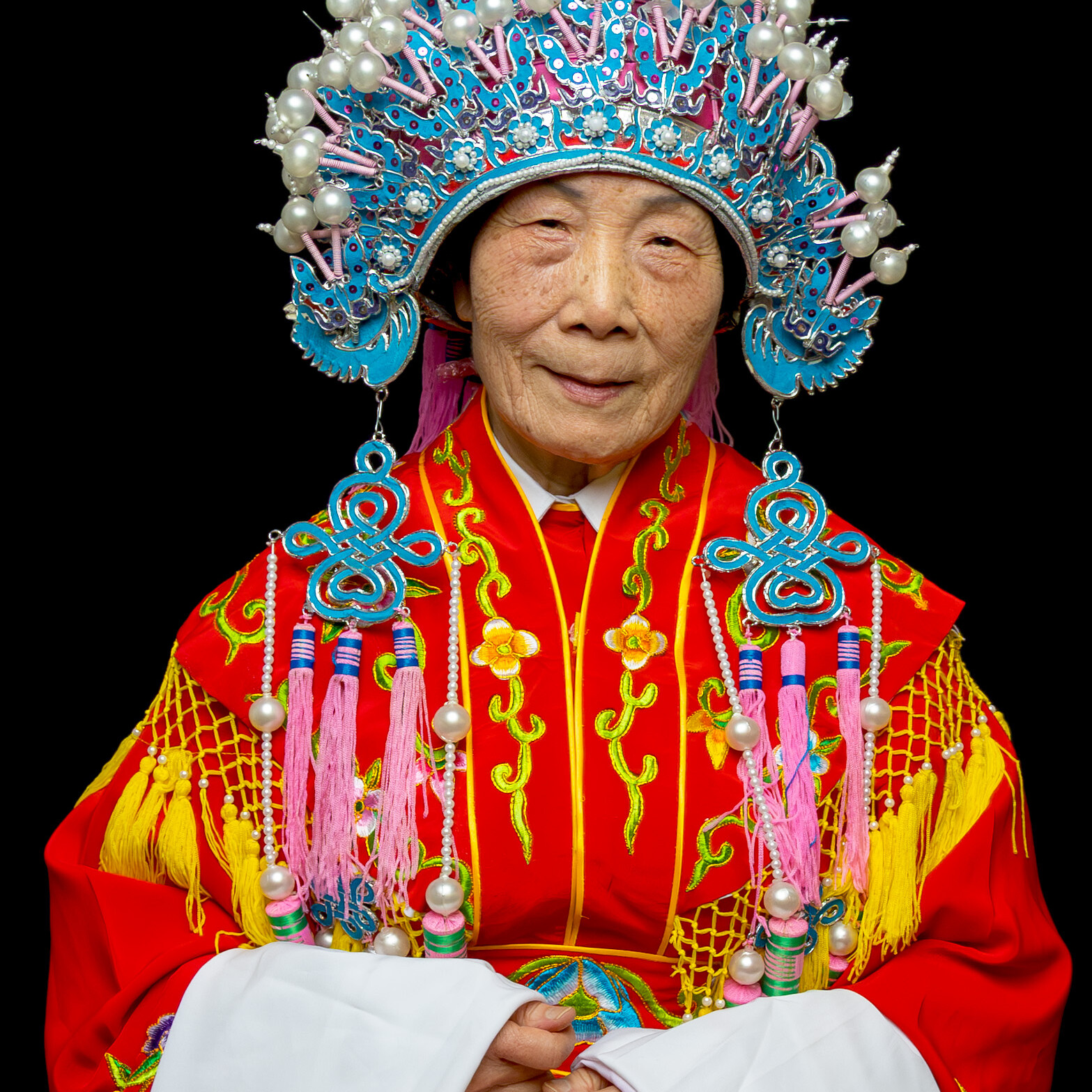
Chinese Stories, Northern Irish Narratives
Hear from project participants and members of Northern Ireland’s Chinese community on their experiences on living and thriving in Northern Ireland. They describe their experiences on the project, their ongoing and evolving connections with China and its heritage, and a little bit about the personal objects they hold dear. Some also delve into the significance of the artefacts contained within the National Museum NI’s Chinese Collection and how they connect them to home – wherever ‘home’ may be.
Video also available on Panopto
About the Stories
The Precious Stories collection shares first-hand accounts from members of Northern Ireland’s Chinese community. Contributors talk about identity, belonging and heritage, drawing on memories of migration, family life and their everyday experiences. They link these stories to both museum objects and personal items explored during the project.
Their stories show how objects, whether kept at home or held in a museum, carry emotional and cultural meaning. By centring these voices, Bridges to China offers new ways to understand Chinese life and heritage in Northern Ireland.
The Stories
Selina Yuet Kwan
Selina Yuet Kwan Lee has lived in Northern Ireland for 59 years. Throughout much of that time, she worked in the catering industry. Following her retirement, she devoted herself to voluntary service within the Chinese community, serving as Principal of a Belfast Chinese Language School and Chairperson of the Oi Kwan Women’s Association.
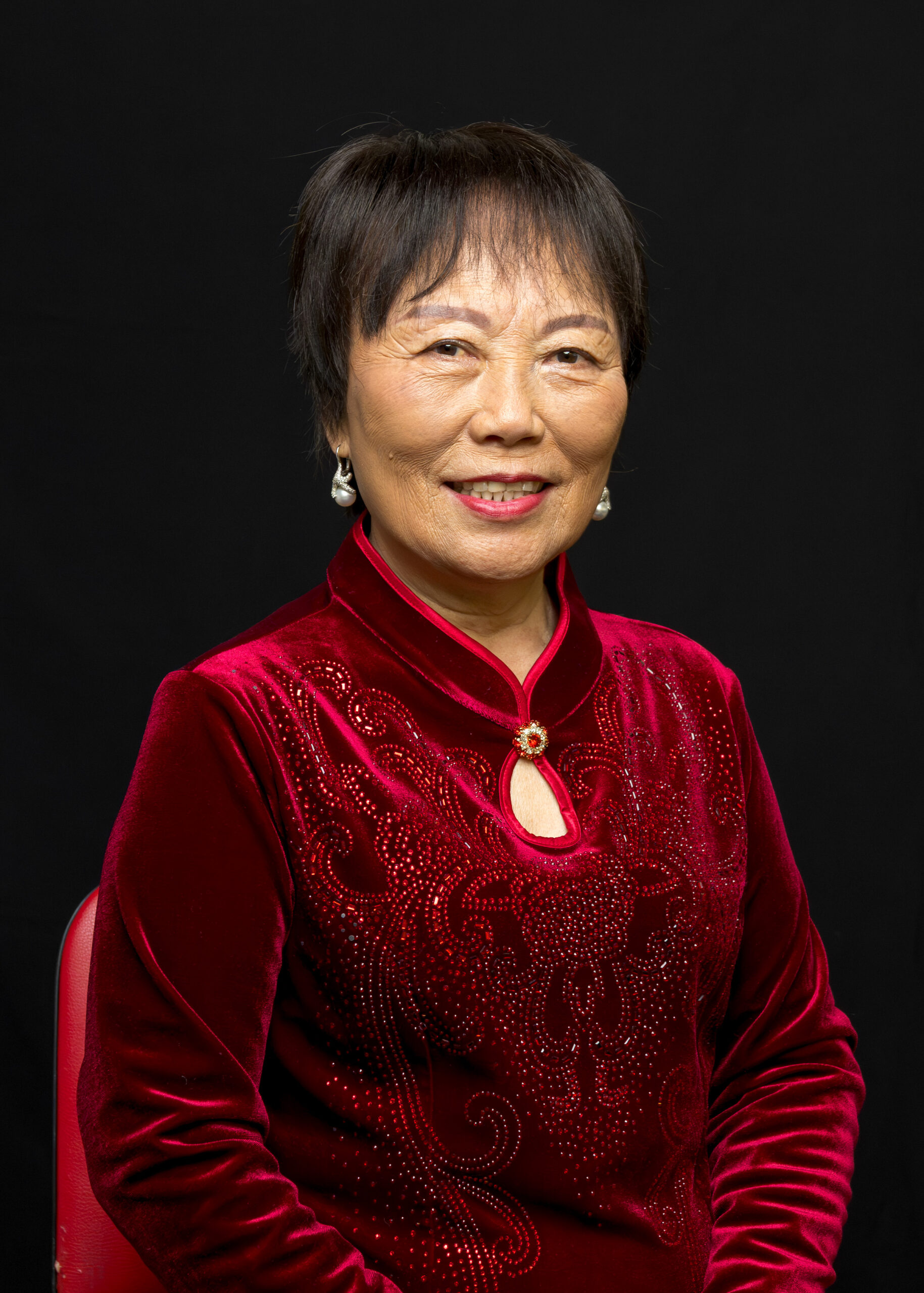
Ri Fang Hao
Dr. Ri Fang Hao’s contribution explores the deep cultural, historical and symbolic significance of the Chinese guardian stone lion. Drawing on mythology, Buddhism, folklore and architectural tradition, she reflects on how these sculptural figures have evolved from exotic symbols introduced through the Silk Road into powerful guardians of homes, institutions and communities.
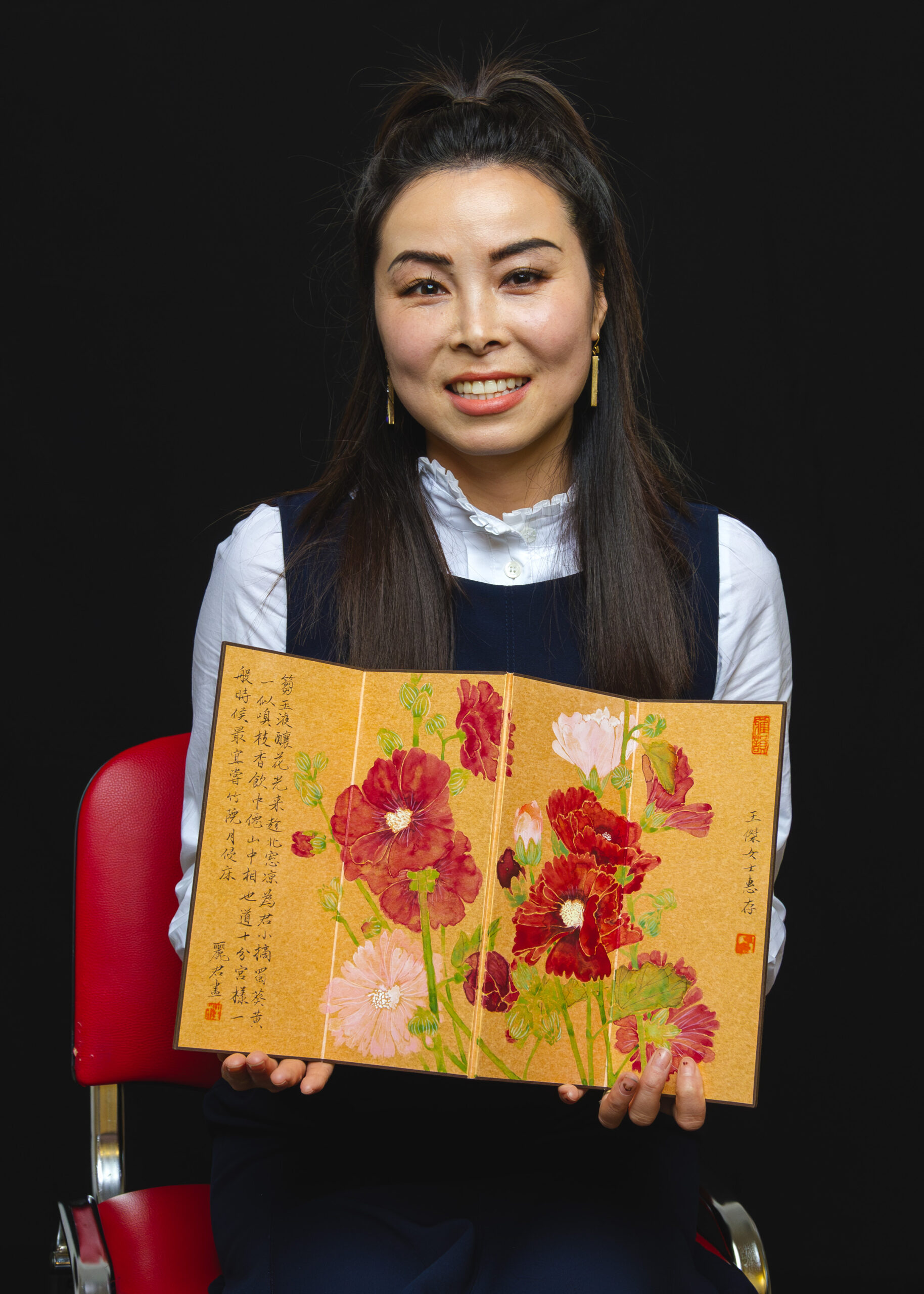
Kelly Wang
Through the Bridges to China project, Kelly shares her personal connection to Chinese cultural artifacts and the deep meanings they carry. Her story explores the traditions of ancient Chinese scholars and the symbolic importance of art in Chinese culture. Kelly's narrative offers insight into how cultural objects serve as bridges between past and present, and between different communities in Northern Ireland.
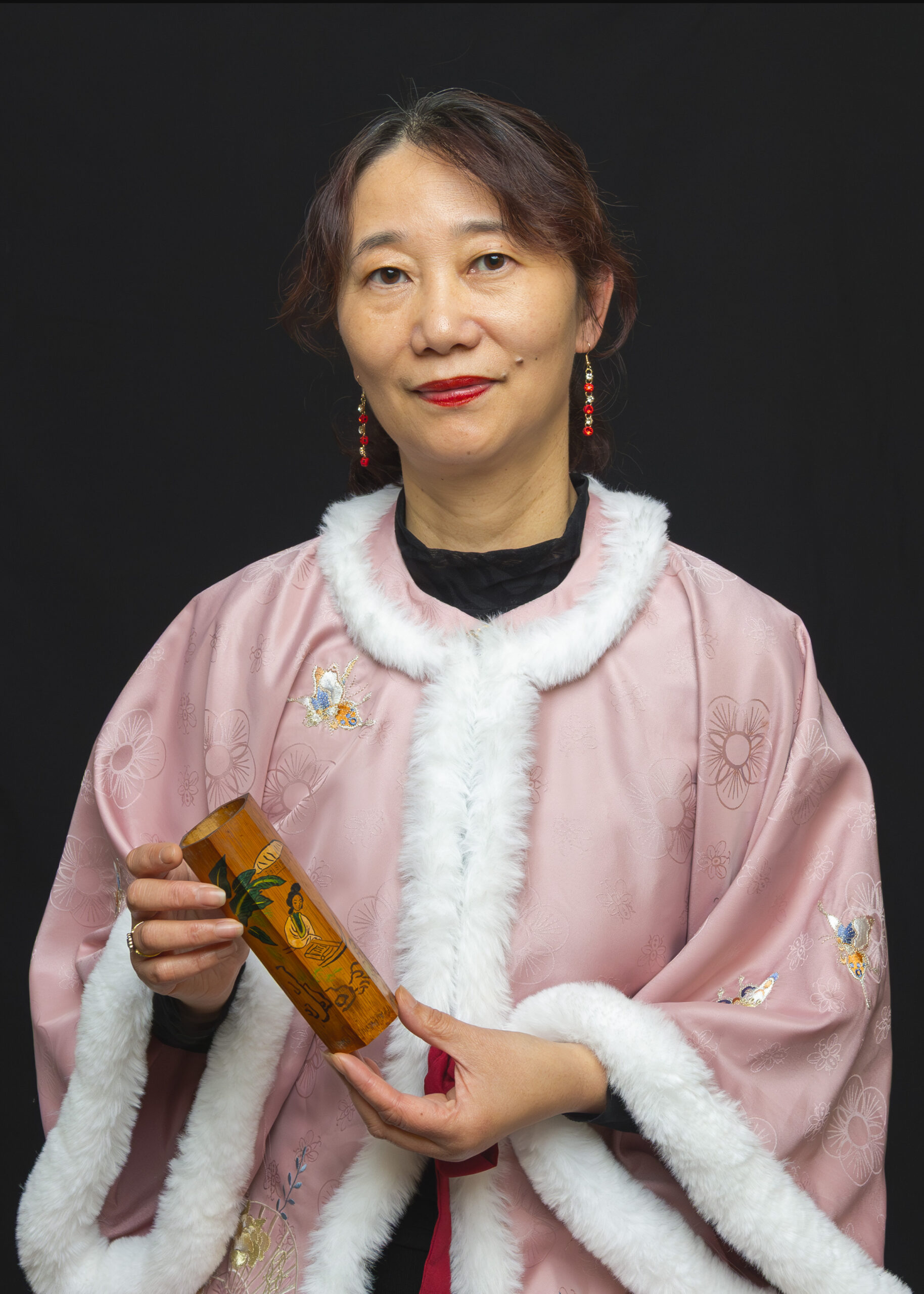
Sharon Fan
Sharon is a dentist from the beautiful city of Hangzhou. Since childhood, she has been immersed in the cultural atmosphere of this historic city and deeply influenced by her father. She has always had a great fondness for Chinese culture. Sharon enjoys Chinese calligraphy and painting, as well as singing. She used to be a member of Xizi women's choir. Now she joins in the Queen's wellbeing choir.
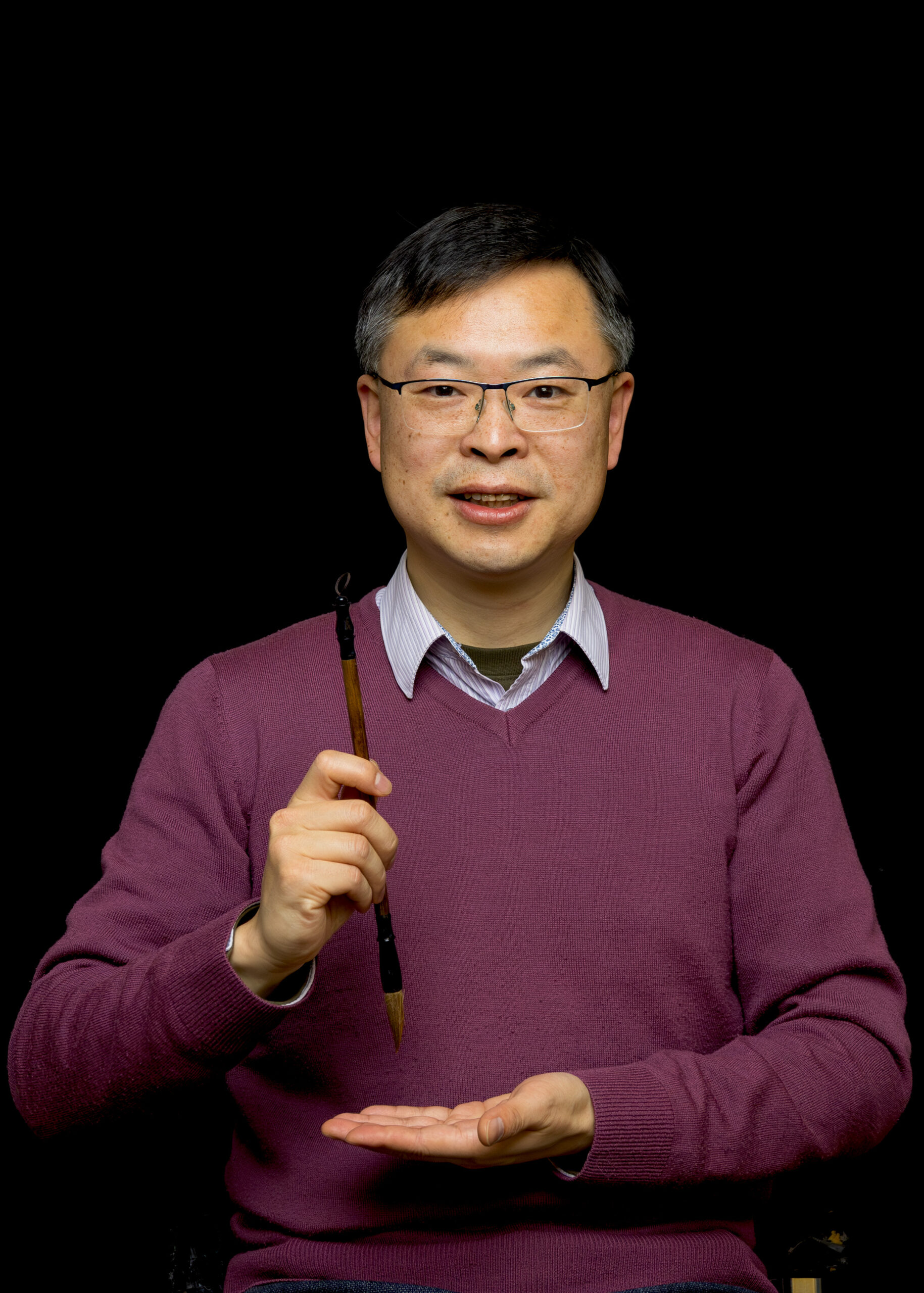
Liang Wang
Liang Wang works at The Language Centre at Queen’s University Belfast. In his role as Language Support Officer, he undertakes both academic teaching and professional services for students and staff members, as well as members of the public. One of the key remits of his role is to promote a multicultural campus through language and intercultural exchange, not only within Queen’s but also across communities and with civic partners, by organising and facilitating language- and culture-based events and activities.
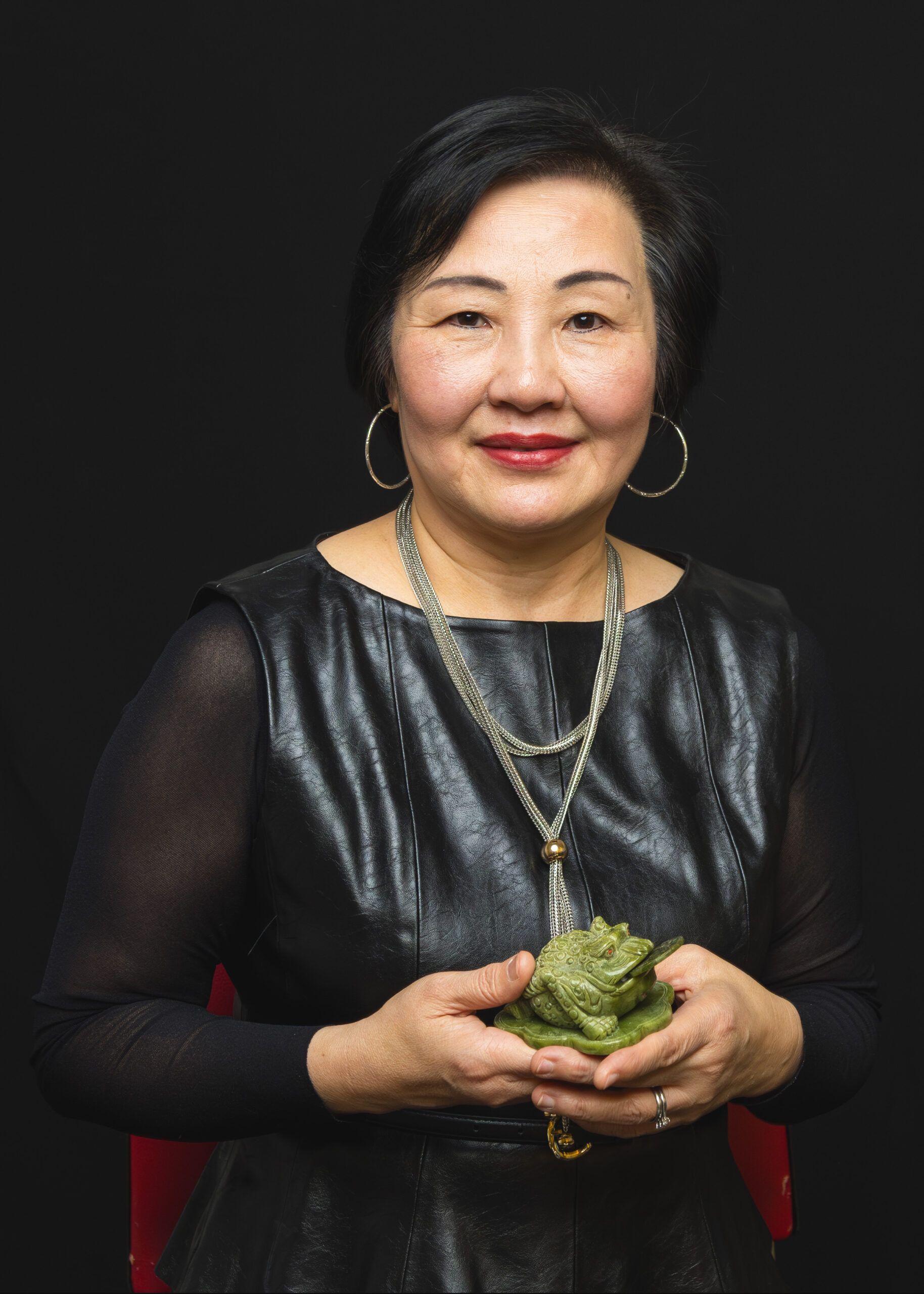
Sally Gillespie
Originally from Hong Kong, Sally Gillespie has lived in Northern Ireland for 35 years. She previously worked in the catering industry and now works as a freelance interpreter for the NHS. Sally is deeply involved in community life. She currently serves as Secretary of the Northern Ireland Chinese Chamber of Commerce and as a management committee member of the Chinese Welfare Association.
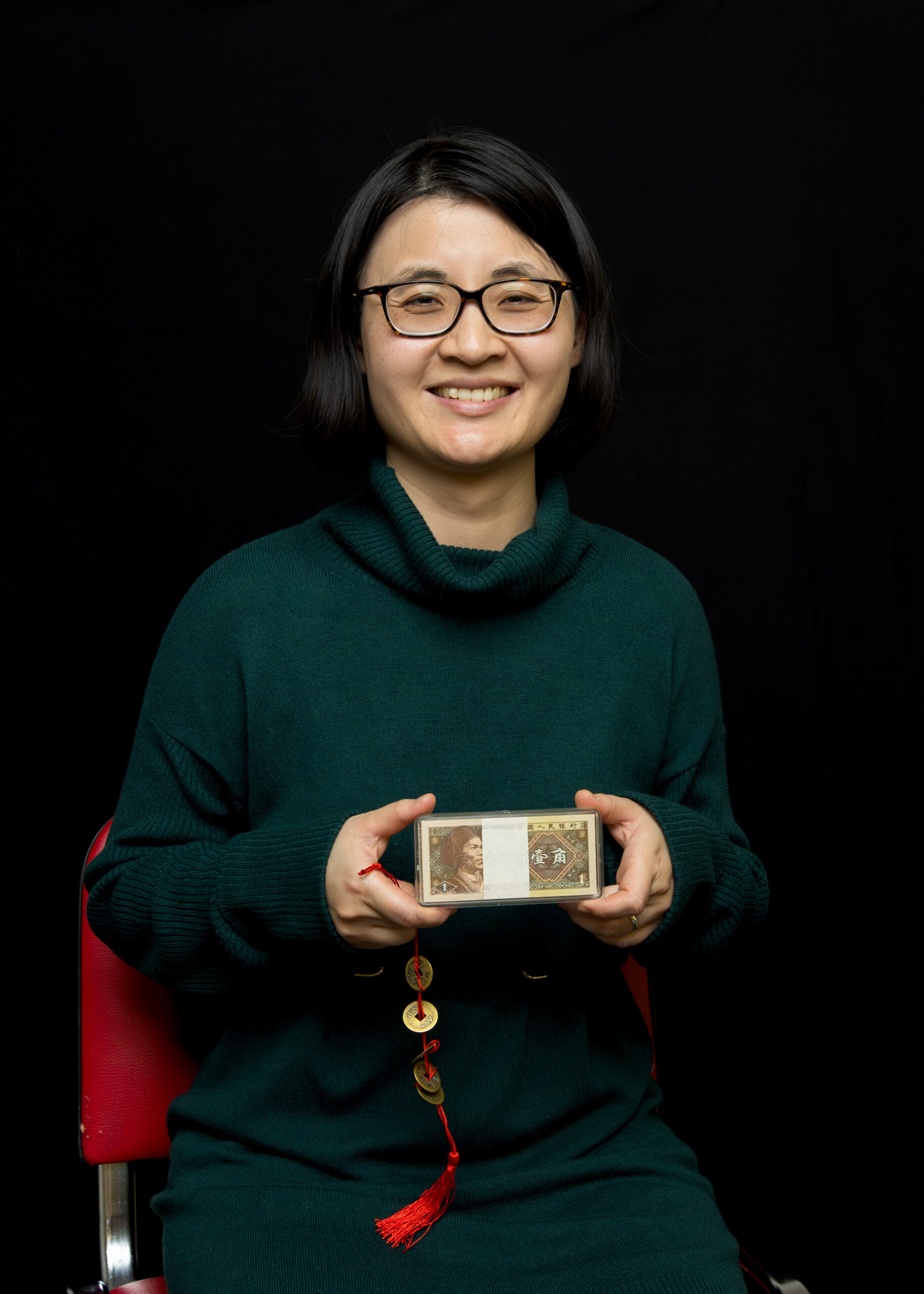
Emily Cong
Emily Cong is a chartered accountant who has lived in the UK for over fifteen years, eight of which have been spent in Belfast. Through Bridges to China, Emily shares her personal connection to Chinese objects in the Ulster Museum, alongside a set of yi jiao RMB notes she received from her grandmother. Her stories centre on family values and intergenerational relationships in Chinese culture.
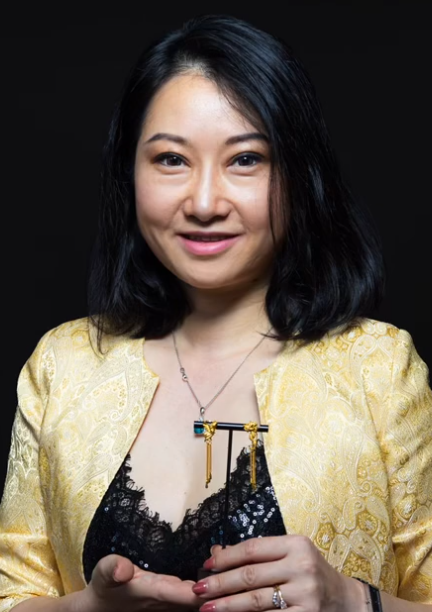
Yushan Tang
Yushan Tang moved from China to Northern Ireland in 2009. As a business founder and psychology researcher, living between cultures has shaped her deep interest in how memory, identity and objects are connected through lived experience.
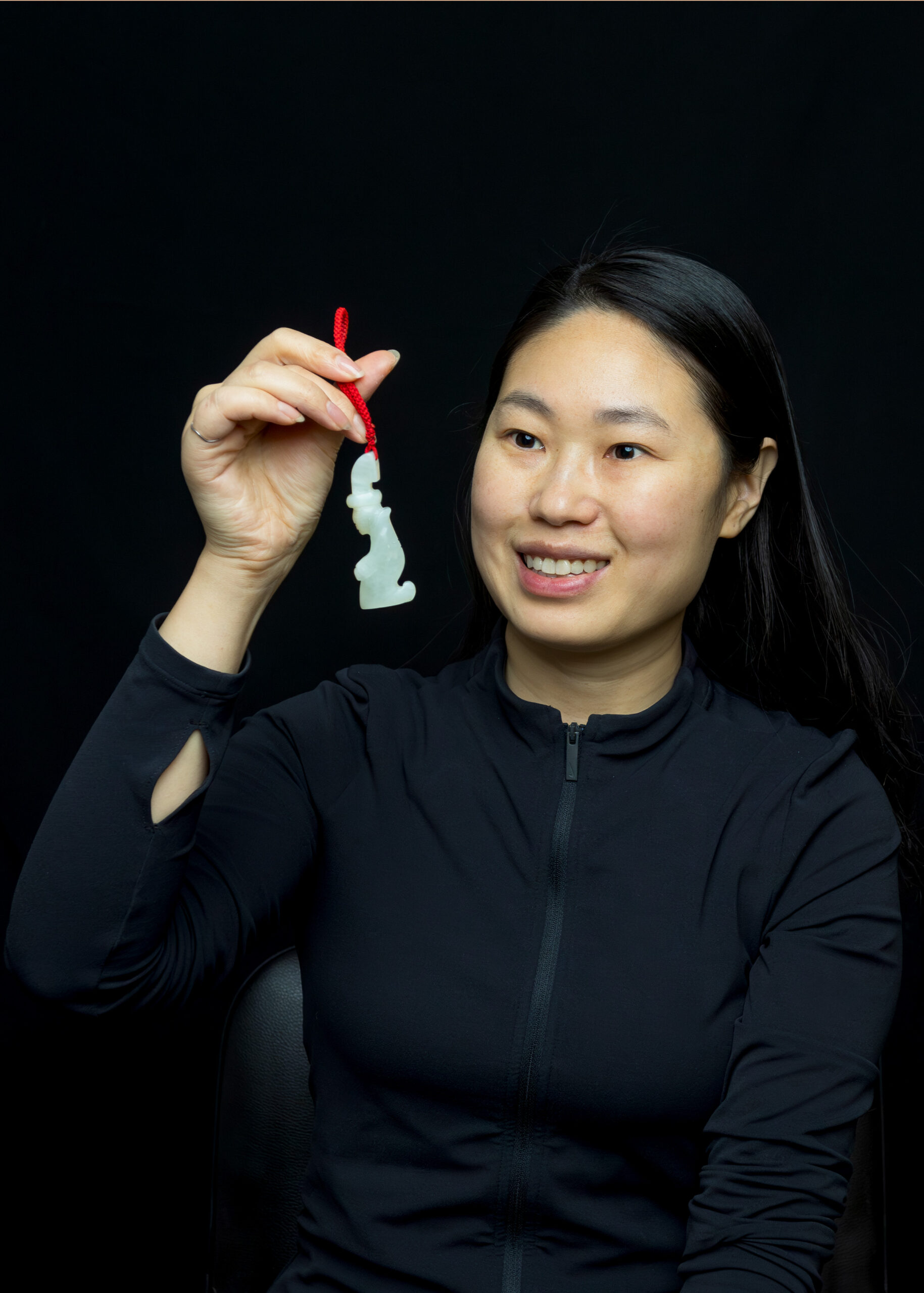
Wei Deng
Wei Deng is originally from Sichuan, China. She graduated from Queen’s University Belfast with an MA in Arts Management in 2020 and is now a guzheng artist based in Belfast. Being part of Bridges to China has been a profound experience for Wei. Exploring Chinese material culture and heritage has influenced her creative practice, opening new artistic possibilities in her music.
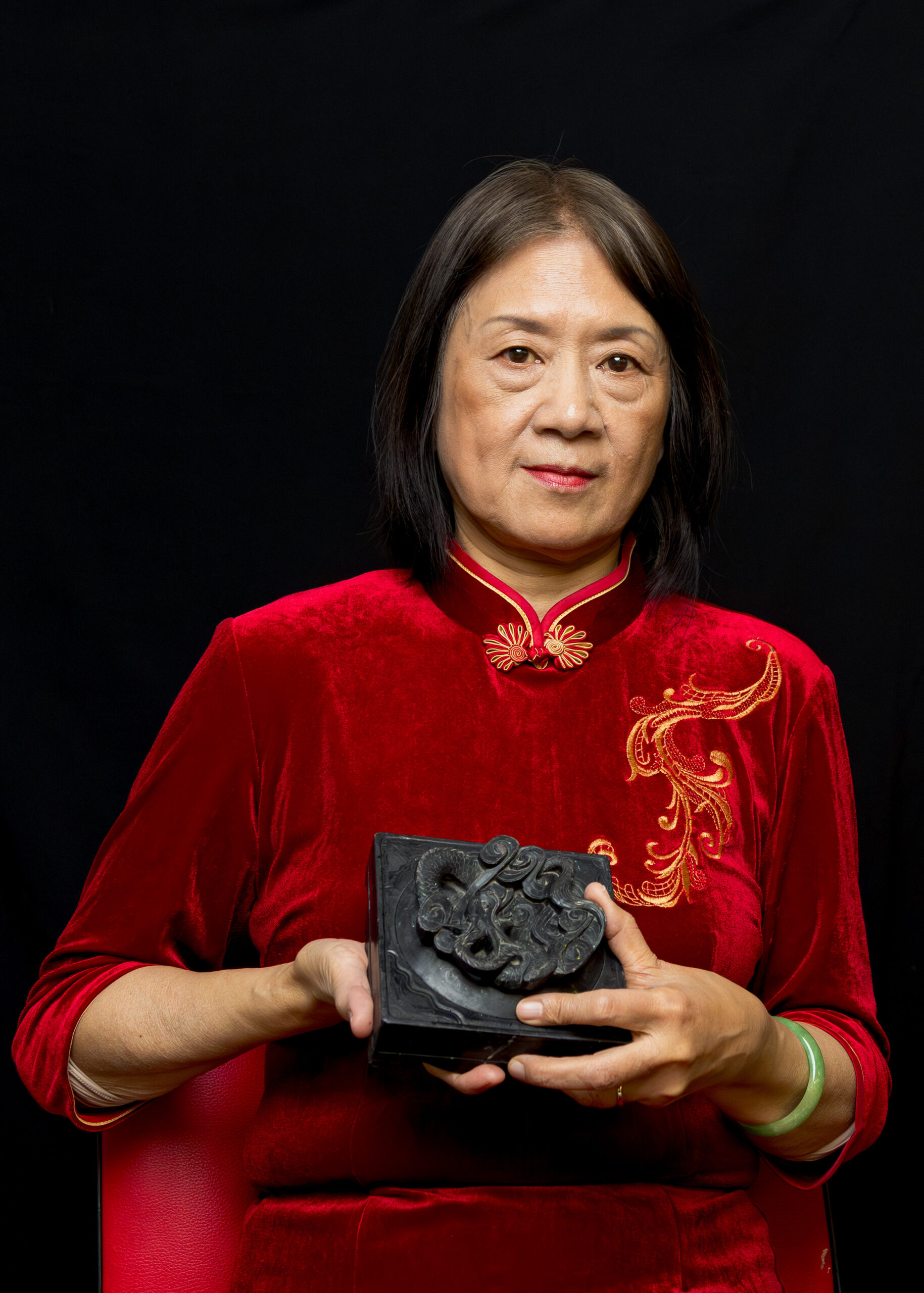
Lili Li
Lili was born in China and has been living in Northern Ireland for over twenty years. Before moving to the UK, she worked as a computer programmer at the University of Cambridge Local Examinations Syndicate in Cambridge. After settling in Northern Ireland, she held technical roles with organisations including Ulster Bank and Biopanda Reagents.
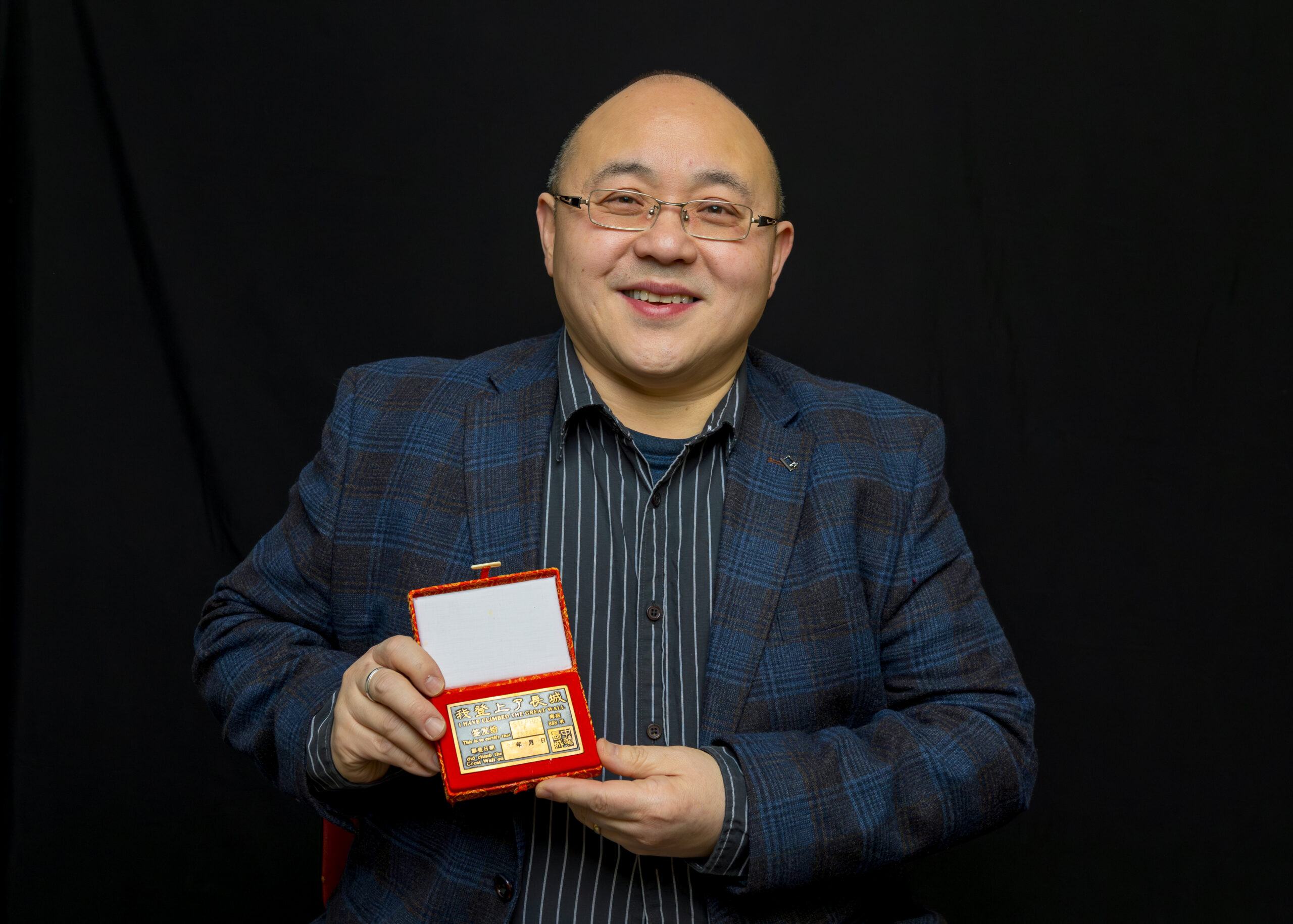
Stephen Lam
Stephen is 54 years old and was born in Ireland to Hong Kong Chinese parents who immigrated in the 1960s in search of a better life. Unlike many other participants in the Bridges to China project, Stephen did not grow up in Hong Kong or mainland China. Instead, he experienced what is often described as a “British Born Chinese” upbringing — shaped both by his Chinese heritage at home and by Irish society more broadly.
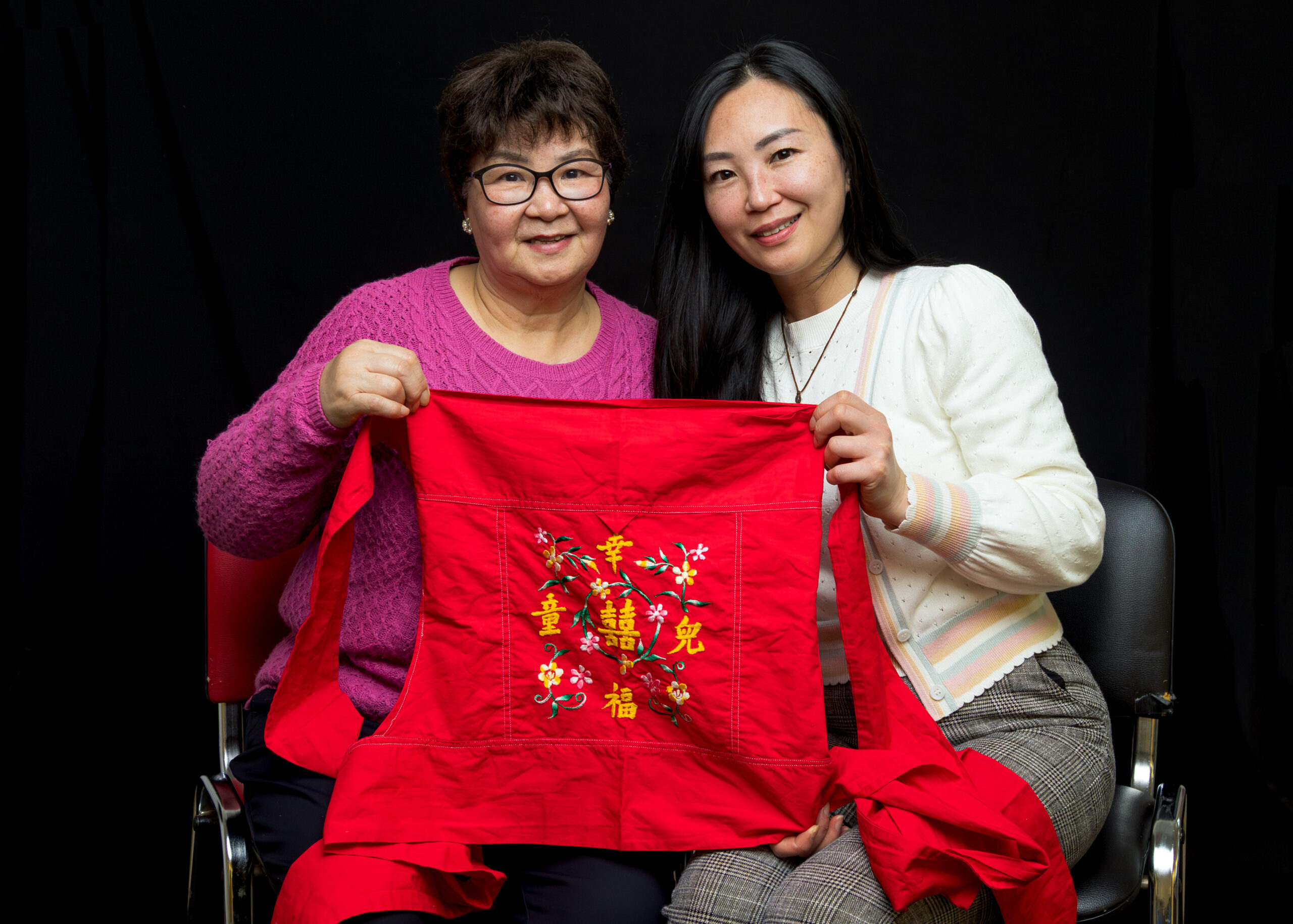
Sylvia Yue & Sau Ling Li
Sylvia Yue’s contribution to Bridges to China centres on a traditional Chinese baby sling used by her mother when she was an infant. Embroidered with Chinese characters meaning 'happy child' or 'blessed child', the sling carries her parents’ hopes and wishes for her life. Passed down through generations and later used to carry Sylvia’s own daughter, the object reflects themes of care, continuity and the transmission of love and blessings within family life.
She also has a really cool Mum.
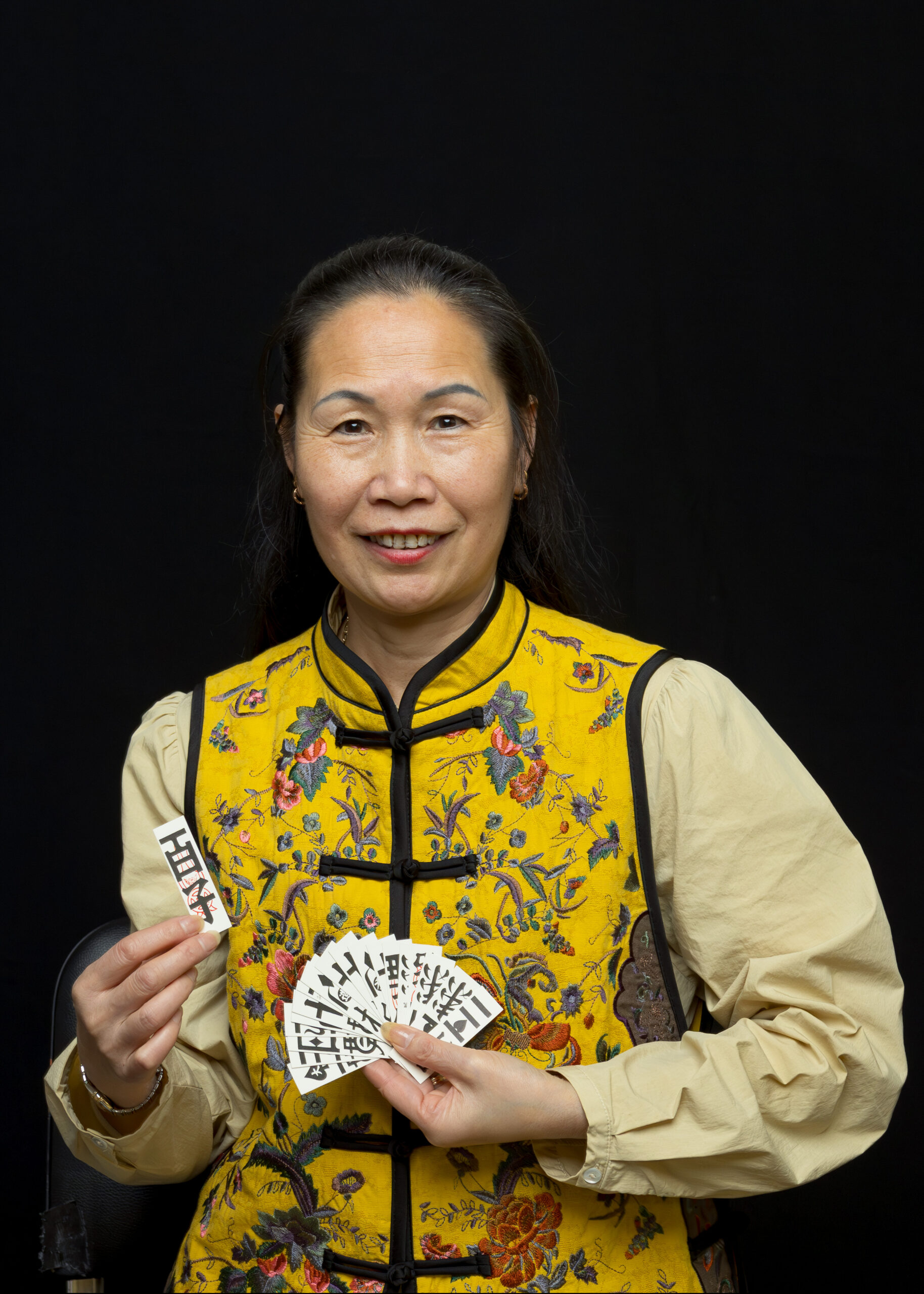
Rebecca Zhang
Fenglian Zhang, originally from Guangzhou, China, has been living in Northern Ireland for the past 19 years. Since retiring, she has been actively involved in community service and currently serves as Vice-Chairperson of the Oi Kwan Women’s Group. Her main focus is volunteering and supporting the Chinese community in Belfast.
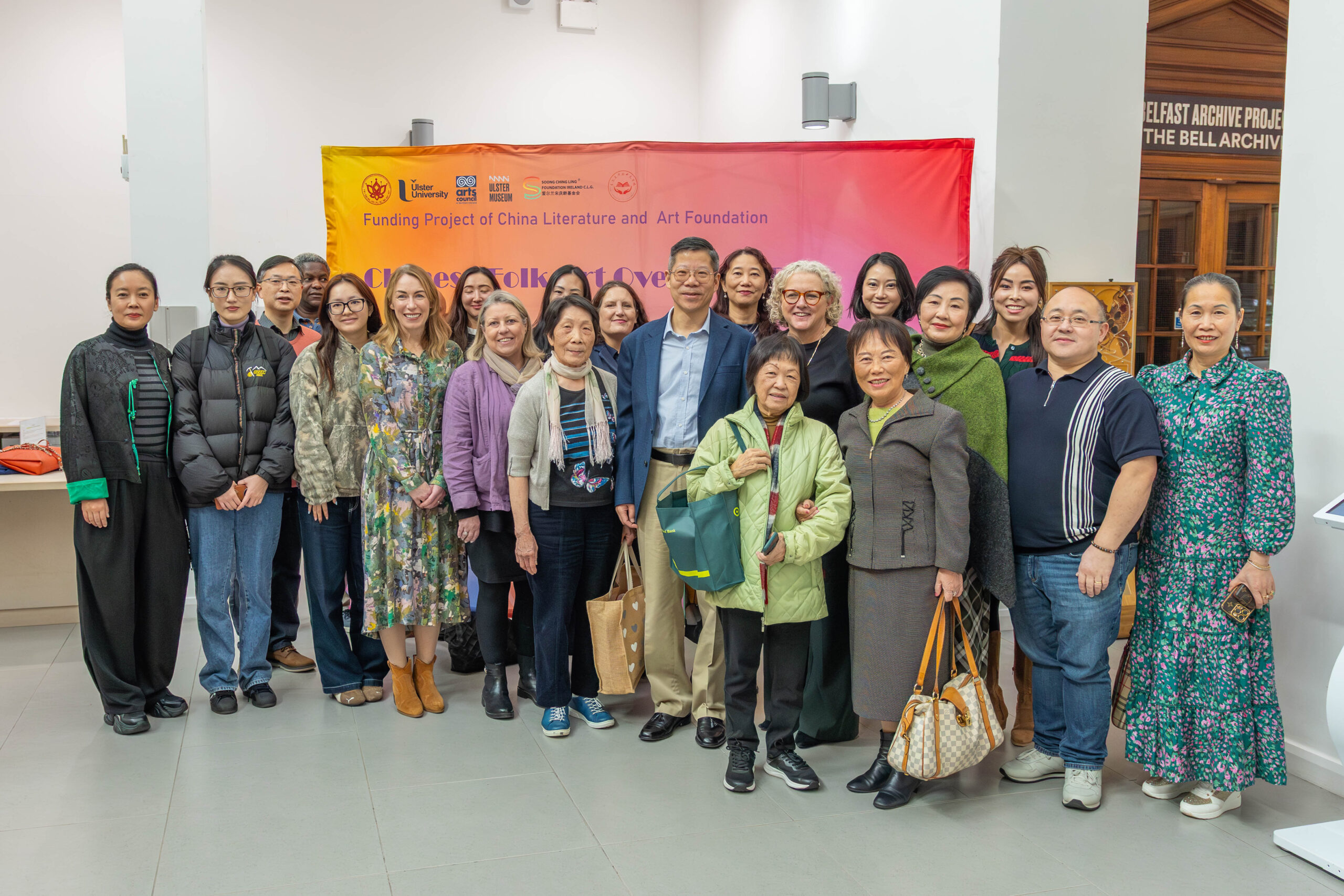
Bridges to China Exhibition
Bridges to China
中國之橋 中国之桥
Exploring the connections between China and Northern Ireland, celebrating the significance and influence of the Chinese community and heritage in Belfast
Video also available on Panopto
About the Project
Bridges to China brings people together to explore the long connections between China and Northern Ireland, and the important role of the Chinese community in Belfast.
The project draws on the knowledge and experience of Northern Ireland’s long‑established Chinese community to explore a remarkable collection of Chinese objects that once had very little documentation or public attention. These objects help share stories of memory, migration and identity, and open new ways to understand Chinese heritage and its significance in Northern Ireland.
Chinese community members contributed cultural knowledge, personal stories, meaningful objects and creative work. Their voices and experiences are at the heart of the project, celebrating the rich cultural tapestry woven by the Chinese community in Northern Ireland.
______________________________________
Bridges to China is a partnership between the Chinese Welfare Association, Queen’s University Belfast, National Museums NI and AvilaMedia. Working together, the project creates new connections between past and present, tradition and creativity and between cultures.
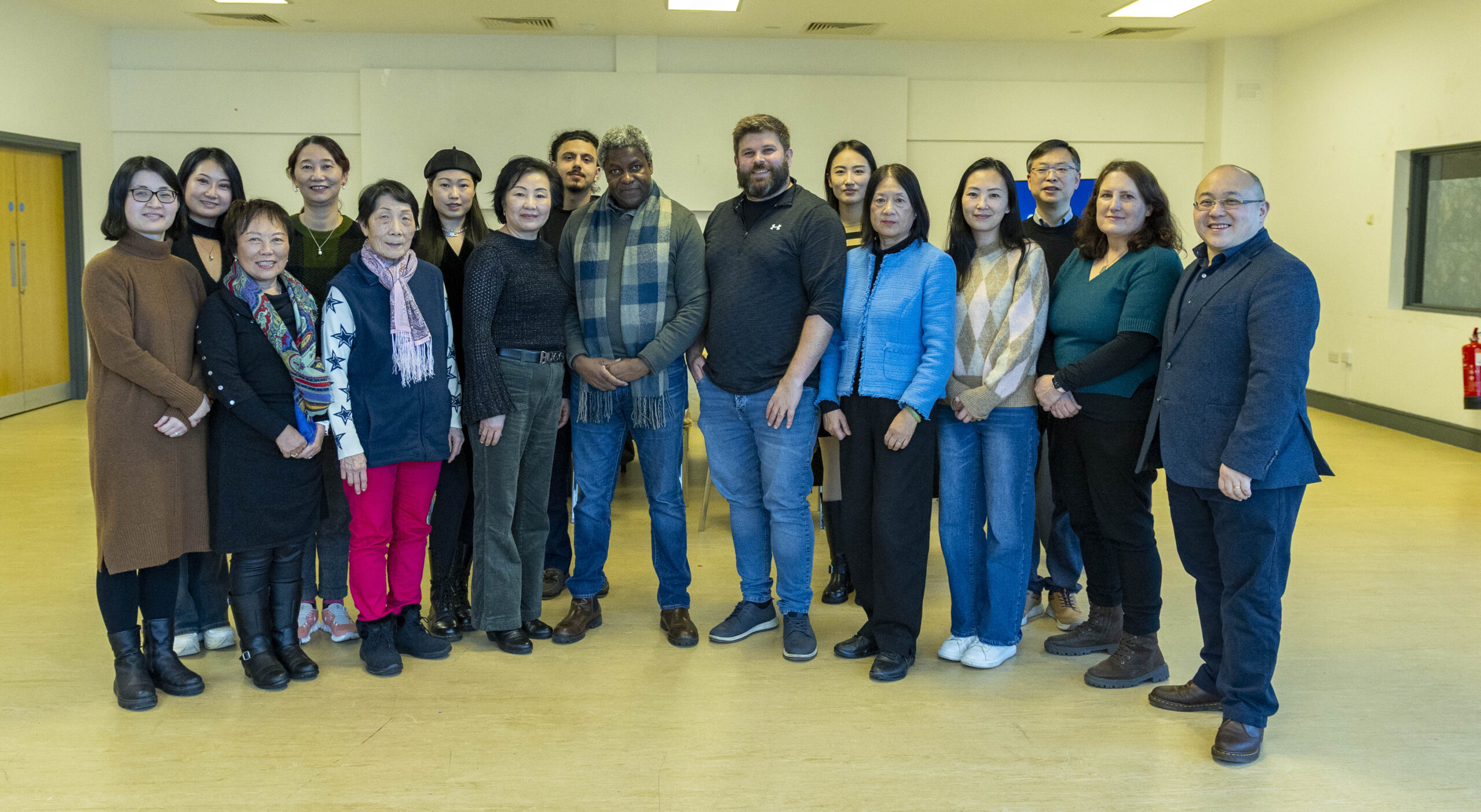
Precious Stories, Treasured Objects
Precious stories
First-person accounts exploring identity, belonging and the many ways the Chinese community has shaped Belfast.
Treasured Objects
Connections across time through artefacts chosen by participants
Shared Heritage
Workshops, conversations and creative engagement that build understanding and strengthen cultural links.
