
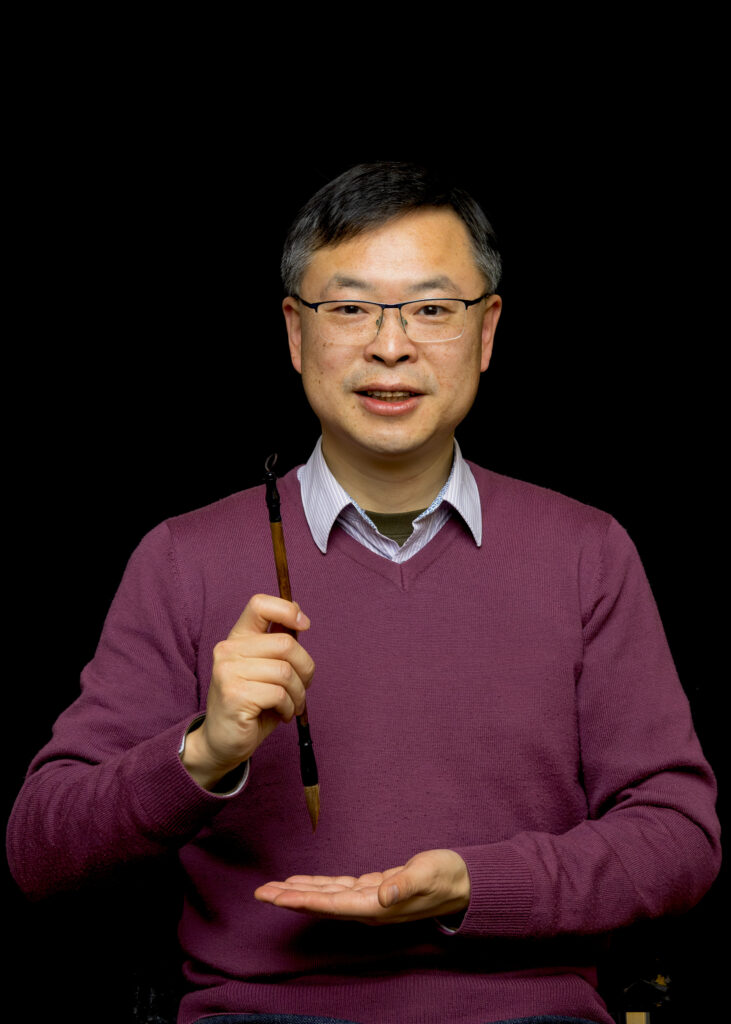
Meet Liang Wang
Language Support Officer, Queen’s University Belfast
Liang Wang works at The Language Centre at Queen’s University Belfast. In his role as Language Support Officer, he undertakes both academic teaching and professional services for students and staff members, as well as members of the public. One of the key remits of his role is to promote a multicultural campus through language and intercultural exchange, not only within Queen’s but also across communities and with civic partners, by organising and facilitating language- and culture-based events and activities.
This work provides him with opportunities to develop partnerships with a wide range of communities and institutions, including Queen’s two neighbours, the Chinese Welfare Association NI and the Ulster Museum. Prior to facilitating the Bridges to China project, Liang worked in collaboration with both partners through Chinese New Year celebration events over a number of years. He greatly values the opportunity to participate in this project, which holds significant educational, socio-cultural and civic importance.
Watch Liang’s Story
Video also available on Panopto
Script, Scratch & Stress Relief
Chinese Writing Brush
Chinese writing brush, known as maobi, is one of the most important tools in traditional Chinese culture and a cornerstone of its calligraphy and ink painting. Typically made with a bamboo handle and a tip crafted from animal hair – such as goat, wolf, or rabbit – the brush enables remarkable variation in line, texture, and expressive style. Used for over two thousand years, maobi is not merely a writing instrument but a symbol of scholarship, artistic cultivation, and the enduring traditions of Chinese literati culture.
Each year, when I organise Chinese New Year celebration activities, calligraphy workshops and stalls are consistently among the most popular. Students and staff, particularly those of Chinese heritage and Chinese language learners, enjoy collecting calligraphy works such as Spring Festival couplets and auspicious characters like 福 (fortune or good luck). In these moments, maobi plays a vital role. I have always made every effort to invite calligraphers – most often Queen’s Chinese students – to prepare and deliver calligraphy both on site and in advance of the events.
In 2019, during the Chinese New Year celebrations, my parents travelled from China to Belfast for a visit. My father, a calligrapher himself, brought his large-sized brush to support my activities. I deeply appreciated his effort and cherished the opportunity for family reunion at the same time. He later left the brush with me for future events, though not without reminding me that I should practise more to improve my own calligraphy skills.
Back Scratcher
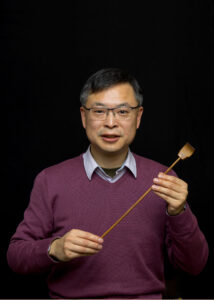
The back scratcher, known in Chinese as yangyang nao, is a simple yet ingenious tool designed to relieve itching in hard-to-reach areas of the back. Traditionally made from materials such as bamboo or wood, it has been used in China for centuries as an everyday household item, symbolising care, comfort, and practical wisdom.
Beyond its practical function, the back scratcher also reflects elements of Chinese craftsmanship and humour. It is commonly known as bu qiu ren, literally meaning “not asking others for help” – a playful reference to its purpose of enabling independence while tending to a basic human need. This alternative name is widely used in daily life and frequently appears in historical records, museum descriptions, and traditional markets.
I took this yangyang nao with me from my parents’ home when preparing for my studies in the UK. While it has spared me many small inconveniences, it has also provided quiet comfort during moments of homesickness, reminding me of home while living thousands of miles away from my family.
Hand-Played Walnuts
Hand-played walnuts, commonly known as walnut balls, are traditionally made from a matched pair of walnuts selected for their similar size and weight. They are rolled within the palm – typically one hand at a time – for leisure as well as for therapeutic purposes, helping to improve hand flexibility, circulation, and coordination. Historically, this practice was exclusively popular among men from rich families, though it is now widely enjoyed by people of all ages.
Through years of handling, the walnuts gradually become smooth, shine-darkened, and well-balanced, embodying ideals of patience, dedication, harmony, and the rewards of sustained effort. In Chinese culture, exercising walnut balls is believed to promote relaxation, focus, and overall well-being, making them both a contemplative aid and a meaningful personal object.
This particular pair was given to me years ago by a Queen’s graduate as a souvenir. Beyond representing cultural heritage, they carry the graduate’s gratitude and good wishes, serving as a tactile reminder of balance, perseverance, and the importance of maintaining health through work. Having experienced ongoing mouse-related hand pain, I have found that regular practice with the walnut balls has significantly reduced my discomfort.