
Treasured Objects
National Museums NI: Bridges to China Collection
Treasured Objects
This archive brings together a selection of objects from the National Museums NI World Cultures Collection, hand selected by participants in the Bridges to China project. Each object reflects a personal connection, memory or point of cultural significance, offering insight into how museum collections can be re-interpreted through lived experience and community knowledge.
Explore the archive below, but also feel free to learn more about Chinese culture through National Museum NI’s Chinese Collection page.
Video also available on Panopto
Co-Production: How We Worked
Bridges to China is a co‑production project in which Chinese community members, museum staff, researchers and media partners shaped the work together from the start. Through object‑handling sessions, personal artefacts, and open conversations, participants applied their lived experience, cultural knowledge and art‑historical understanding to museum collections that had previously been sparsely documented.
Working together helped create new interpretations, showing how community insight can challenge gaps in museum records and offer new ways to understand collections. This approach builds on methods developed previously for the Many Memories, Many Voices and Global Voices, Local Choices projects.
The Objects
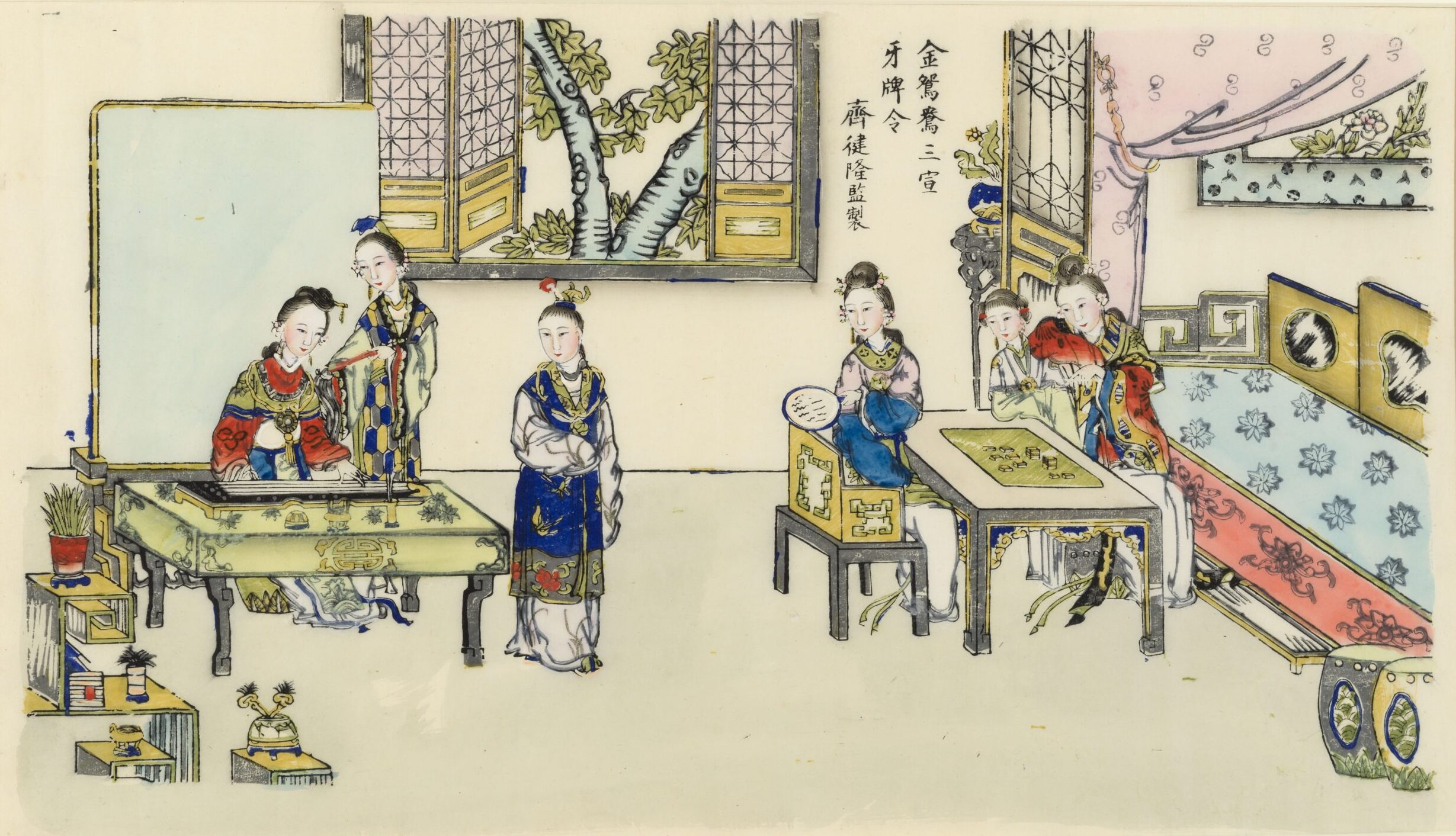
Chinese Ink Painting
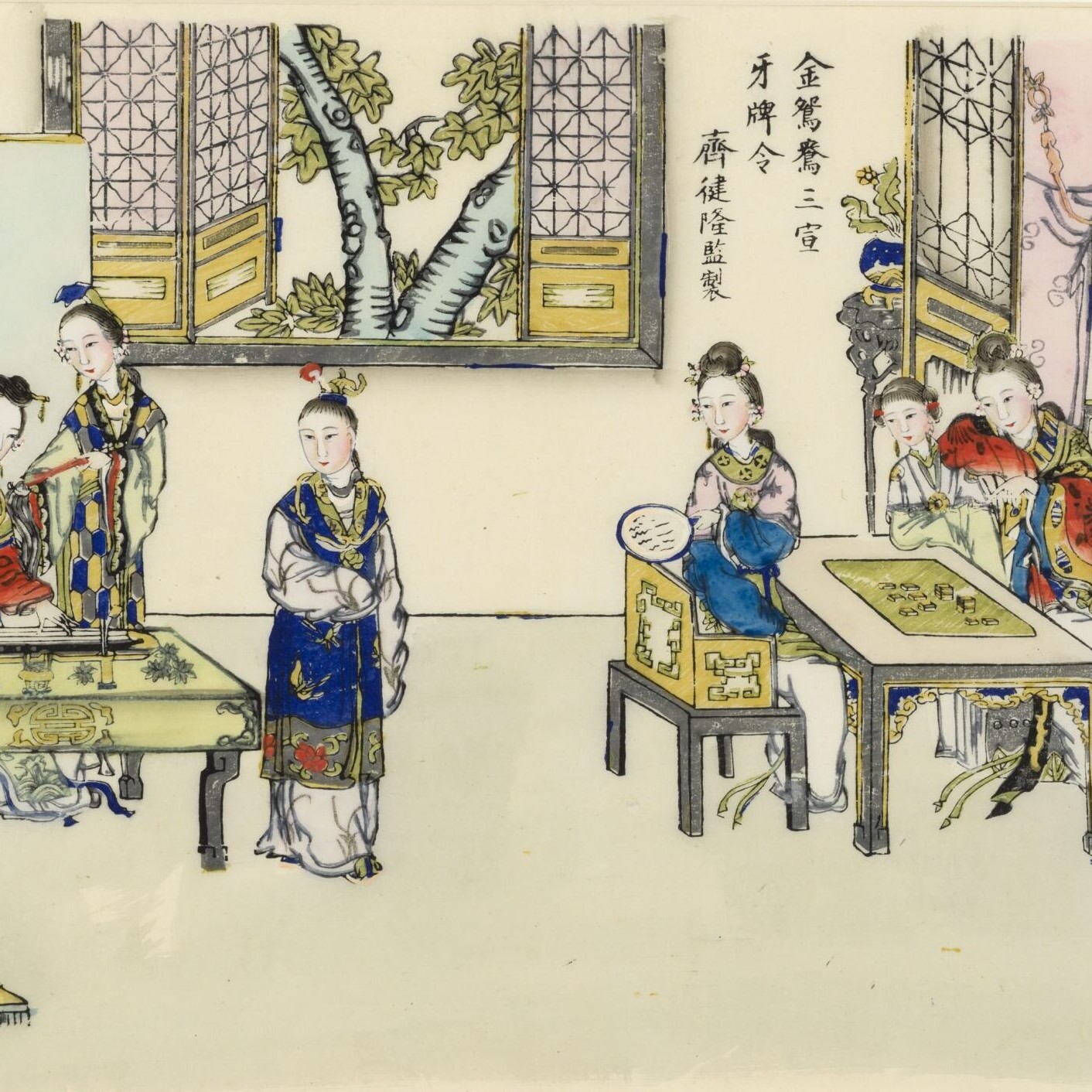
This watercolour painting on rice paper represents a court scene possibly ‘Poker Game Announced by Jin Yuanyang’ in Chapter 40 of ‘Dream of a Red Chamber’, a famous 18th-century Chinese novel authored by Cao Xueqin.
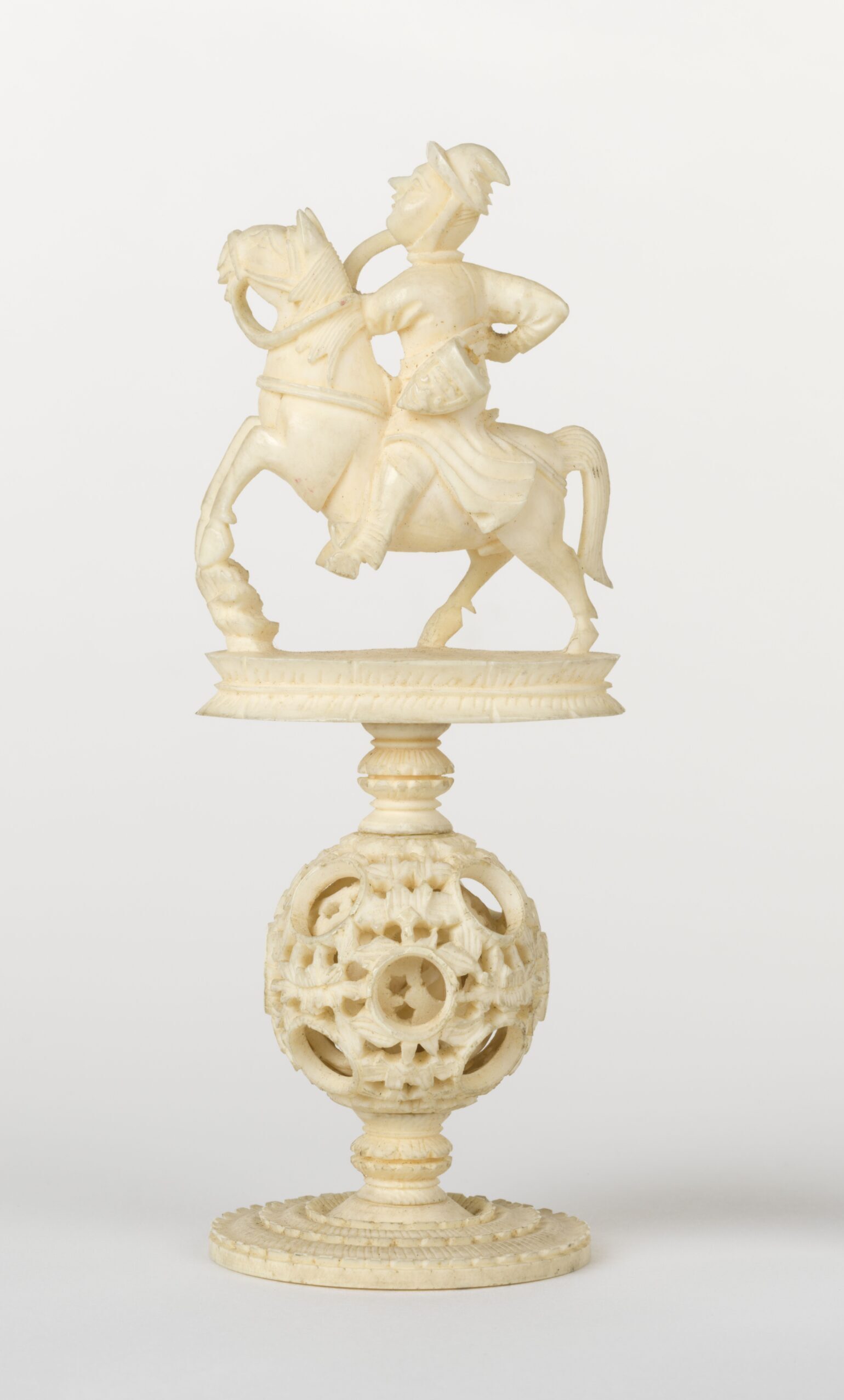
Ivory Chess Pieces
The chess pieces feature an intricately carved bowman / archer on horseback supported on flat circular lotus carved base with globular puzzle ball stem in ivory. The costume on the bowman may be Mongolian.
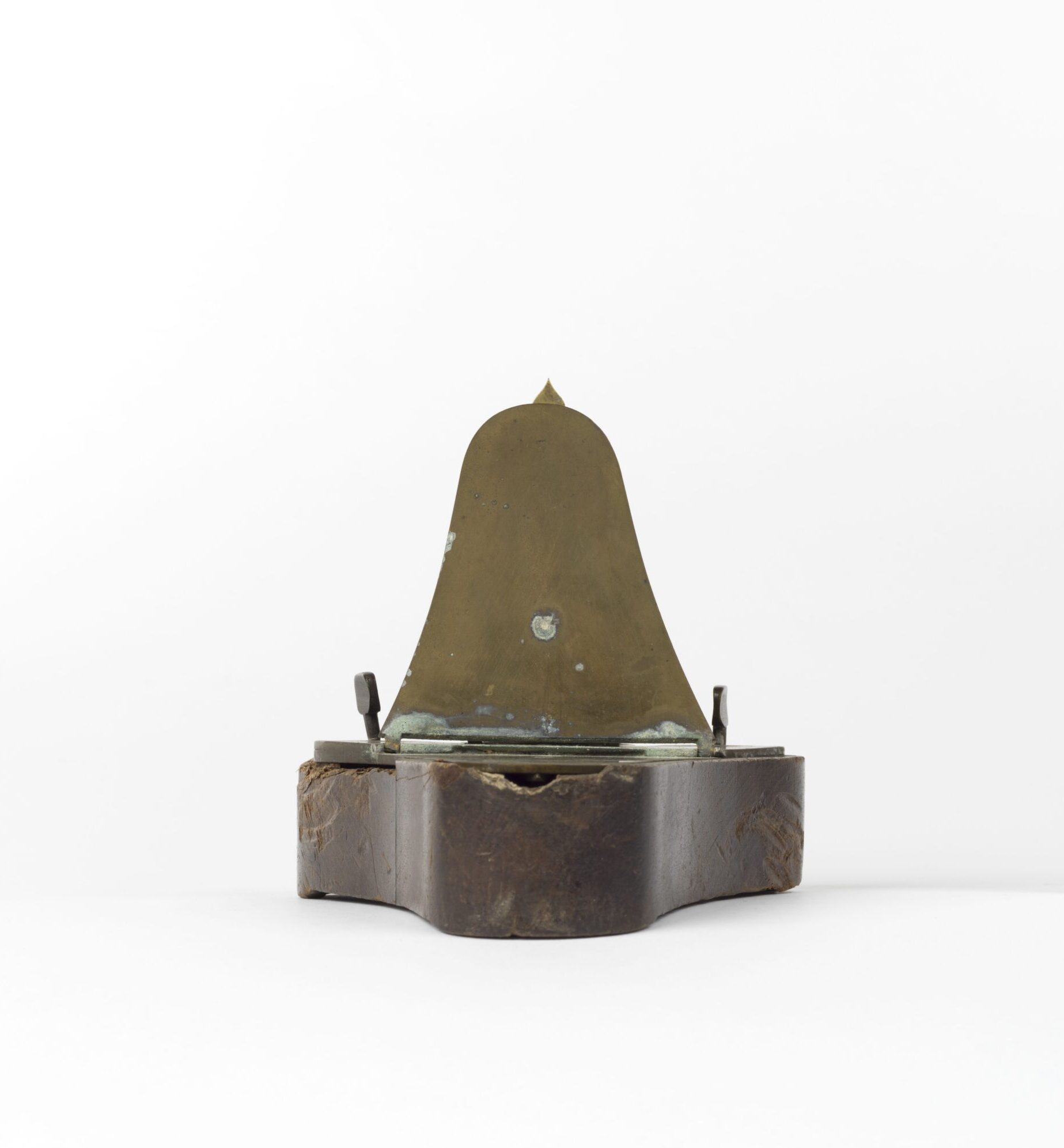
Solar-Lunar Compass
Chinese portable hybrid timekeeping device with sun dial (for reading time by the shadow cast by the sun during the day) and possible water clock (for reading the time made by water drips at night) made of wood and brass with moveable pieces including a gnomon.
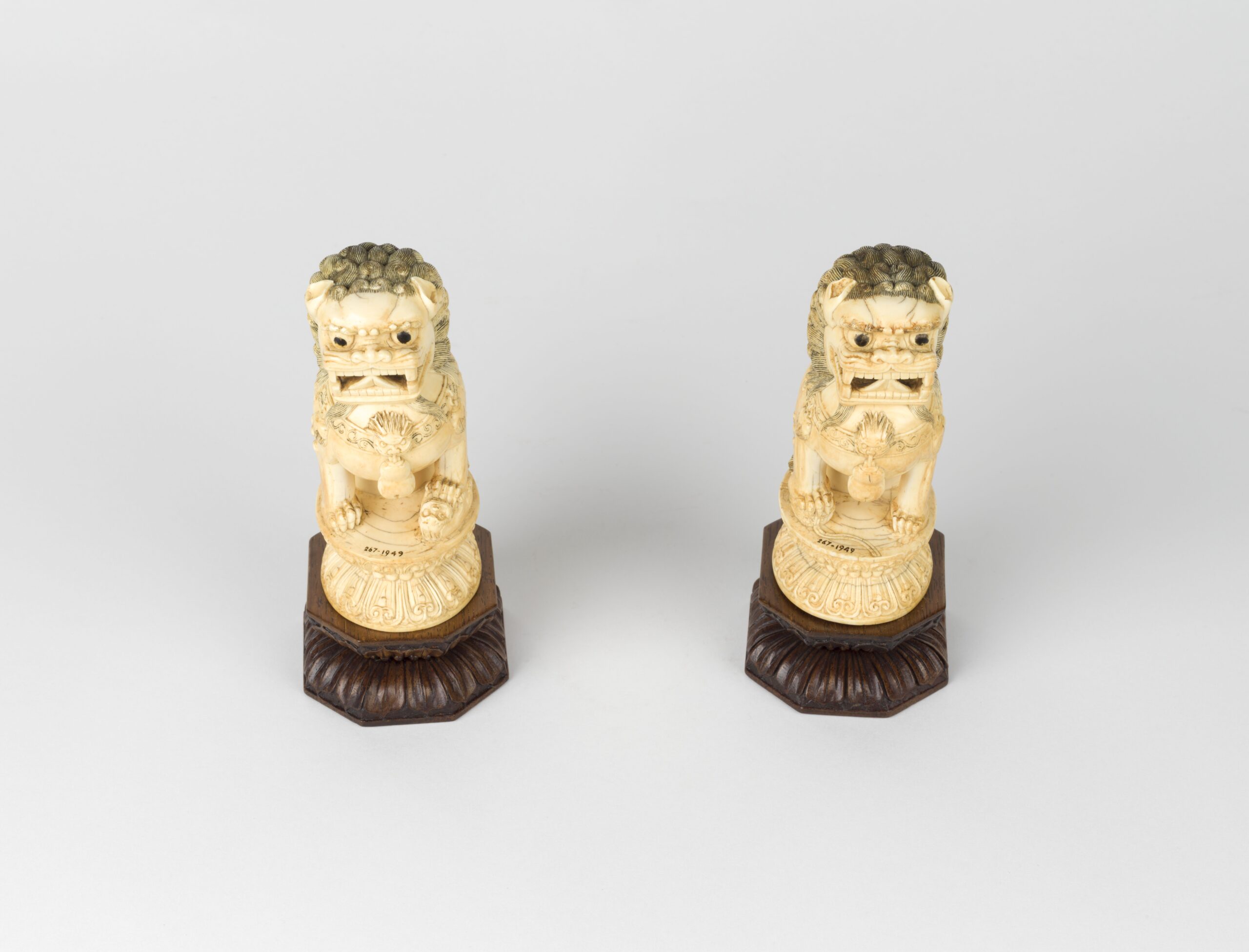
Imperial Stone Guardians
Pair of ivory guardian lions / lions of Fo / lion dogs (shi shi) on wooden lotus bases used to protect from evil spirits. The curly hair on the lions usually depicts a high rank in society.
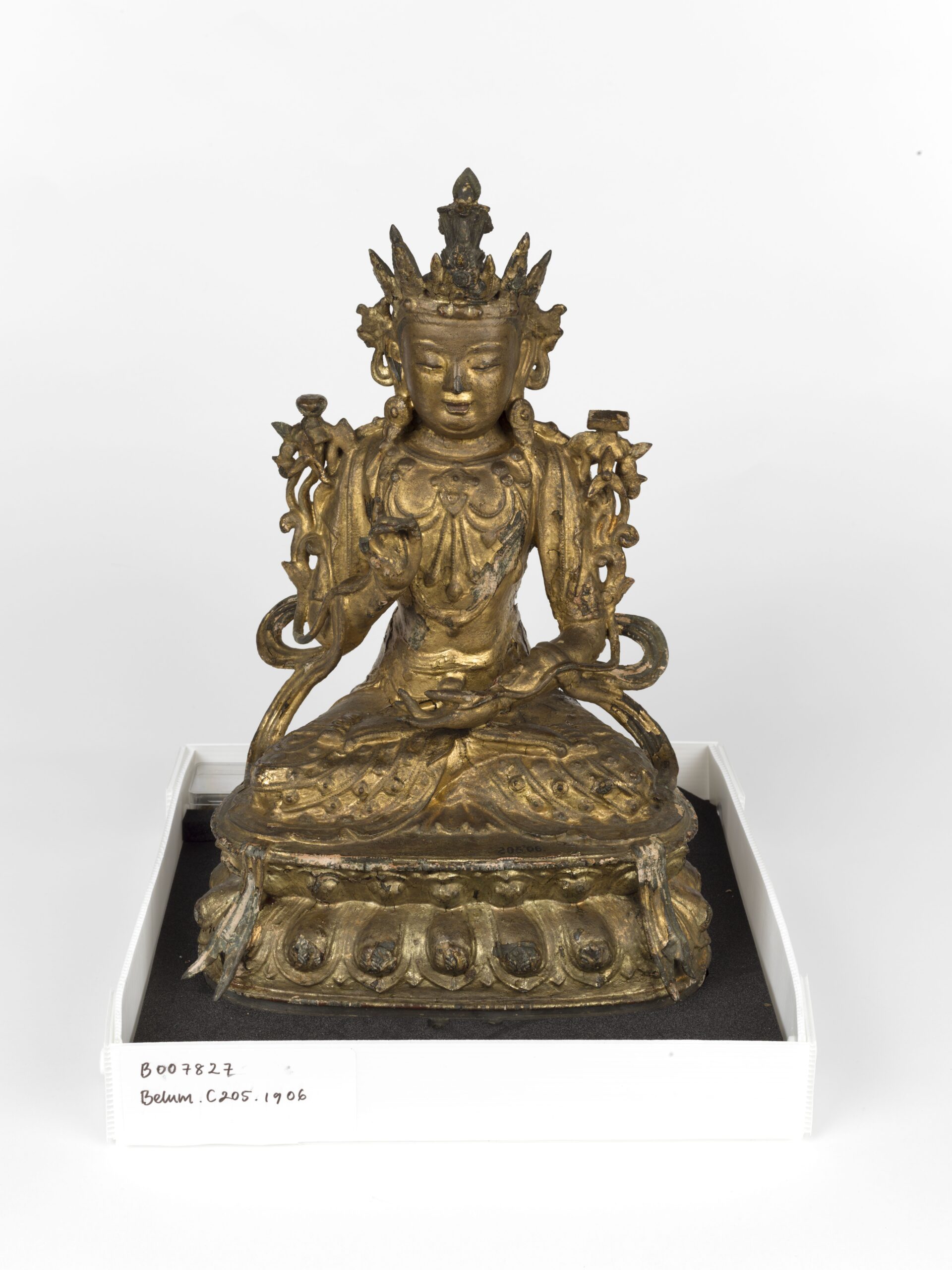
Gilt-Bronze Guanyin
Gilt bronze figure of Guanyin, the Bodhisattva of compassion, seated on double lotus base in padmasana, crossed legged position. The right hand gesture is called karana mudra and is used to ward off evil whilst the left hand holds a pearl, symbolising protection and wisdom.
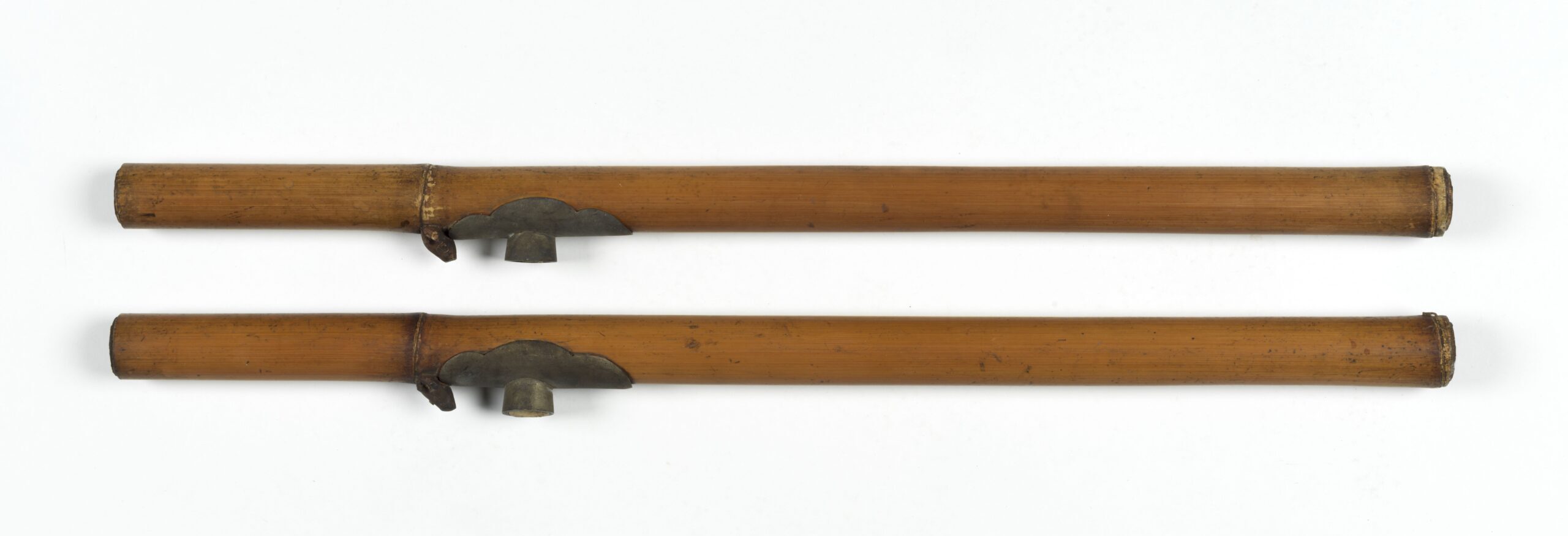
Opium Pipes
Two large opium pipes. The stem is made from wood, probably bamboo and has a metal saddle. One pipe has a Chinese character inscribed under the metal saddle. Opium had long been valued in China as a medicine that could ease pain, assist sleep and reduce stress.
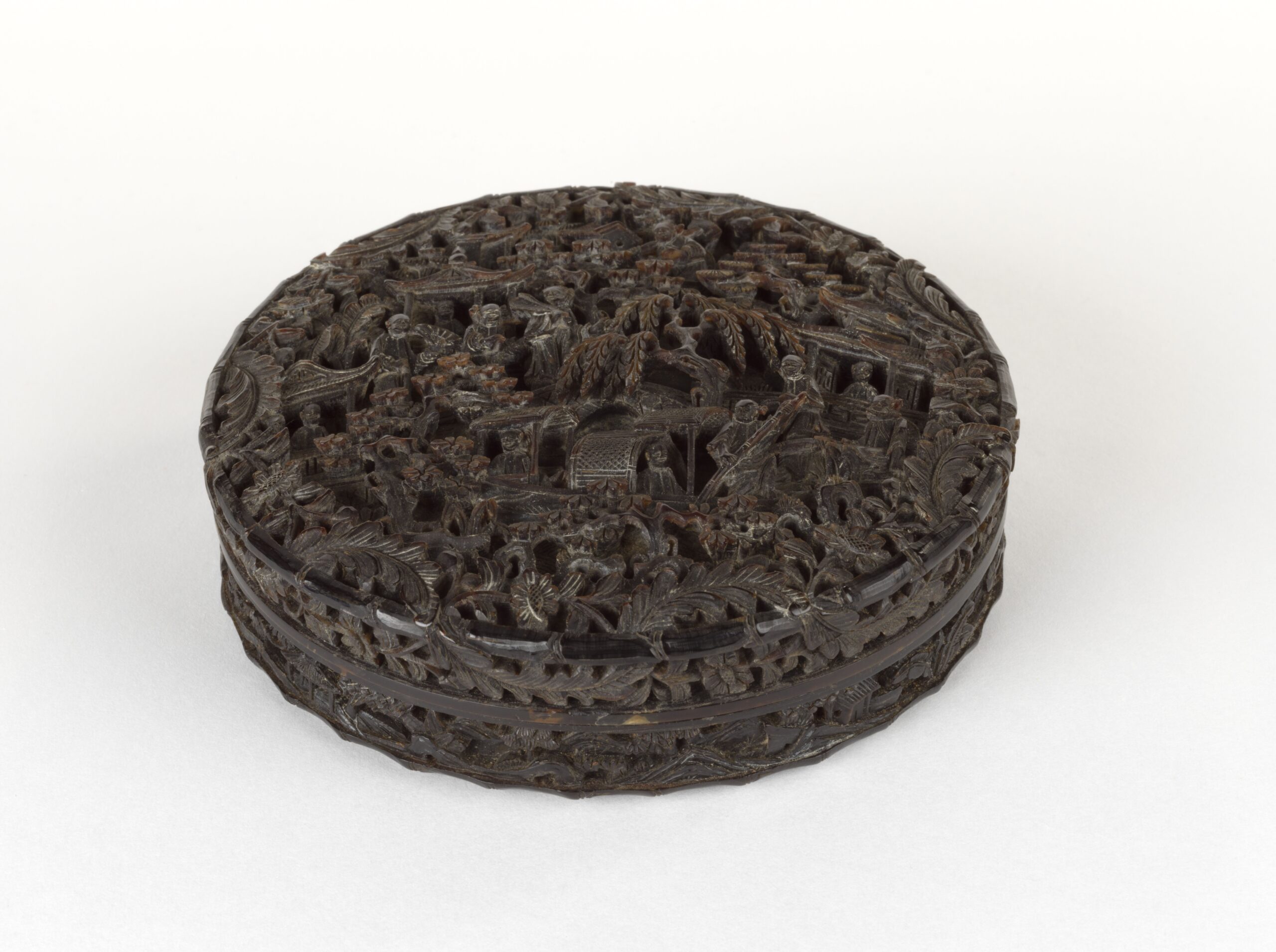
Carved Snuff Box
Tortoise shell snuff box with carved decoration in relief with figures, trees, plant life, boats, pagodas, and islands. The use of narrative landscapes on small luxury objects embodied an educated ideal, where portable objects like snuff boxes became vehicles for aesthetic appreciation and social distinction.
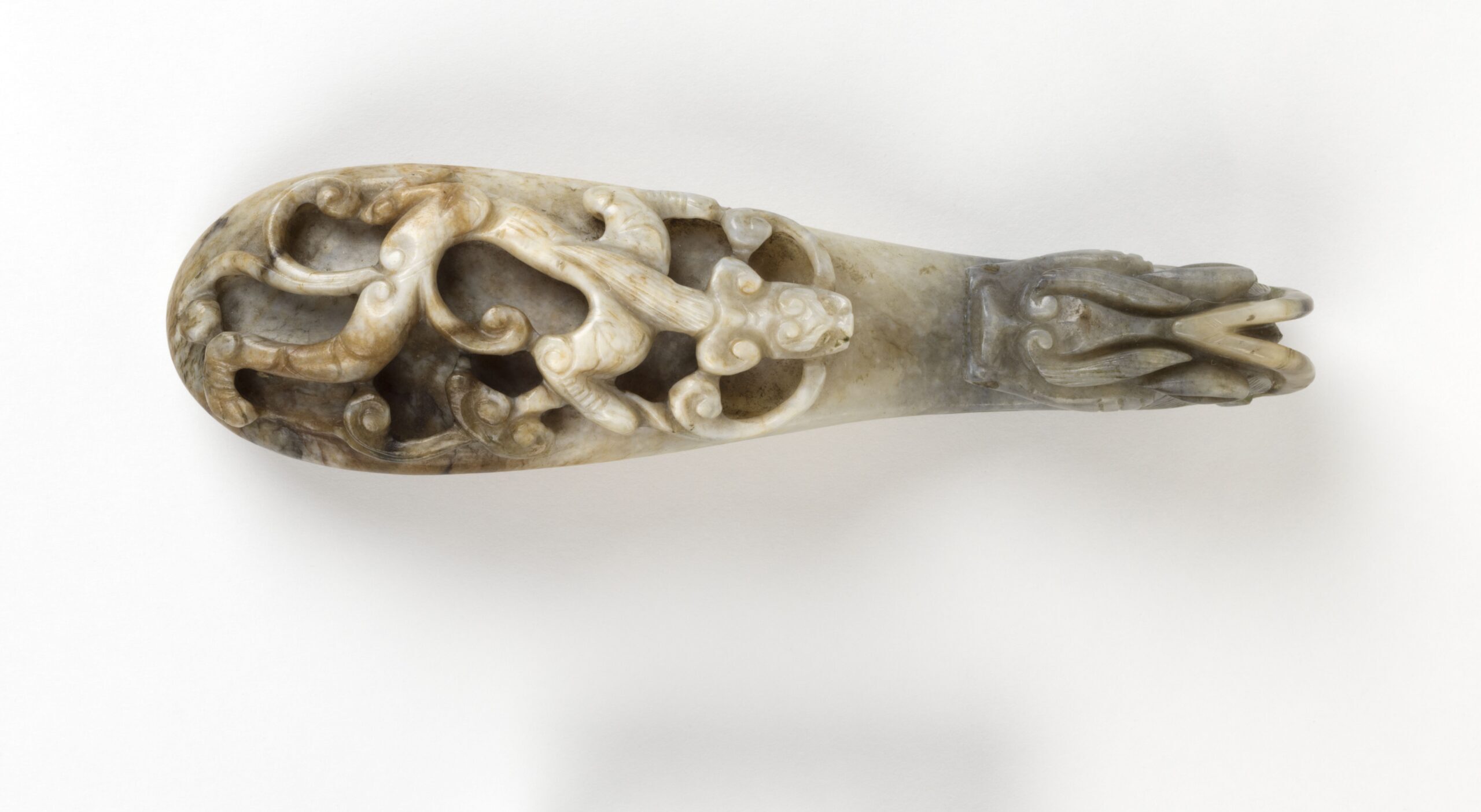
Jade Buckle
Grey jade carved ornament based on archaic belt hook design. It has a hook or protrusion on the back to attach a belt. Dragon motifs on the design. The hooked section depicts a mature dragon (long) and the relief on the shaft a ‘baby’ dragon (chi long), symbolising good fortune.
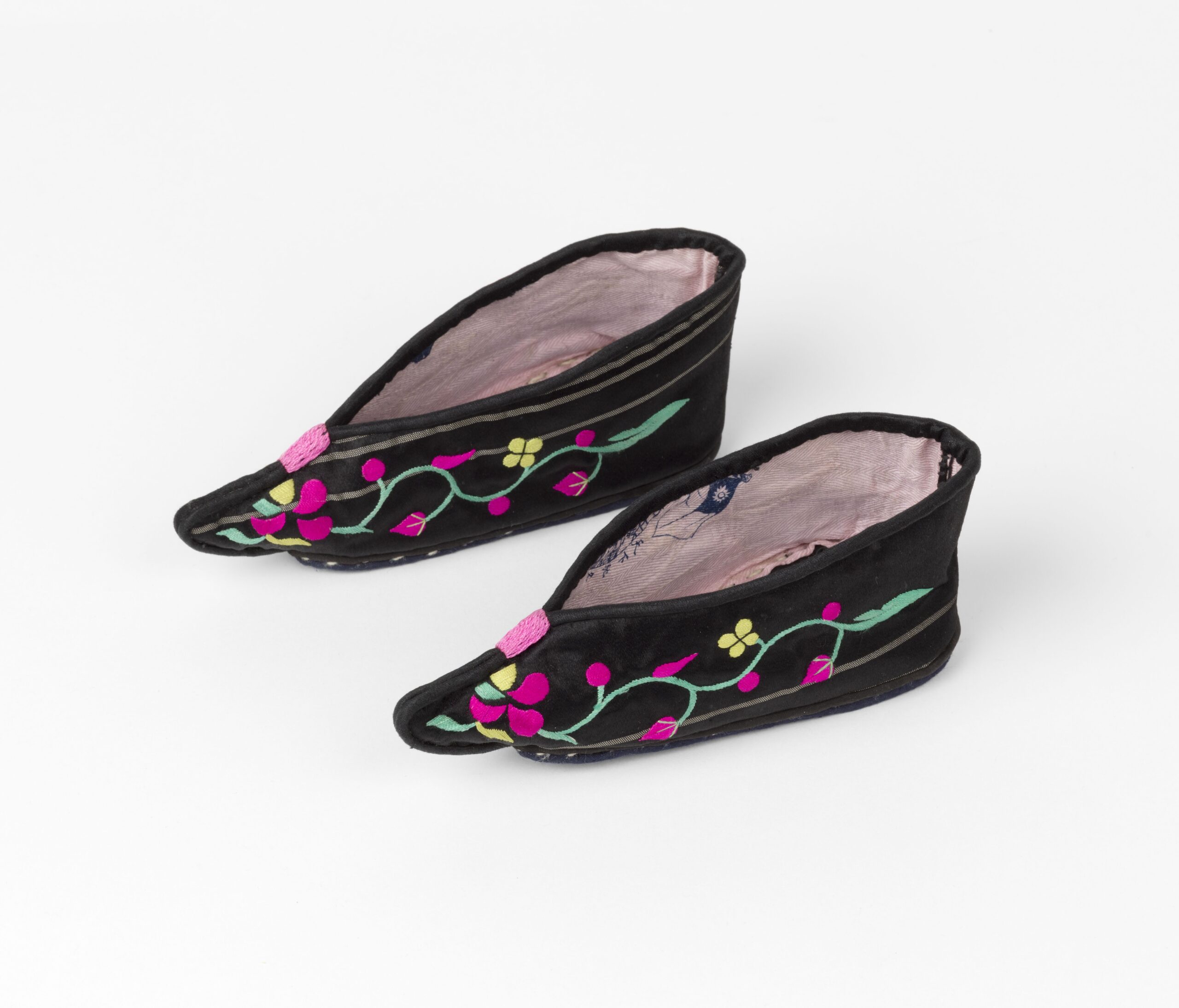
Lotus Shoes
Shoes for bound feet, gong xie (弓鞋). Small pair of black silk shoes for bound feet with bright pink, yellow and green embroidery of plants. The lining of the shoes indicate they were commercially made in the early 20th century, a time when foot binding was beginning to become controversial in China.
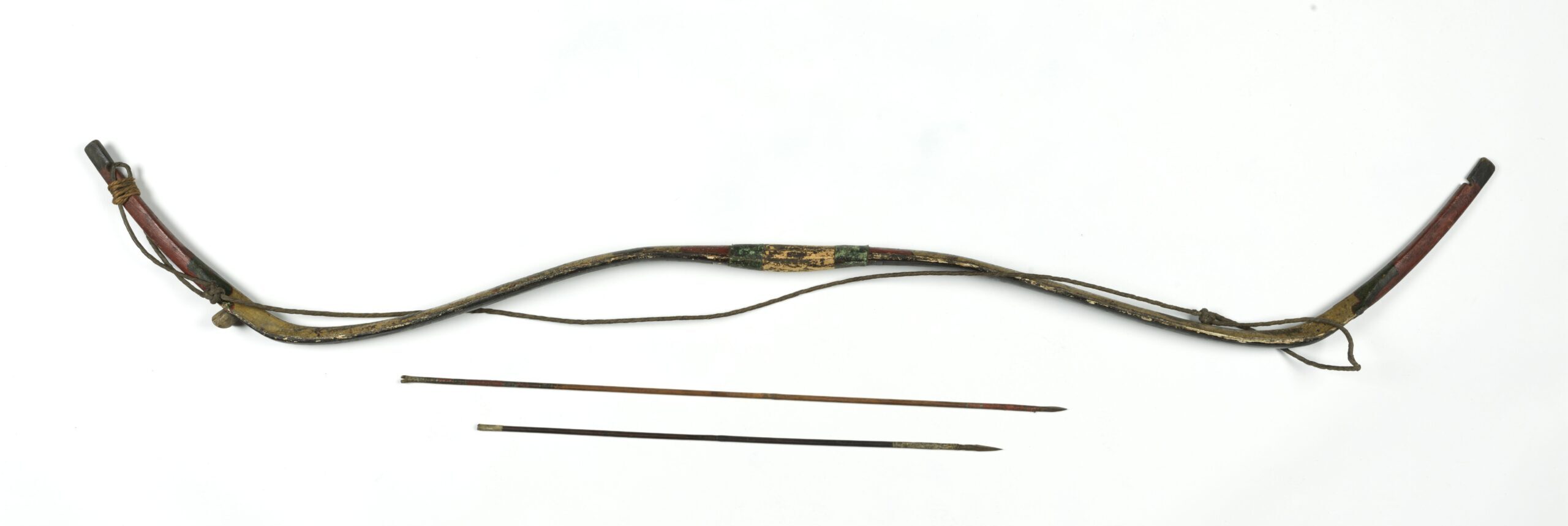
Bow & Arrows
Wooden bow covered in painted leather with a string. Decoration includes plant life as well as a swastika well-being symbol. The bow resembles those used by Manchu banner men and the size makes it quite easily identified as a Manchu bow.
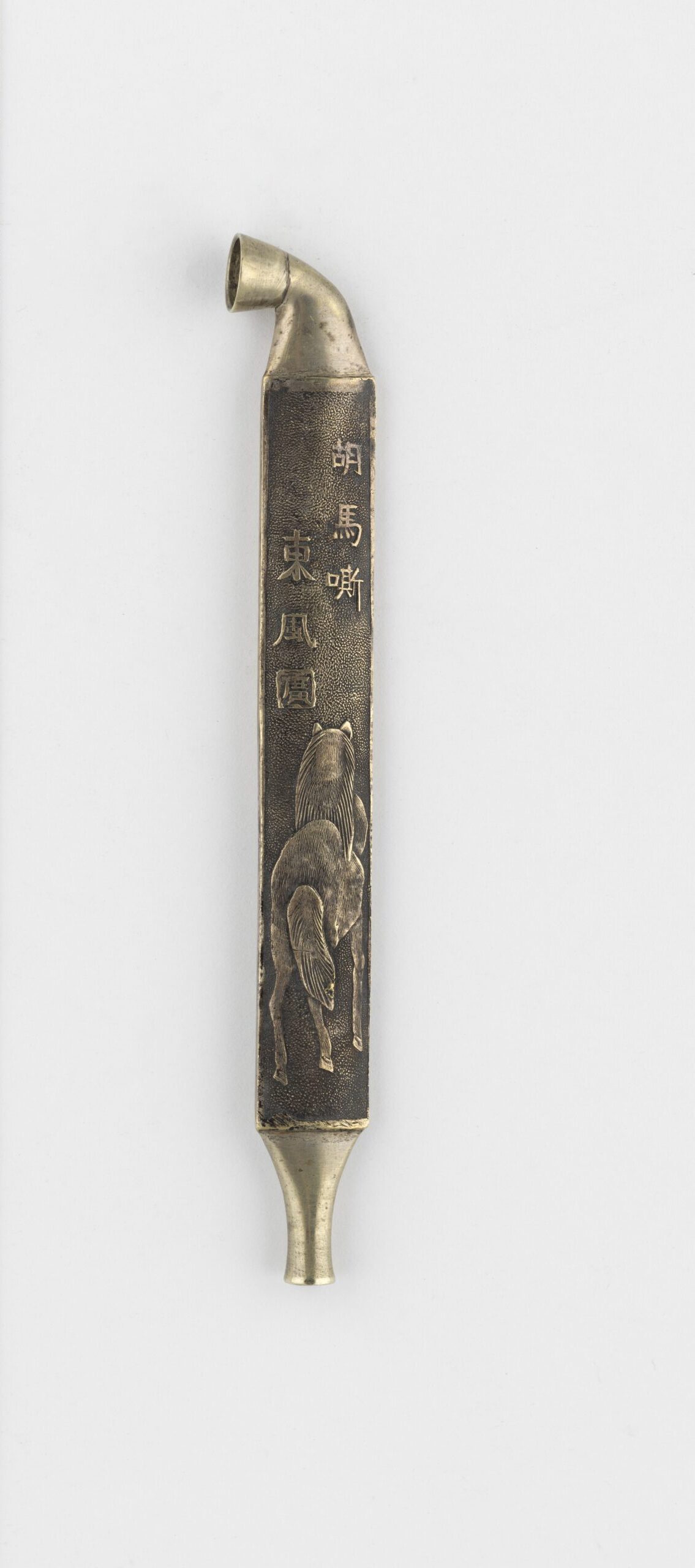
Horsehead Tobacco Pipe
Chinese metal tobacco pipe, referred to as a “horsehead pipe” (馬頭烟嘴/马头烟嘴) due to its distinctive curved end. The Chinese text on the side reads “胡馬嘶東風” (胡马嘶东风), followed by an unidentified sixth character. The text means “The nomadic horse neighs at the east wind."