
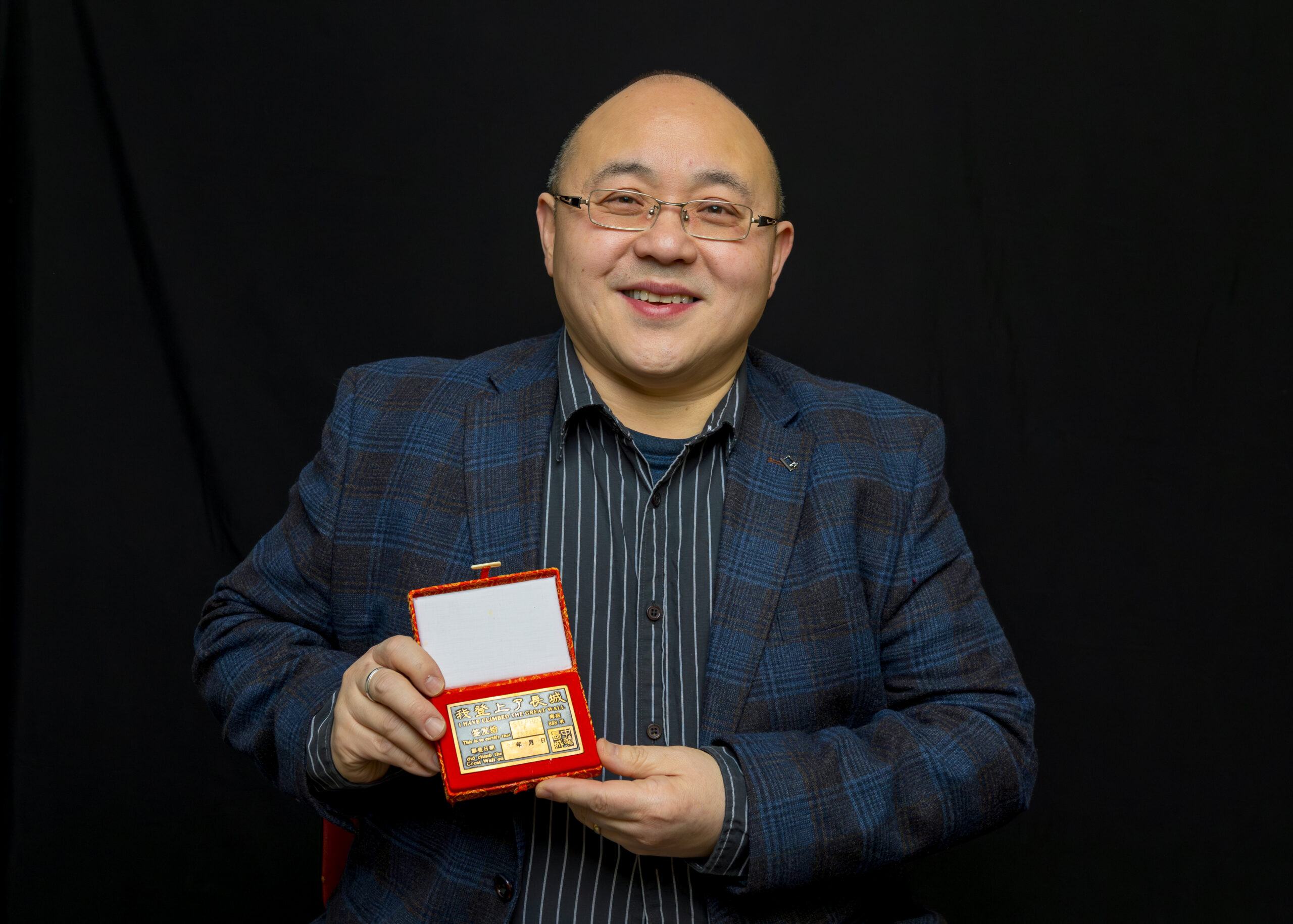
Meet Stephen Lam
Hospitality Businessman
Stephen is 54 years old and was born in Ireland to Hong Kong Chinese parents who immigrated in the 1960s in search of a better life.
Unlike many other participants in the Bridges to China project, Stephen did not grow up in Hong Kong or mainland China. Instead, he experienced what is often described as a “British Born Chinese” upbringing — shaped both by his Chinese heritage at home and by Irish society more broadly.
His understanding of Chinese culture was learned primarily through family teachings from grandparents, parents and relatives. Although he first visited Hong Kong as a toddler, his early memories are limited to photographs and stories. It was not until he returned as a teenager that he began to experience the culture more directly. That visit proved to be eye-opening and helped him connect what he had been taught at home with the lived reality of Chinese society.
Through these experiences, Stephen developed a deeper understanding of what being Chinese meant to him and of the importance of preserving Chinese heritage, history and identity.
He values projects like Bridges to China for creating space where the histories and knowledge of both cultures can be shared and documented. Having participated in the workshops, he reflects positively on the experience and hopes similar initiatives will continue in the future.
Watch Stephen’s Story
Video also available on Panopto
Opium History
Opium Pipe
During my visit to the Ulster Museum, I was particularly drawn to the Opium Pipe that was prominent during the Ching (Qing) dynasty.
The use of opium pipes in China began in the 17th century, where traditionally, the use of the opium pipe was regarded as a precise and ritualistic process that centred on vaporising the drug rather than burning it. The Pipe itself is called Yen Tsiang or ‘smoking pistol’, which has a long stem structure commonly made of bamboo, similar to the artefact presented in the museum. However, other opium pipes were made of more luxurious materials such as ivory or metal, and could feature ornate designs. Other components to this include a detachable ceramic bowl – Yen Low, a lamp – Yen Tene; which is a small vegetable oil fuelled lamp designed to provide a specific amount of heat needed to vaporise the opium, as well as a long thin needle – Yen Hauck, used to prepare the opium.
For a period of time the use of opium became a complex cultural and social practice, signifying a mark of privilege among wealthy Chinese merchants and officials in the 18th century. However, this began to change when Britain was experiencing a problem trading with China where desirable Chinese goods such as silk, porcelain and tea were highly sought after. Chinese merchants, however, did not want to buy British goods in return. As a result, Britain had to pay silver for the goods that it was importing, eventually risking a silver shortage.
British Opium Trade & the First Opium War
To offset this trade imbalance, Britain resulted to trading opium which they began to grow in its Indian colonies and exporting it to China. This caused opium to spread through the population leading to a multitude of problems such as a loss in silver which was used to pay for the imported opium and by the early 19th century more and more Chinese were smoking British opium as a recreational drug. However, what started as recreation soon became a punishing addiction for many and once addicted, people would often do just about anything to continue to get access to the drug. This lead to the Chinese government banning both the production and the importation of opium. Later, it went a step further by outlawing the smoking of opium and imposing a punishment to anyone who broke this law.
In response to this, the British East Indian Company was illegally importing massive amounts of opium into China and in less than 30 years – from 1810 to 1838 – opium imports in china increased from 4,500 chests to 40 thousand.
This resulted in China experiencing social and economic devastation, ultimately leading China to seize and destroy opium. The opium trade was attacked on several levels, including arresting over 1,600 Chinese dealers, as well as destroying tens of thousands of opium pipes. China also demanded that foreign companies needed to turn over their supplies of opium in exchange for tea, which the British refused to do, leading to all foreign trade being stopped and quarantined.
This led to the outbreak of the first Opium war spanning from 1839 to 1842 where the British warships and merchantmen bombarded and overpowered the Chinese troops, resulting in Chinese officials forcefully signing the Treaty of Nanking.
Treaty of Nanking & Historical Impact
This treaty required China to pay compensation for the loss to the British government and its merchants because of the destroyed opium, surrendering the island of Hong Kong to Britain as a colony as well as providing Britain with 5 new treaty ports where British merchants and their families could reside. For China, the Treaty of Nanking provided no benefits.
The impact of the first opium war, from a historical perspective marked the beginning of the end of late Imperial China, that had lasted for thousands of years. The war also marked what is now referred to in China as the “century of Humiliation” where from that point, the Ching (Qing) dynasties authority was severely weakened, allowing foreign powers to gain significant control over Chinese trade and territory.