

Rebecca Zhang
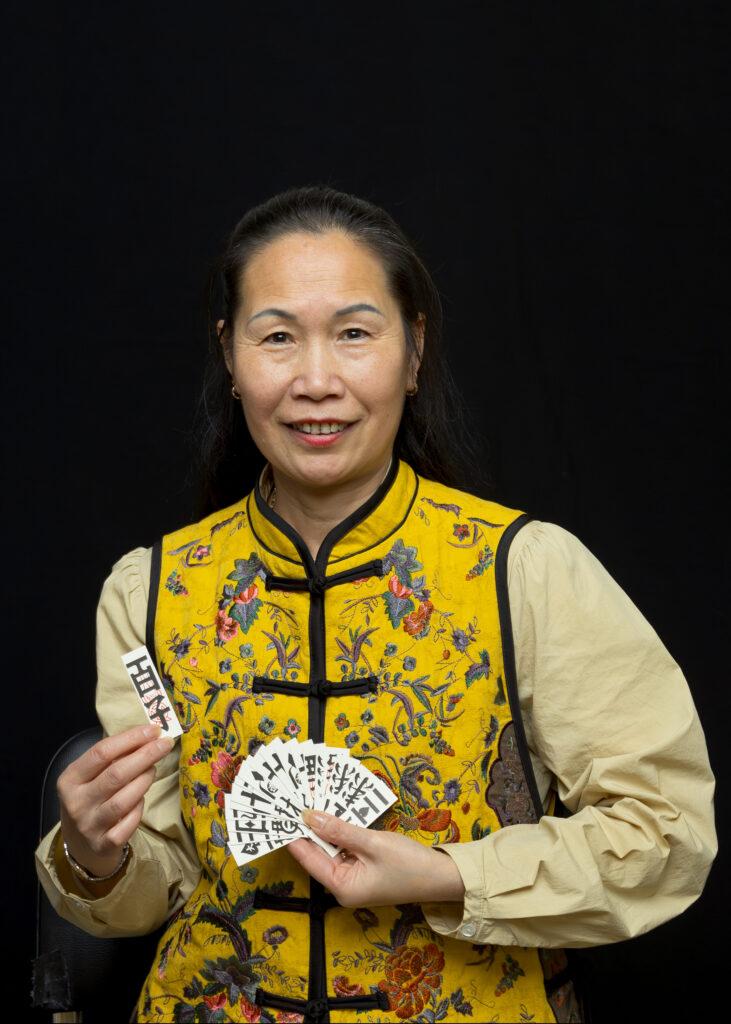
Meet Rebecca (Fenglian) Zhang
Fenglian Zhang, originally from Guangzhou, China, has been living in Northern Ireland for the past 19 years. Since retiring, she has been actively involved in community service and currently serves as Vice-Chairperson of the Oi Kwan Women’s Group. Her main focus is volunteering and supporting the Chinese community in Belfast.
Through the project, she shared the story of traditional Hakka playing cards. Although simple in form, these cards bring daily joy and companionship to many elderly members of the Chinese community in Northern Ireland, demonstrating how small objects can carry deep social and cultural meaning.
“Since moving to Hong Ling Garden, a social housing community for elderly Chinese residents, four years ago, I have met many Chinese people living there. Most of them are retired, and retirement is not always easy. Many of us, including myself, do not speak English well. After losing the ability to work and the sense of identity that comes with employment, life can feel even more challenging.
As a result, many residents play Hakka card games for entertainment. Four or five people gather each day to play, chatting and gossiping as a way to pass the time. Sometimes they even argue over who has won or lost. When I watch from the side, I often feel helpless, and sometimes a little saddened. What I see is only a small glimpse of the loneliness and neglect that many elderly people face.”
Hakka Playing Cards
Hakka cards, also known as Six Tiger Cards or Leaf Cards, are a traditional Chinese card game originating from the Ming Dynasty. The gameplay combines elements of both mahjong and playing cards.
The deck is characterised by the suits “Wan” (characters), “So” (bamboo) and “Tong” (circles), along with special cards similar to “Zhong”, “Fa”, “Bai” and “Mo Tou”. A standard set usually consists of 120 cards. The designs are generally simple, sometimes featuring printed patterns.
How the Game Is Played
-
Each player is dealt 15 cards, while the dealer receives 16.
-
The objective is to form combinations similar to those in mahjong, such as pairs and sets.
-
Players may “touch” cards but cannot discard immediately after doing so.
-
Priority is given to the player closest to completing a winning hand.
-
Winning (Hu) can be achieved either by self-draw or by claiming another player’s discard.
-
A minimum scoring requirement, often six points, is typically needed to declare a winning hand.
Cultural Significance
Hakka cards reflect the simple, communal lifestyle of Hakka people and serve as a popular form of social entertainment in their spare time. The game is lively and engaging, and it remains commonly played in Hakka villages and public parks.

Yushan Tang
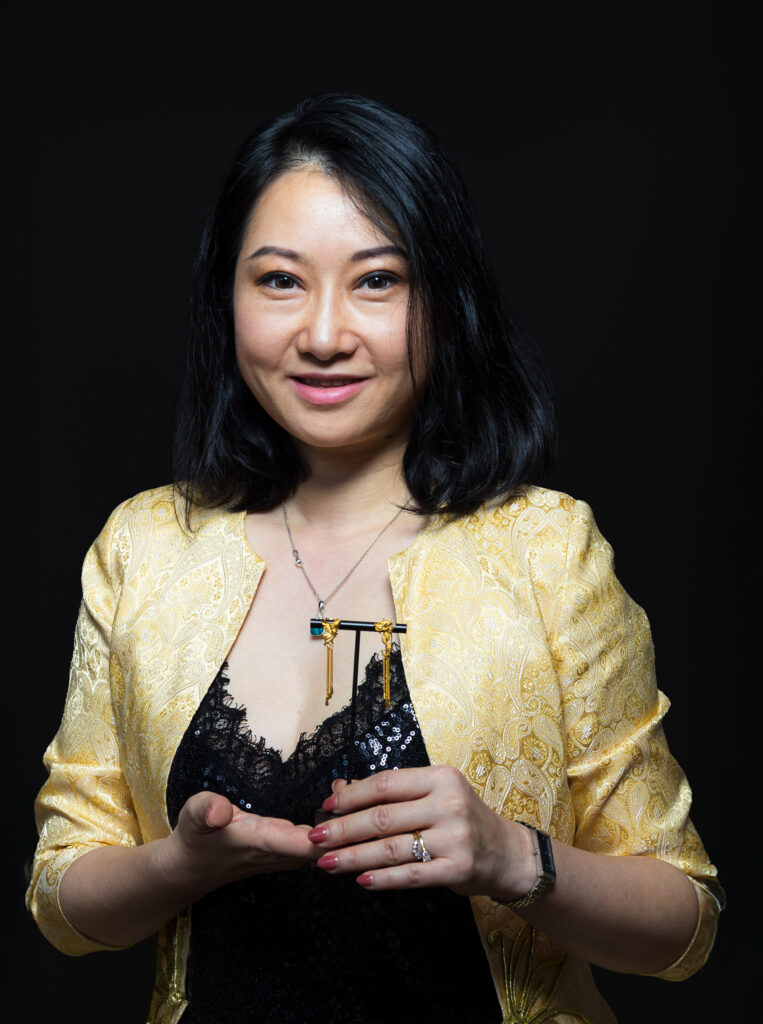
Meet Yushan (Connie) Tang
Researcher
Yushan Tang moved from China to Northern Ireland in 2009. As a business founder and psychology researcher, living between cultures has shaped her deep interest in how memory, identity and objects are connected through lived experience.
Taking part in Bridges to China has given her the opportunity to reflect on her own journey while reconnecting with shared cultural roots. She values how heritage programmes like this contribute to a more open, inclusive and vibrant cultural landscape in Northern Ireland.
Watch Connie's Story
https://youtu.be/UZEHG2_Ov6c
Video also available on Panopto
Lotus Shoes
Bow Shoes (弓鞋): Gender, Craft, and the Bound Female Body in Chinese History
Introduction: What Are Bow Shoes?
Bow shoes, also widely known as lotus shoes, are small, delicately made shoes designed for women whose feet had been bound through the traditional Chinese practice of foot binding (chánzú 缠足). These shoes are closely associated with the ideal of the “three-inch golden lotus” (三寸金莲), a term that came to represent the culturally constructed ideal of feminine beauty in late imperial China.
Although visually striking for their size and ornamentation, bow shoes are inseparable from the bodily discipline that produced them. They functioned not merely as footwear, but as material evidence of gendered norms, social hierarchy, and the regulation of women’s mobility over nearly a millennium of Chinese history.
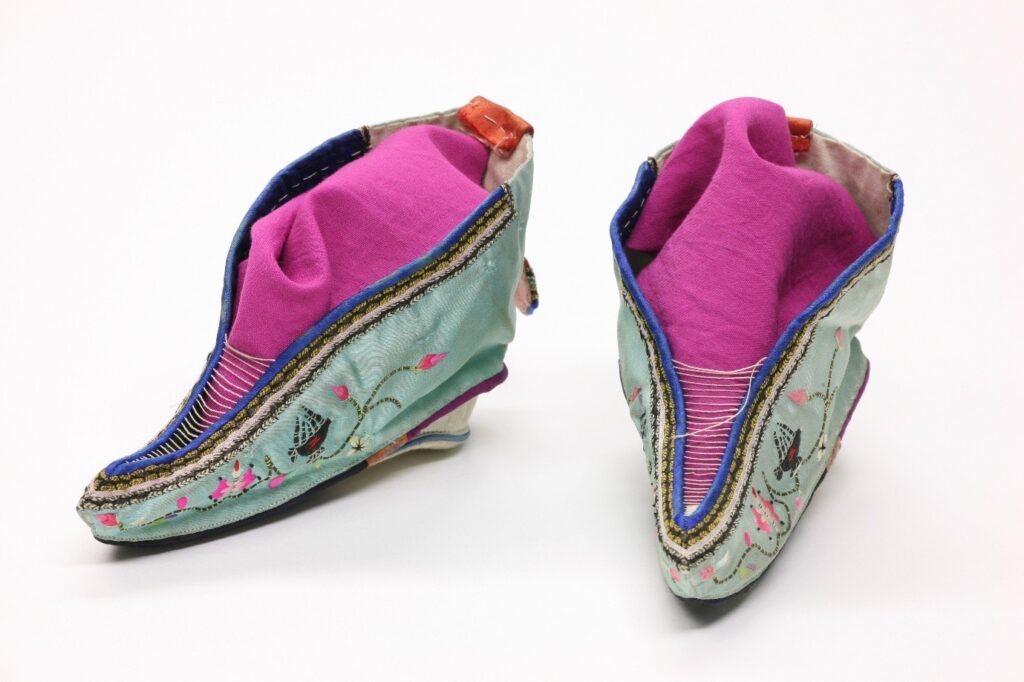
Image 1: Pair of bow / lotus shoes
Image credit: Wikimedia Commons
Source: Wikipedia, Lotus shoes
Historical Origins of Foot Binding and Lotus Shoes
Foot binding is generally understood to have originated during the Five Dynasties and Ten Kingdoms period (10th century) and became widespread during the Song dynasty (960–1279). Early literary accounts describe court dancers performing on bound feet, contributing to the association between small feet, elegance, and elite femininity.
By the Ming (1368–1644) and Qing (1644–1912) dynasties, foot binding had spread far beyond court culture. While it initially marked elite status, the practice later extended across social classes and regions, though with significant variation. Correspondingly, lotus shoes became a common feature of women’s material culture, adapted to regional tastes, economic conditions, and available craftsmanship.
Importantly, the most extreme form of foot binding—the tightly arched “three-inch lotus”—appears to have developed relatively late, around the 16th century, suggesting that both the practice and the shoes evolved over time rather than remaining static traditions.
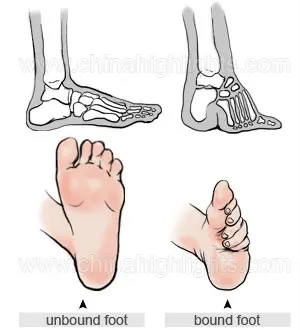
Image 2: Chinese foot binding
Source: China Highlights, “8 FAQs about Foot Binding”
Craftsmanship and Materials: Reading the Shoe as an Object
Lotus shoes were typically handmade, often by women themselves or by female relatives. Traditional examples feature hand embroidery using silk threads, with motifs symbolising fertility, longevity, or marital harmony.
However, some surviving bow shoes display a hybrid construction: machine-embroidered uppers combined with hand-stitched soles. The presence of industrial workshop stamps on the inner lining of certain shoes indicates production during a transitional historical moment—likely the late Qing or early Republican period, when early industrialisation and mechanised workshops began to coexist with domestic handcraft traditions.
Such objects reflect not only personal use but also broader transformations in Chinese society, including the influence of the first Industrial Revolution and the emergence of early commercial enterprises.
Social Meaning: Gender, Status, and the Female Body
In late imperial China, bound feet were widely regarded as markers of beauty, refinement, and moral respectability. Small feet were believed to enhance a woman’s desirability and marriage prospects, and in some regions, foot binding functioned as a form of social capital for families seeking upward mobility.
At the same time, foot binding severely restricted women’s physical mobility and reinforced their confinement to domestic space. Bow shoes therefore embodied a paradox: they were admired for their aesthetic delicacy while simultaneously symbolising physical pain, long-term disability, and gendered control.
Scholars have debated whether foot binding should be understood primarily as male oppression, a Confucian moral discipline, or a practice maintained and transmitted by women themselves. Contemporary historical research emphasises that mothers often made pragmatic decisions to bind their daughters’ feet in response to economic realities and social expectations, particularly in households reliant on indoor textile labour.
Decline and Abolition
From the mid-19th century, foot binding increasingly came under criticism. Reform-minded intellectuals, Christian missionaries, women’s organisations, and revolutionary movements such as the Taiping Rebellion all contributed to growing opposition. Anti-foot binding societies emerged in urban centres, advocating for “natural feet” (tiānzú 天足).
In 1912, following the fall of the Qing dynasty, the new Republican government officially outlawed foot binding. Although enforcement was uneven—particularly in rural areas—the practice declined rapidly over the following decades. By the mid-20th century, foot binding had virtually disappeared, and the last lotus shoe factory in China closed in 1999.
Interpreting Bow Shoes Today
Today, bow shoes are preserved in museum collections as powerful historical artefacts. They invite reflection on how beauty standards, gender norms, and bodily discipline were culturally constructed and sustained over centuries.
For contemporary audiences, these shoes do not speak with a single voice. They evoke pain and restriction, but also skill, endurance, and the lived experiences of women whose stories were rarely recorded in written history. As objects, bow shoes allow us to move beyond abstract narratives and engage directly with the material realities of women’s lives in pre-modern China.
Sources
This article has been written using a synthesis of established historical and scholarly resources to support public understanding of bow shoes (弓鞋), also known as lotus shoes, and the wider practice of foot binding in China.
The principal reference sources include:
- Wikipedia, “Foot binding”
Used for historical overview, chronology, regional variation, social interpretation, and summaries of academic scholarship on foot binding and lotus shoes. - China Highlights, “8 FAQs about Foot Binding”
Used for general explanations, terminology (including gong xie 弓鞋 / arch shoes), and accessible descriptions intended for a public audience.
These sources themselves draw on a wide body of academic research by historians and scholars of Chinese women’s history, including Dorothy Ko, John R. Shepherd, Laurel Bossen, and Hill Gates.
Sharon Fan
Meet Sharon Fan
Dentist
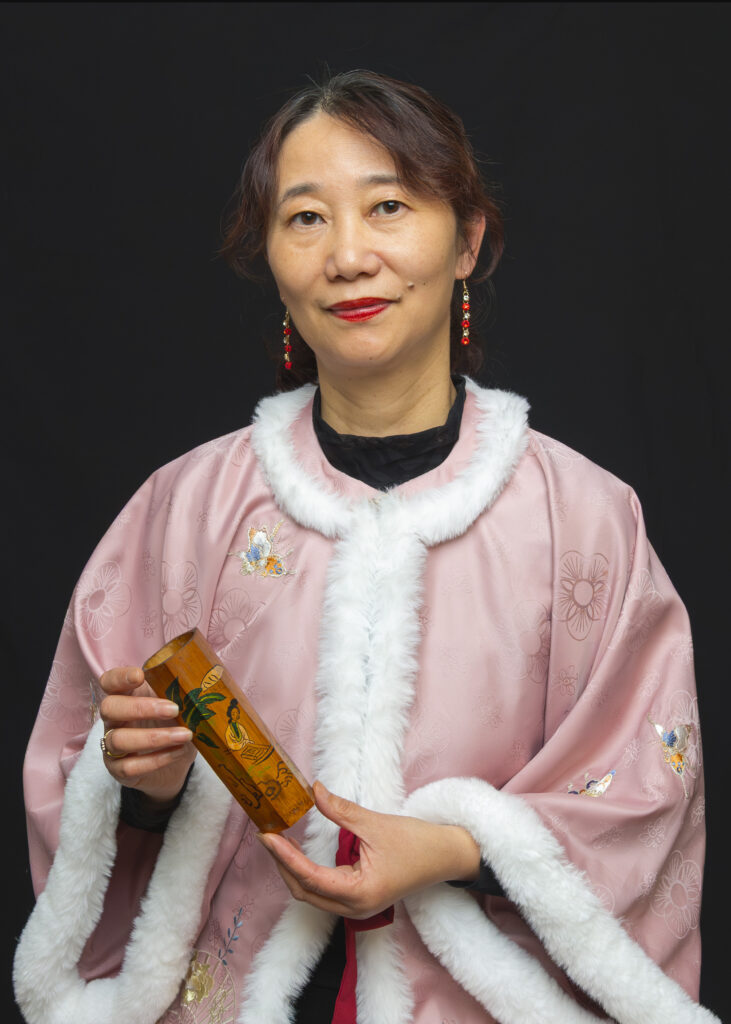
Sharon is a dentist from the beautiful city of Hangzhou. Since childhood, she has been immersed in the cultural atmosphere of this historic city and deeply influenced by her father. She has always had a great fondness for Chinese culture. Sharon enjoys Chinese calligraphy and painting, as well as singing. She used to be a member of Xizi women's choir. Now she joins in the Queen's wellbeing choir.
Watch Sharon's Story
https://youtu.be/Hmj8d3btHlk
Video also available on Panopto
Dream of the Red Chamber
Dream of the Red Chamber (“红楼梦”) is one of the four great classic Chinese novels. The painting I chose to discuss is inspired by a scene involving drinking games, which are frequently depicted in the novel. In particular, the “Poker Game Managed by Jin Xunyang” in Chapter 40 left a deep impression on me.
The rule of this game is that, based on the dice thrown by the participant, corresponding poetry verses, idioms or common sayings must be recited. The content recited must match the face of the dice. This game tests a person’s literary knowledge and quick thinking.
I chose this item because my dad really liked this book. When he was young, he enjoyed DIY and made many brush pots out of bamboo. He painted characters from Dream of the Red Chamber onto them. This item reminds me of many happy memories from when we were young.
I also practised Chinese calligraphy and painting. I feel that culture is something that needs to be passed down. It is our root and the emotional bond that connects us with our predecessors.
Stephen Lam
Meet Stephen Lam
Hospitality Businessman
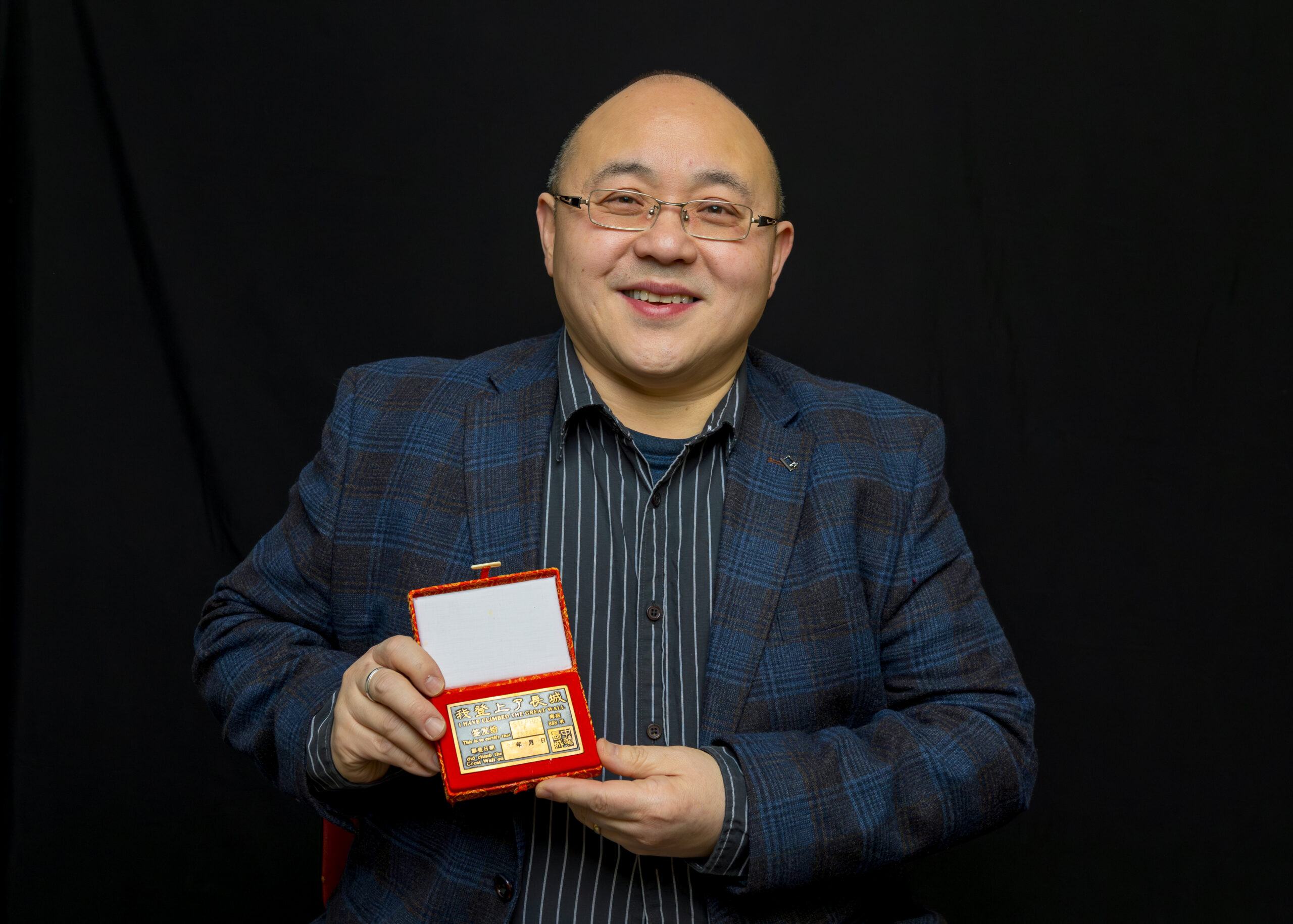
Stephen is 54 years old and was born in Ireland to Hong Kong Chinese parents who immigrated in the 1960s in search of a better life.
Unlike many other participants in the Bridges to China project, Stephen did not grow up in Hong Kong or mainland China. Instead, he experienced what is often described as a “British Born Chinese” upbringing — shaped both by his Chinese heritage at home and by Irish society more broadly.
His understanding of Chinese culture was learned primarily through family teachings from grandparents, parents and relatives. Although he first visited Hong Kong as a toddler, his early memories are limited to photographs and stories. It was not until he returned as a teenager that he began to experience the culture more directly. That visit proved to be eye-opening and helped him connect what he had been taught at home with the lived reality of Chinese society.
Through these experiences, Stephen developed a deeper understanding of what being Chinese meant to him and of the importance of preserving Chinese heritage, history and identity.
He values projects like Bridges to China for creating space where the histories and knowledge of both cultures can be shared and documented. Having participated in the workshops, he reflects positively on the experience and hopes similar initiatives will continue in the future.
Watch Stephen's Story
https://youtu.be/yMmb-G2rdYQ
Video also available on Panopto
Opium History
Opium Pipe
During my visit to the Ulster Museum, I was particularly drawn to the Opium Pipe that was prominent during the Ching (Qing) dynasty.
The use of opium pipes in China began in the 17th century, where traditionally, the use of the opium pipe was regarded as a precise and ritualistic process that centred on vaporising the drug rather than burning it. The Pipe itself is called Yen Tsiang or ‘smoking pistol’, which has a long stem structure commonly made of bamboo, similar to the artefact presented in the museum. However, other opium pipes were made of more luxurious materials such as ivory or metal, and could feature ornate designs. Other components to this include a detachable ceramic bowl – Yen Low, a lamp – Yen Tene; which is a small vegetable oil fuelled lamp designed to provide a specific amount of heat needed to vaporise the opium, as well as a long thin needle – Yen Hauck, used to prepare the opium.
For a period of time the use of opium became a complex cultural and social practice, signifying a mark of privilege among wealthy Chinese merchants and officials in the 18th century. However, this began to change when Britain was experiencing a problem trading with China where desirable Chinese goods such as silk, porcelain and tea were highly sought after. Chinese merchants, however, did not want to buy British goods in return. As a result, Britain had to pay silver for the goods that it was importing, eventually risking a silver shortage.
British Opium Trade & the First Opium War
To offset this trade imbalance, Britain resulted to trading opium which they began to grow in its Indian colonies and exporting it to China. This caused opium to spread through the population leading to a multitude of problems such as a loss in silver which was used to pay for the imported opium and by the early 19th century more and more Chinese were smoking British opium as a recreational drug. However, what started as recreation soon became a punishing addiction for many and once addicted, people would often do just about anything to continue to get access to the drug. This lead to the Chinese government banning both the production and the importation of opium. Later, it went a step further by outlawing the smoking of opium and imposing a punishment to anyone who broke this law.
In response to this, the British East Indian Company was illegally importing massive amounts of opium into China and in less than 30 years – from 1810 to 1838 – opium imports in china increased from 4,500 chests to 40 thousand.
This resulted in China experiencing social and economic devastation, ultimately leading China to seize and destroy opium. The opium trade was attacked on several levels, including arresting over 1,600 Chinese dealers, as well as destroying tens of thousands of opium pipes. China also demanded that foreign companies needed to turn over their supplies of opium in exchange for tea, which the British refused to do, leading to all foreign trade being stopped and quarantined.
This led to the outbreak of the first Opium war spanning from 1839 to 1842 where the British warships and merchantmen bombarded and overpowered the Chinese troops, resulting in Chinese officials forcefully signing the Treaty of Nanking.
Treaty of Nanking & Historical Impact
This treaty required China to pay compensation for the loss to the British government and its merchants because of the destroyed opium, surrendering the island of Hong Kong to Britain as a colony as well as providing Britain with 5 new treaty ports where British merchants and their families could reside. For China, the Treaty of Nanking provided no benefits.
The impact of the first opium war, from a historical perspective marked the beginning of the end of late Imperial China, that had lasted for thousands of years. The war also marked what is now referred to in China as the “century of Humiliation” where from that point, the Ching (Qing) dynasties authority was severely weakened, allowing foreign powers to gain significant control over Chinese trade and territory.
Kelly Wang
Meet Kelly Wang
Project Participant
Through the Bridges to China project, Kelly shares her personal connection to Chinese cultural artifacts and the deep meanings they carry. Her story explores the traditions of ancient Chinese scholars and the symbolic importance of art in Chinese culture.
Kelly's narrative offers insight into how cultural objects serve as bridges between past and present, and between different communities in Northern Ireland.
Watch Kelly's Story
https://youtu.be/G35kM3reV68
Video also available on Panopto
The Sleeve Treasure: A Cultural Gift
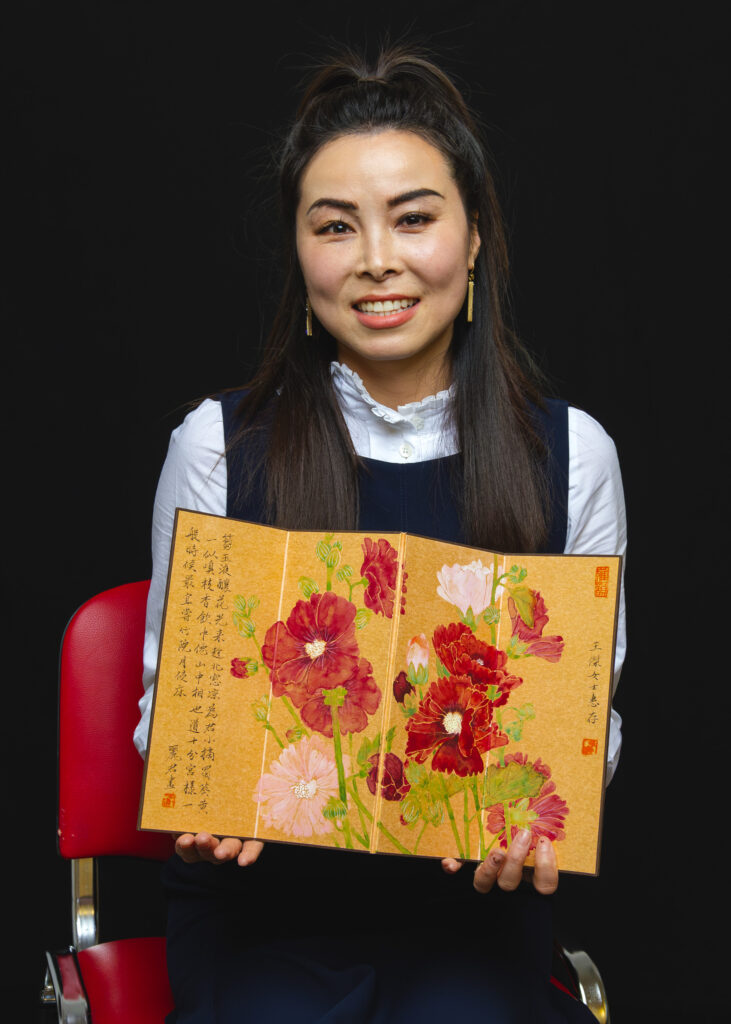
This Chinese folding painting was a house-warming gift from my friend Winnie. It functions almost like a miniature room divider. On the left side, there is a poem written in traditional Chinese calligraphy, while the rest of the painting is filled with delicate floral motifs.
The poem is written vertically and read from right to left. It tells the story of someone receiving a bottle of autumn wine from a friend. He leans by the window, enjoying the cool air and autumn scenery, and reflects that the best time to drink the wine is right now — with friends, in a quiet courtyard where bamboo shadows sway and moonlight spills across the room. At its heart, the poem is about friendship and cherishing the present moment.
You may notice there is no punctuation in the poem. In classical Chinese poetry, this is common. The rhythm and rhyme carry the meaning. The absence of punctuation leaves space for interpretation and gives the writing a natural, flowing quality.
Practising calligraphy as a child, however, was a nightmare for me. My mum was a Chinese teacher and would never tolerate messy handwriting. I remember having to fill four or five full pages just to perfect a single stroke. She could always tell whether I had written with care. Sometimes she would look at a page and say, “I don’t like this one — there’s no strength in it.” She believed that temperament reveals itself in brushwork — the way you finish a stroke can show whether you are calm or impatient. She often said that practising calligraphy shapes your character, that it tempers and disciplines you.
There is another story connected to this painting. A friend of mine received a similar piece from Winnie. The artist accidentally left out one word — 危, meaning “danger” — and later squeezed it back in quite obviously. My friend was unhappy about it, as she associated the word with a bad omen for her new home. In Chinese gift-giving culture, symbolism and auspicious meaning matter deeply. People pay close attention to words and imagery, especially for significant occasions such as moving house.
Working on this project gave me the opportunity to present this painting and reflect on Chinese gift-giving traditions — on how we express care and friendship through meaningful objects. It also brought back memories of my childhood. Whenever I see beautiful calligraphy now, I still feel a small sense of regret that I did not practise more seriously when I was young.
Lili Li
Video also available on Panopto
Meet Lili Li
Vice Chair, Chinese Welfare Association
Lili was born in China and has been living in Northern Ireland for over twenty years. Before moving to NI, she worked as a computer programmer at the University of Cambridge Local Examinations Syndicate in Cambridge. After settling in Northern Ireland, she has held technical roles with organisations including Ulster Bank and Biopanda Reagents.
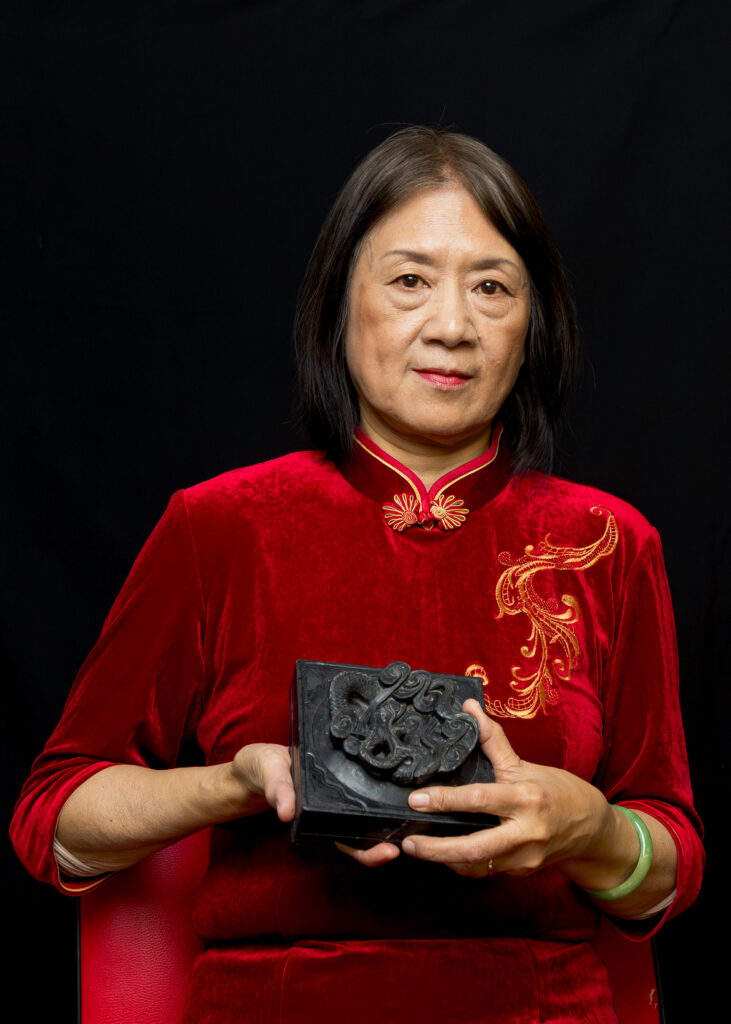
As part of the Bridges to China project, Lili shared her personal object — an inkstone. One of the “Four Treasures of the Study”, the inkstone represents thousands of years of Chinese civilization and artistic tradition. Through her story, Lili offers a deeply human insight into Chinese culture, showing how everyday objects can carry emotion, memory and creativity, and connect generations across cultures.
Watch Lili's Story
https://youtu.be/rD996Yxy1n8
Traditional Chinese Inkstone
The inkstone is one of the “Four Treasures of the Study” — the four essential tools in the Chinese tradition of writing and painting. These are not merely practical instruments. They carry thousands of years of civilisation and embody the spirit of Chinese artistic heritage.
The design of this inkstone is beautiful. A dragon coils across the top, surrounded by swirling clouds. This “cloud-dragon pattern” is one of the most prestigious motifs in traditional Chinese culture, symbolising power, nobility and good fortune.
At the centre of the inkstone is a round, sunken surface where the inkstick is ground with water to produce ink. It is here that writing and painting begin.
This inkstone was a gift from my mother. When she learned that I had begun studying Chinese painting, she passed this treasured object on to me.
My mother was an artist whose works were exhibited widely. She only began painting seriously after retiring. She told me she had dreamed of painting since childhood and finally found the time to pursue it later in life.
Now painting has become one of the most important parts of my own life. Every time I grind ink on this stone, lay out the xuan paper and prepare to paint, I feel a deep sense of calm and grounding. To me, painting is not simply a hobby. It is a way of expressing emotion and carrying forward Chinese culture.
This inkstone holds more than ink. It holds my mother’s dreams, my own passion and our shared love of Chinese culture.
Liang Wang
Meet Liang Wang
Language Support Officer, Queen's University Belfast
Liang Wang works at The Language Centre at Queen’s University Belfast. In his role as Language Support Officer, he undertakes both academic teaching and professional services for students and staff members, as well as members of the public. One of the key remits of his role is to promote a multicultural campus through language and intercultural exchange, not only within Queen’s but also across communities and with civic partners, by organising and facilitating language- and culture-based events and activities.
This work provides him with opportunities to develop partnerships with a wide range of communities and institutions, including Queen’s two neighbours, the Chinese Welfare Association NI and the Ulster Museum. Prior to facilitating the Bridges to China project, Liang worked in collaboration with both partners through Chinese New Year celebration events over a number of years. He greatly values the opportunity to participate in this project, which holds significant educational, socio-cultural and civic importance.
Watch Liang's Story
https://youtu.be/oVeNExNMWBg
Video also available on Panopto
Script, Scratch & Stress Relief
Chinese Writing Brush
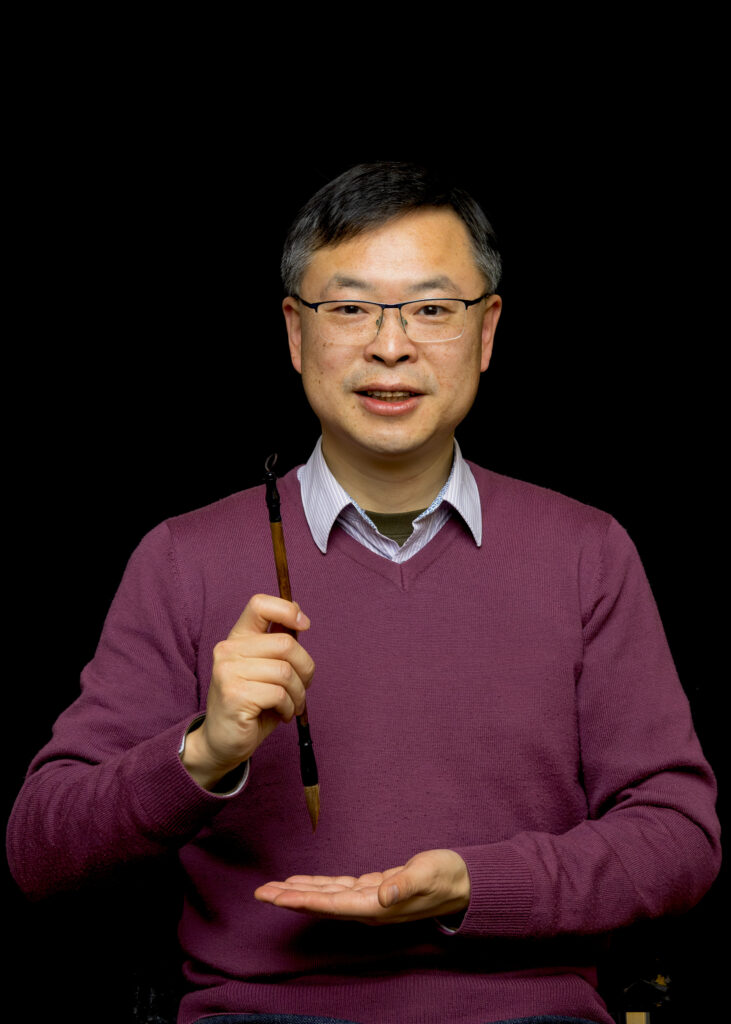
Chinese writing brush, known as maobi, is one of the most important tools in traditional Chinese culture and a cornerstone of its calligraphy and ink painting. Typically made with a bamboo handle and a tip crafted from animal hair – such as goat, wolf, or rabbit – the brush enables remarkable variation in line, texture, and expressive style. Used for over two thousand years, maobi is not merely a writing instrument but a symbol of scholarship, artistic cultivation, and the enduring traditions of Chinese literati culture.
Each year, when I organise Chinese New Year celebration activities, calligraphy workshops and stalls are consistently among the most popular. Students and staff, particularly those of Chinese heritage and Chinese language learners, enjoy collecting calligraphy works such as Spring Festival couplets and auspicious characters like 福 (fortune or good luck). In these moments, maobi plays a vital role. I have always made every effort to invite calligraphers – most often Queen’s Chinese students – to prepare and deliver calligraphy both on site and in advance of the events.
In 2019, during the Chinese New Year celebrations, my parents travelled from China to Belfast for a visit. My father, a calligrapher himself, brought his large-sized brush to support my activities. I deeply appreciated his effort and cherished the opportunity for family reunion at the same time. He later left the brush with me for future events, though not without reminding me that I should practise more to improve my own calligraphy skills.
Back Scratcher
The back scratcher, known in Chinese as yangyang nao, is a simple yet ingenious tool designed to relieve itching in hard-to-reach areas of the back. Traditionally made from materials such as bamboo or wood, it has been used in China for centuries as an everyday household item, symbolising care, comfort, and practical wisdom.
Beyond its practical function, the back scratcher also reflects elements of Chinese craftsmanship and humour. It is commonly known as bu qiu ren, literally meaning “not asking others for help” - a playful reference to its purpose of enabling independence while tending to a basic human need. This alternative name is widely used in daily life and frequently appears in historical records, museum descriptions, and traditional markets.
I took this yangyang nao with me from my parents’ home when preparing for my studies in the UK. While it has spared me many small inconveniences, it has also provided quiet comfort during moments of homesickness, reminding me of home while living thousands of miles away from my family.
Hand-Played Walnuts
Hand-played walnuts, commonly known as walnut balls, are traditionally made from a matched pair of walnuts selected for their similar size and weight. They are rolled within the palm – typically one hand at a time – for leisure as well as for therapeutic purposes, helping to improve hand flexibility, circulation, and coordination. Historically, this practice was exclusively popular among men from rich families, though it is now widely enjoyed by people of all ages.
Through years of handling, the walnuts gradually become smooth, shine-darkened, and well-balanced, embodying ideals of patience, dedication, harmony, and the rewards of sustained effort. In Chinese culture, exercising walnut balls is believed to promote relaxation, focus, and overall well-being, making them both a contemplative aid and a meaningful personal object.
This particular pair was given to me years ago by a Queen’s graduate as a souvenir. Beyond representing cultural heritage, they carry the graduate’s gratitude and good wishes, serving as a tactile reminder of balance, perseverance, and the importance of maintaining health through work. Having experienced ongoing mouse-related hand pain, I have found that regular practice with the walnut balls has significantly reduced my discomfort.
Sally Gillespie
Meet Sally Gillespie
NHS Interpreter
Originally from Hong Kong, Sally Gillespie has lived in Northern Ireland for 35 years. She previously worked in the catering industry and now works as a freelance interpreter for the NHS.
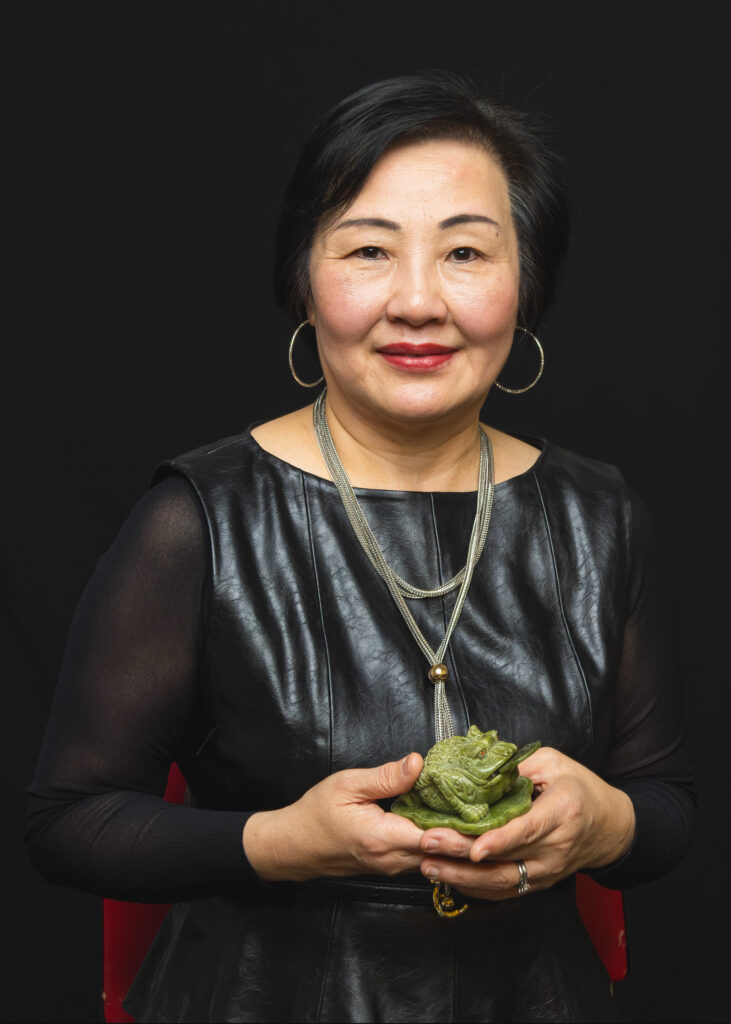
Sally is deeply involved in community life. She currently serves as Secretary of the Northern Ireland Chinese Chamber of Commerce and as a management committee member of the Chinese Welfare Association. As a representative of CWA, she was honoured to act as a facilitator for the Bridges to China project. Her personal object — a three-legged feng shui toad — carries powerful memories of her late father and reflects her journey of resilience and perseverance.
Watch Sally's Story
https://youtu.be/PQmCi2_Nqnc
Video also available on Panopto
Three-Legged Toad
Today I brought with me this three-legged toad. It is a mythical creature, often shown as a round, plump toad with three legs, sitting on coins and holding one in its mouth.
In feng shui, the three-legged toad is believed to bring financial good fortune and ward off bad luck. The coin in its mouth symbolises money coming in. It is usually placed near an entrance, but not facing directly outwards, so that wealth “enters” rather than “leaves”.
When I first came to Northern Ireland 35 years ago, I carried one dream with me: to open my own Chinese restaurant. In 2001, I finally took that risk. I invested every penny I had to make that dream a reality.
Less than three months after opening, I received devastating news from Hong Kong that my father had passed away. My restaurant was still new and I was working tirelessly to build up customers. I simply could not leave and fly home. Because of that, I missed my father’s funeral. That regret has stayed with me all my life.
The years that followed were not easy. I had little experience managing the financial side of the business and debts grew quickly. I remortgaged my house to clear them. A year later, I had to sell my home entirely to settle further debts. There were moments when I truly felt I had reached the end of the road.
In 2003, I returned to Hong Kong for the first time to visit my father’s grave. During that visit, I walked into a small feng shui shop and found this three-legged toad. I did not buy it because I believed it would magically bring wealth. I bought it because, at that moment, I needed something to believe in.
For many people in Hong Kong, the three-legged toad symbolises prosperity. For me, it became something deeper. I placed it in my restaurant and it sat with me through long and difficult nights. It did not bring wealth, but it brought me strength and confidence when I needed it most.
My restaurant survived. It ran for ten years and even won several awards. After the global recession, I eventually sold it. When I left, the only thing I took with me was this little toad.
Every time I look at it, I am reminded of the darkest period of my life and how it shaped who I am today. My life has been full of ups and downs, but I have never given up. Whatever I do, I give it my full effort.
I do not encourage superstition, but I believe we all need something to hold on to during difficult times — whether that is faith, a person, a promise or even a small object like this toad.
Giving up is always the easy option. Facing problems and working through them requires courage. I am grateful that I chose not to give up — not on my restaurant and not on this project. Through this experience, I have made new friends and encountered opportunities I would never otherwise have known. It has enriched my life in ways I did not expect.
Selina Yuet Kwan
Meet Selina Yuet Kwan
Chinese Welfare Association
Selina Yuet Kwan Lee has lived in Northern Ireland for 59 years. Throughout much of that time, she worked in the catering industry. Following her retirement, she devoted herself to voluntary service within the Chinese community, serving as Principal of a Belfast Chinese Language School and Chairperson of the Oi Kwan Women’s Association.
In 2001, she was honoured with an MBE for her services to the community. Selina remains actively involved in the Northern Ireland Chinese Chamber of Commerce and the Chinese Welfare Association, continuing to support and advocate for the Chinese community in Northern Ireland.
Watch Selina's Story
https://www.youtube.com/watch?v=BNTnuJ51uVU
Video also available on Panopto
Phoenix Crown & Rosy Robe
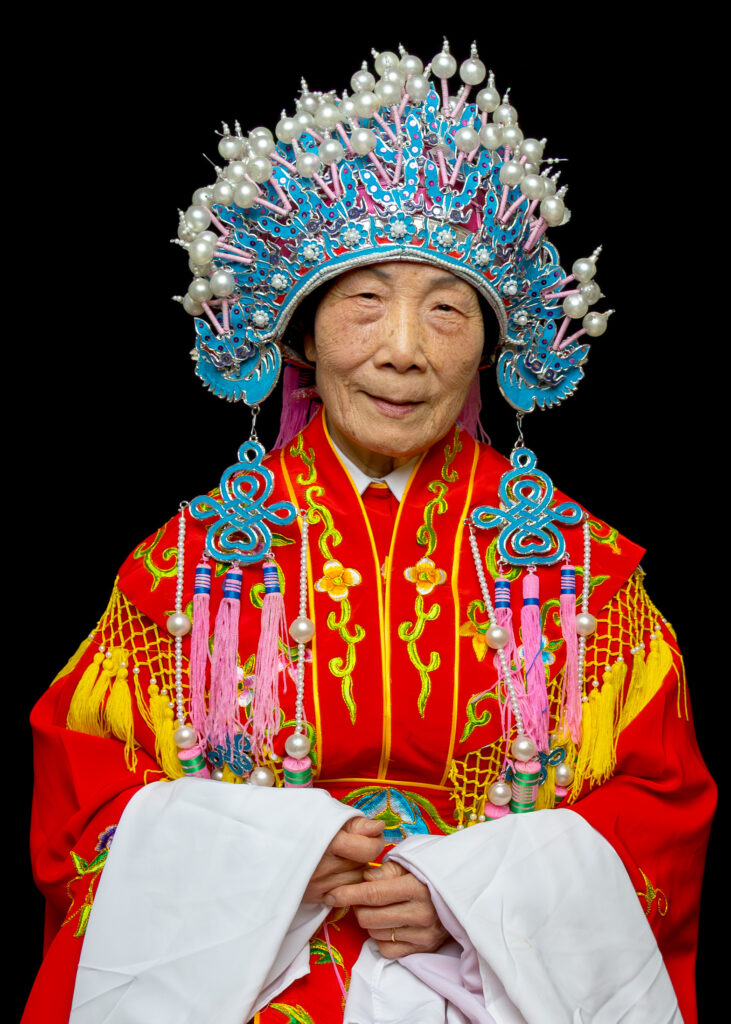
The use of the phoenix as a headdress ornament for women of the Chinese imperial family can be traced back to the Han dynasty. During the Song dynasty, the phoenix crown became the principal ceremonial headwear for noblewomen within the imperial court. The Ming dynasty continued this tradition, and the ceremonial crowns worn by empresses and consorts were formally known as fengguan, or phoenix crowns. In later writings, ceremonial crowns worn by titled noblewomen outside the imperial household were also commonly referred to as phoenix crowns.
I have always felt a special connection to the phoenix crown and rosy robe, largely because my mother was a devoted admirer of Cantonese opera. When I was growing up in Hong Kong, she often took me to performances. From the very first one I attended, I was captivated by the traditional costumes. The brilliance and richness of the colours left a lasting impression on me, and from that moment I fell in love with Cantonese opera.
More than fifty years ago, I discovered this particular set of phoenix crown and rosy robe in a shop in Shenzhen and was immediately drawn to it. I eventually brought it back with me to Northern Ireland, where it has remained ever since. From time to time, I still wear it for performances at special events.
This outfit holds countless memories. It reminds me of my mother and of my childhood. I will always treasure and preserve it, hoping one day to pass it on to my children, and to their children after them.
Wei Deng
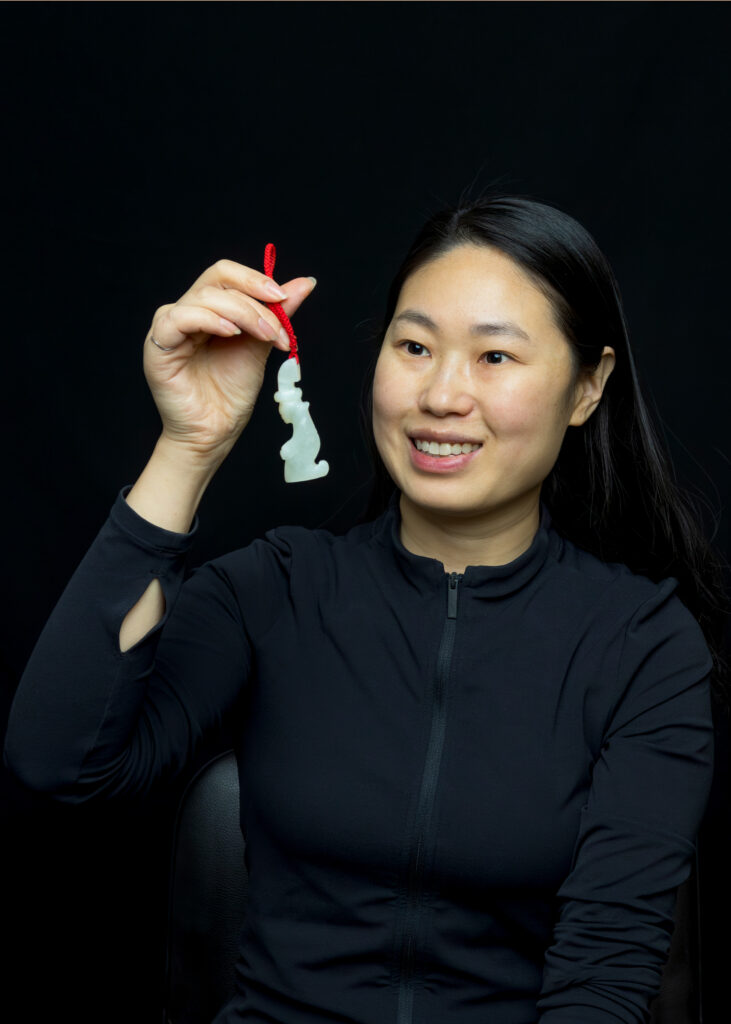
Meet Wei Deng
Guzheng Artist
Wei Deng is originally from Sichuan, China. She graduated from Queen’s University Belfast with an MA in Arts Management in 2020 and is now a guzheng artist based in Belfast.
Being part of Bridges to China has been a profound experience for Wei. Exploring Chinese material culture and heritage has influenced her creative practice, opening new artistic possibilities in her music. She is grateful for the opportunity to contribute to cross-cultural understanding and hopes the project continues to connect communities across borders.
Watch Wei's Story
https://youtu.be/SVRjPDEHWCk
Video also available on Panopto
Jaded Memories
I am very happy to write about this special piece from my collection, a traditional Chinese jade carving called 玉跪人 (Yu Gui Ren), which literally translates to “jade kneeling figure”. Crafted from nephrite jade, this artefact depicts a person in a kneeling posture, a gesture of profound respect in ancient Chinese culture.
What makes this piece unique is its phonetic symbolism. In Mandarin, “玉跪人” sounds identical to “遇贵人”, meaning to meet noble or kind people or to encounter good fortune through helpful mentors.
This carving blends artistic beauty with cultural belief. Its smooth lines and serene expression reflect both craftsmanship and the hope for meaningful connection in life. To me, it is more than an ornament. It is a reminder to value kindness and to stay open to meeting people who enrich my journey in life.