
Chinese Ink Painting
BELUM.C5991
© Image courtesy of National Museums NI
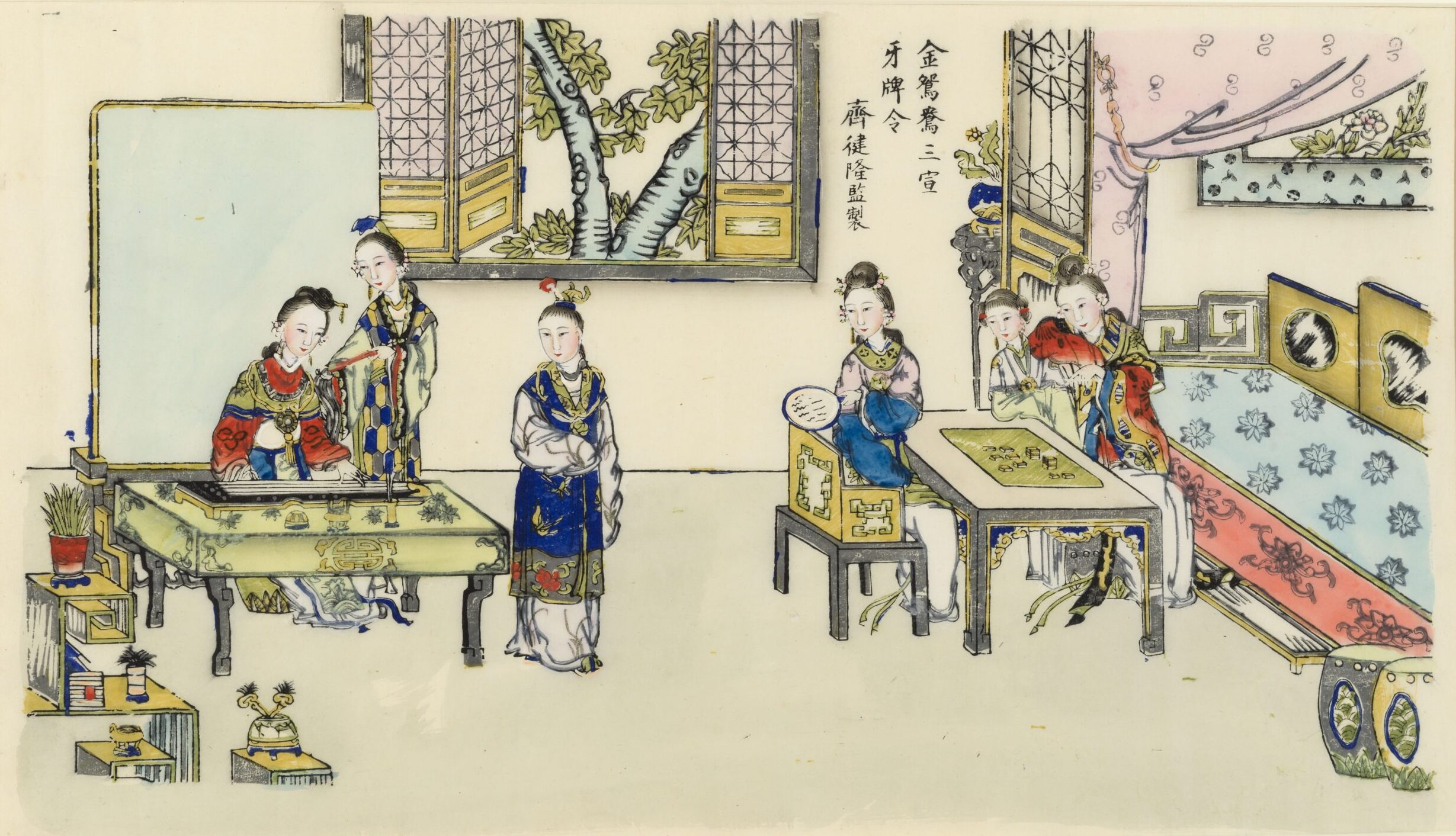
BELUM.C5991: Watercolour painting on rice paper from China
Material: Rice Paper
This watercolour painting on rice paper represents a court scene possibly ‘Poker Game Announced by Jin Yuanyang’ in Chapter 40 of ‘Dream of a Red Chamber’, a famous 18th-century Chinese novel authored by Cao Xueqin. Being able to interpret the painting itself is an intellectual test that educated, elite children in China are expected to be capable of as evidence of showing their awareness of literary masterpieces. The scene’s architectural details—such as open lattice windows, decorated screens, and intricately patterned furnishings—reflect the elite domestic environments typical of late imperial China. The painting depicts elaborately dressed seated women engaged in intellectual pastimes such as playing a stringed instrument, most likely a Guqin, and a game with tiles/tablets, possibly Mahjong or Pai Gow. These ladies are being waited on by domestic servants. The Chinese script at the top of the painting indicates the maker of the painting.
"This painting highlights sharp contrasts between the richly dressed, comfortably seated ladies and the young maids in simpler clothing and deferential postures—one even appearing childlike. These details reveal the social hierarchies and traditional labour expectations placed on poor girls in the past. Reflecting on this alongside my own family history and experiences in Guangdong and Hong Kong, I realise how these patterns persist today: domestic workers, mostly young women and often migrants from lower socio-economic backgrounds, continue to provide essential yet undervalued labour that supports modern households. Although society has changed, inequalities shaped by class, gender, age, ethnicity, and economic status remain deeply embedded, and the painting serves as a reminder that these power structures have evolved but never disappeared."
Sylvia Yue, Project Participant

Bow & Arrows
BELUM.C1206.1
© Image courtesy of National Museums NI
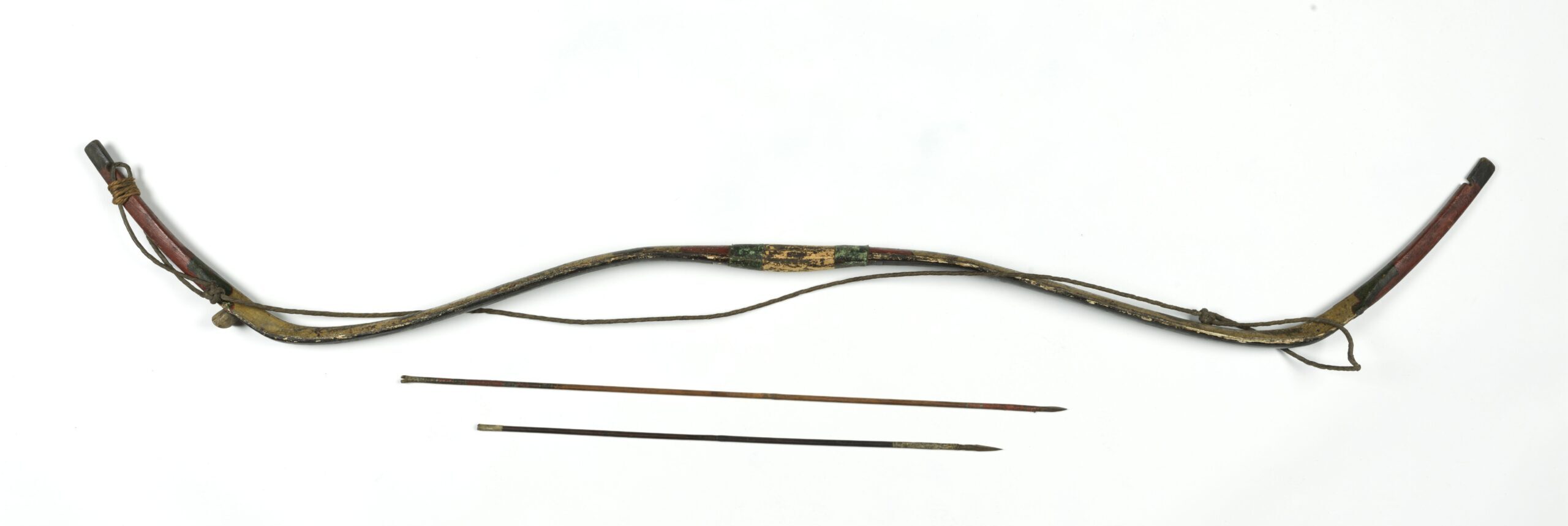
BELUM.C1206.1: Traditional Bow & Arrows
Material: Wood | Culture: Chinese | Location: Northern China
Wooden bow covered in painted leather with a string. Decoration includes plant life as well as a swastika well-being symbol. The bow resembles those used by Manchu banner men and the size makes it quite easily identified as a Manchu bow. Bows have been used in Chinese culture for centuries, used for hunting, conflict and symbolically used in folklore stories to tell stories of good and evil.
"By holding this bow, you can understand why the Manchu and other frontier peoples of northern China were such good archers and proficient warriors. This bow is so light to the touch, yet it cannot be broken. It would have made for very durable and agile fighting tactics."
Stephen Lam, Project Participant
BELUM.C1206.2 & .3: Arrows
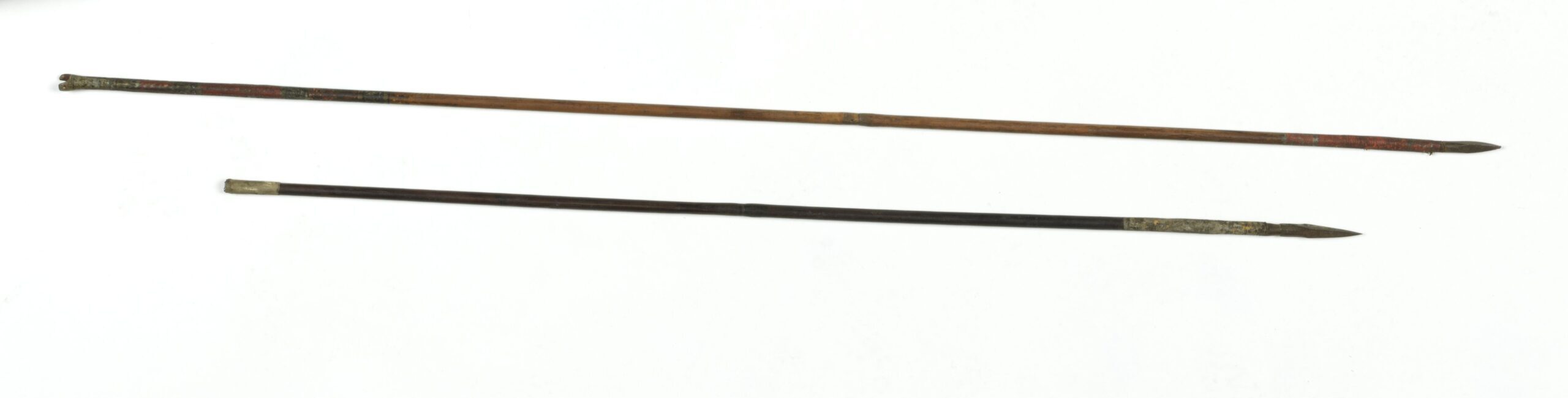
Large (BELUM.C1206.2) and small (BELUM.C1206.3) arrows donated alongside bow. Arrows such as this one were used by Manchu banner men. The arrow is missing the feather used as 'fly'. Arrows were crafted with remarkable precision and varied designs that reflected both technological innovation and tactical needs.
Ivory Chess Pieces
BELUM.C374.1926 & C375.1926
© Image courtesy of National Museums NI
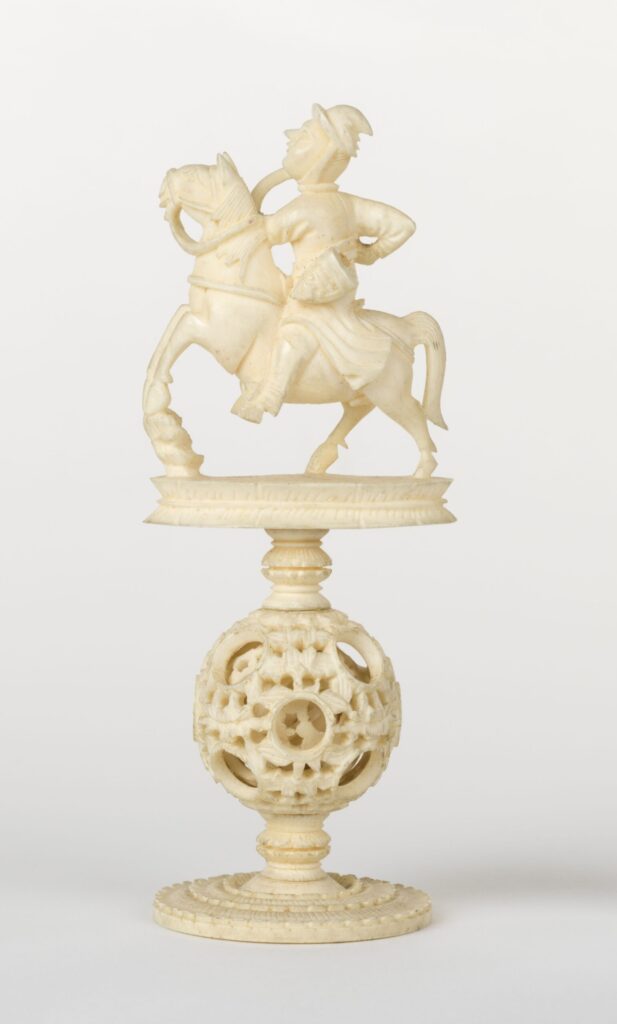
BELUM.C374.1926: Ivory chess piece with globular puzzleball stem
Height: 11.4 cm | Material: Ivory | Culture: Chinese | Location: China
Acquisition method: Purchase | Date of acquisition: 1926
White chess piece features an intricately carved bowman / archer on horseback supported on flat circular lotus carved base with globular puzzle ball stem in ivory. The costume on the bowman may be Mongolian. The piece which can be separated in two, comprises a figure on a base which can be screwed apart from the puzzle ball on a base, essentially allowing for 2 games in one. This is one of two chess pieces purchased by the museum, the other one being BELUM.C375.1926 (below) a stained red chess piece of a cavalryman. Most likely made around 1850 – 1880 in China, Qing dynasty as an export piece for use in Western-style chess. It’s unlikely this piece was made for ‘Chinese chess’ (Xiangqi) which is different to Western-style chess in terms of its characters and rules. Xiangqi was (until the last few years) played almost exclusively with flat discs. In 2018, China banned trade in ivory, including both commercial ivory importation and domestic ivory sales.
“My grandpa taught me how to play Chinese chess. Other adults would let me win or take back my moves, but he never did. Once I moved a piece, I had to live with it. He always said, ‘You can’t always win.’ At the time, I thought he was too strict. Now I understand — it was never just about chess.”
Kelly Wang, Project Participant
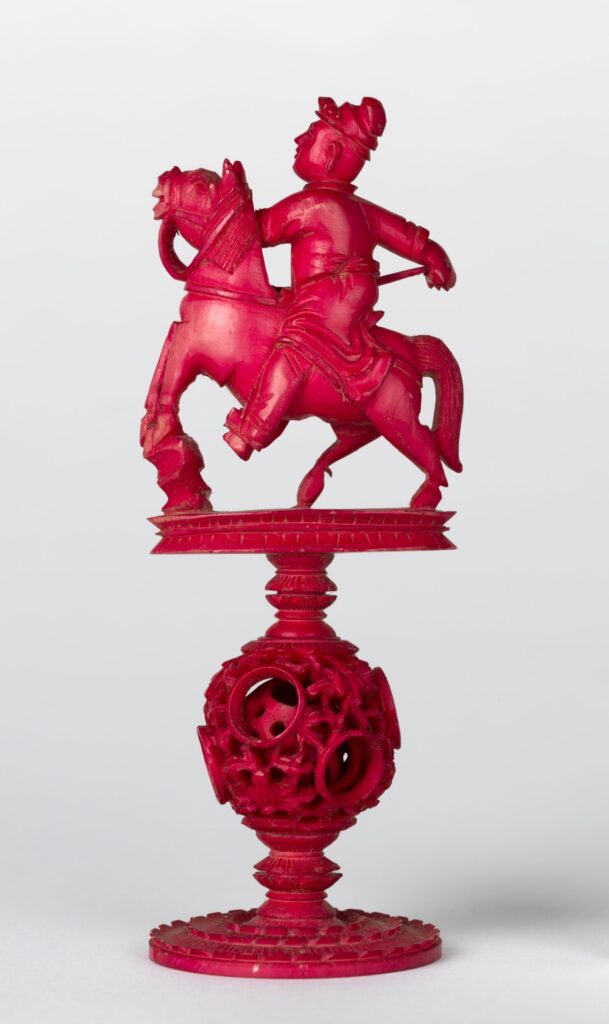
BELUM.C375.1926
© Image courtesy of National Museums NI
BELUM.C375.1926
Red chess piece features an intricately carved man with a sword on horseback supported on flat circular lotus carved base with globular puzzle ball stem in ivory. The costume on the cavalryman may be Mongolian. The piece which can be separated in two, comprises a figure (with detachable sword) on a base which can be screwed apart from the puzzle ball on a base, essentially allowing for 2 games in one. This is one of two chess pieces, the other one being BELUM.C374.1926 (above), a white ivory chess piece of a knight who is a bowman. Most likely made around 1850 – 1880 in China, Qing dynasty as an export piece for use in Western-style chess. It’s unlikely this piece was made for ‘Chinese chess’ (Xiangqi) which is different to Western-style chess in terms of its characters and rules. Xiangqi was (until the last few years) played almost exclusively with flat discs. In 2018, China banned trade in ivory, including both commercial ivory importation and domestic ivory sales.
Solar-Lunar Compass
BELUM.C814.1914
© Image courtesy of National Museums NI
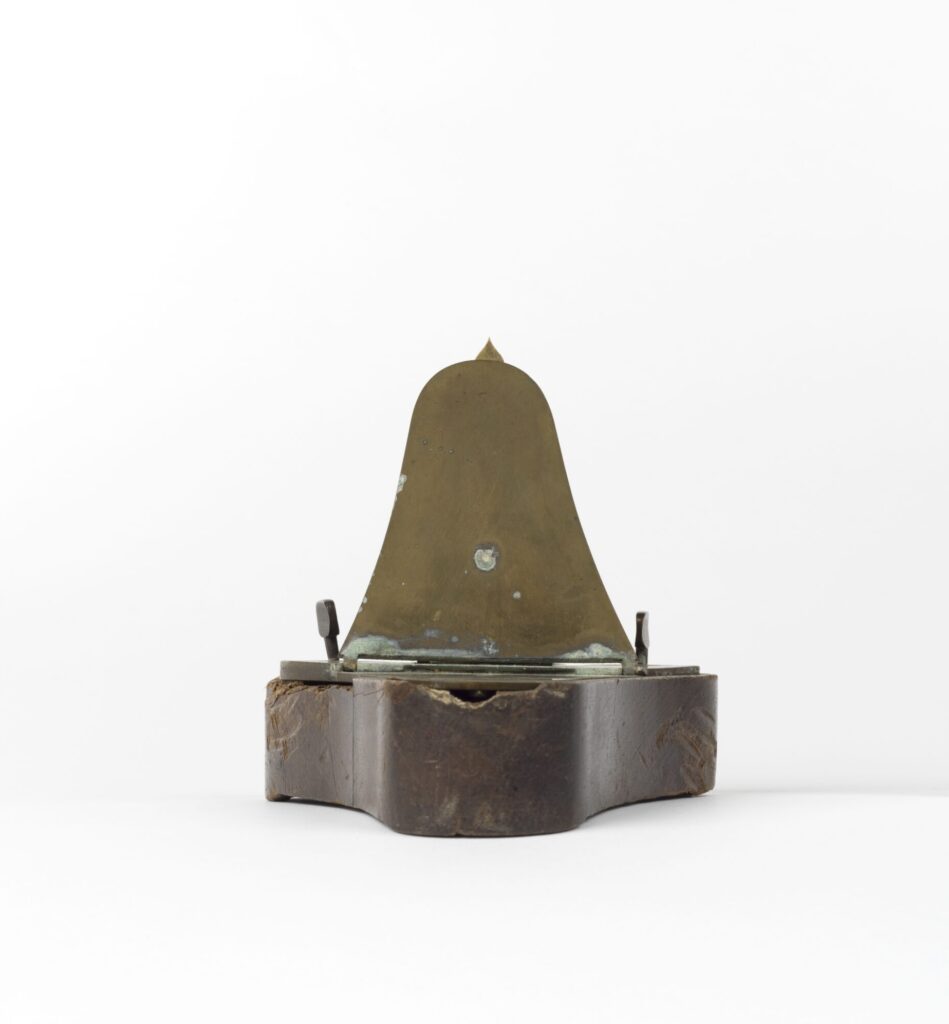
BELUM.C814.1914: Traditional sundial with gnomon
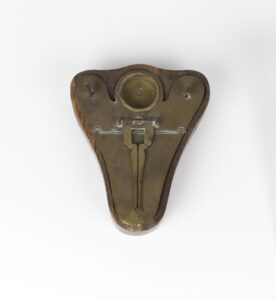
Chinese portable hybrid timekeeping device with sun dial (for reading time by the shadow cast by the sun during the day) and possible water clock (for reading the time made by water drips at night) made of wood and brass with moveable pieces including a gnomon. The upper section represents the day, divided into 12 equal units (2hrs each), named after the twelve earthly branches. The lower section is based on the Chinese solar calendar and uses the 24 solar terms/ cycles to describe seasonal changes. It reflects the ancient Chinese people's profound understanding of the sun's movement patterns. Instruments such as this one were very important to astronomical observation, timekeeping, ritual scheduling, and for work which relied on seasonal change such as farming. Probably Qing dynasty.
"This Chinese equatorial sundial with a 24-solar-term dial wasn’t just for telling the time — it also helped people keep track of the seasons. By combining astronomy, geometry, and careful craftsmanship, ancient Chinese scholars transformed their observations of the sky into practical tools that supported farming and daily life.
Instruments like this show how advanced China was in science and technology at an early stage. Long before similar devices appeared in other parts of the world, they were already being used to measure time accurately and track the 24 solar terms—key to organising farming and community life. They offer a powerful reminder of the depth and ingenuity of traditional Chinese scientific knowledge."
Lili Li, Project Participant
Take the 3D Tour
Imperial Stone Guardians
BELUM.C267.1949
© Image courtesy of National Museums NI
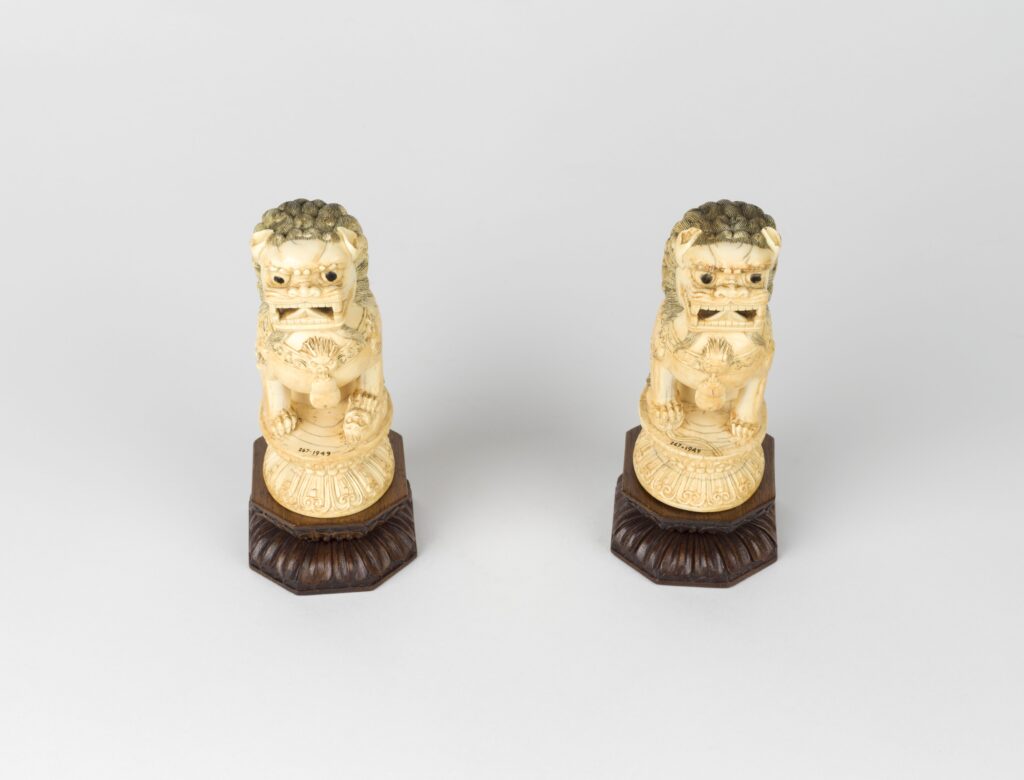
BELUM.C267.1949: Lions of Fo - traditional guardian lion dog figures (shi shi)
Material: Ivory | Culture: Chinese
Pair of ivory guardian lions / lions of Fo / lion dogs (shi shi) on wooden lotus bases used to protect from evil spirits. The curly hair on the lions usually depicts a high rank in society. The male lion holds a ball under his paw, symbolising power and authority, representing control over the world and protection of the home or collection it guards. The female lion is portrayed to be cradling a cub under her paw, deemed to be conveying protection, nurturing, and the continuity of lineage. Together, the pair embodies complementary yin-yang principles — the male asserting strength and the female ensuring protection and care. It is typical that the male stands on the right hand side looking at the public while the female stands on his left. Larger examples of Chinese guardian lions are for temple or architectural use, however this small pair was most likely crafted with the intention of a luxury decorative object or presentation gift for the home. Probably late Qing dynasty. In 2018, China banned trade in ivory, including both commercial ivory importation and domestic ivory sales.
Rather than being realistic depictions of lions, shi shi are mythical creatures shaped by artistic exaggeration and symbolism. Their fierce expressions and alert postures emphasise vigilance and strength. As Ri Fang Hao explains:
“The guardian stone lion is a unique creation in Chinese culture that integrates history, art, religion and folklore. Evolving from an exotic rare animal to a divine beast protecting homes and the nation, its image is deeply imprinted in the collective memory of Chinese people.”
Ri Fang Hao, Project Participant
Take the 3D Tour: Male lion and Female Lion
Gilt-Bronze Guanyin
BELUM.C205.1906
© Image courtesy of National Museums NI
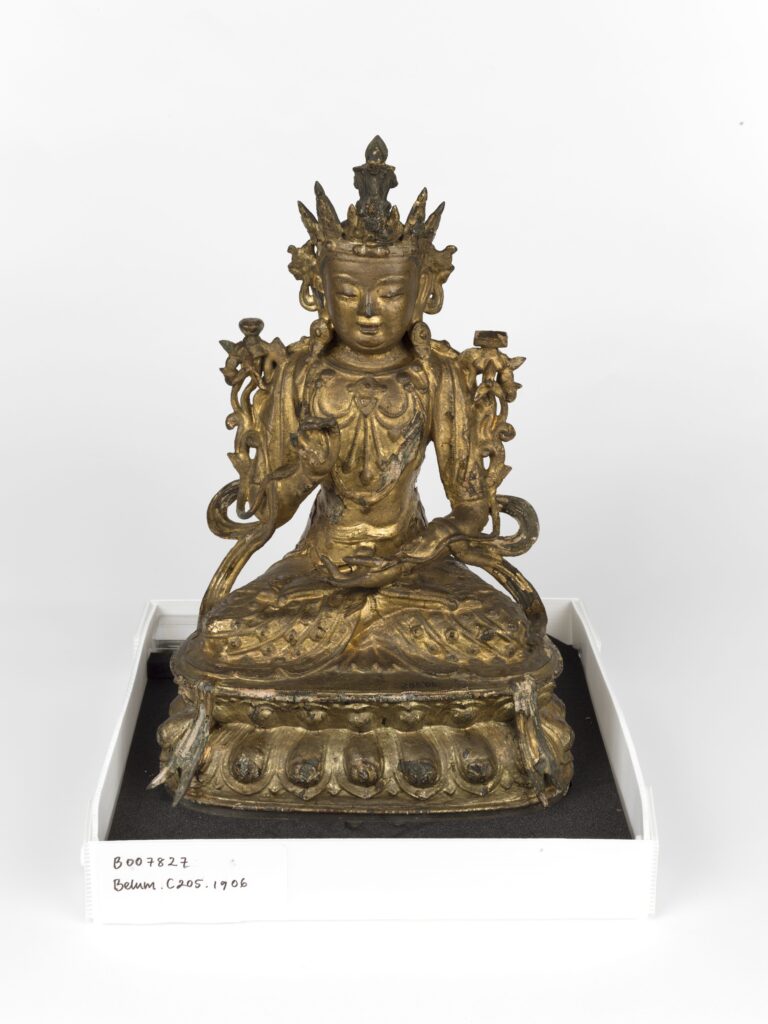
BELUM.C205.1906: Buddha in Bronze Gilt
Height: 38 cm | Material: Brass | Culture: Chinese
Gilt bronze figure of Guanyin, the Bodhisattva of compassion, seated on double lotus base in padmasana, crossed legged position. The right hand gesture is called karana mudra and is used to ward off evil, whilst the left hand holds a pearl, symbolising protection and wisdom. Religious figures such as this one are believed to help people through difficult times. Small gilt-bronze figures of this type were produced by lost-wax or sand-mould casting, then gilt and burnished. Late Ming / early Qing.
"My Mum is a Buddhist; This object made me think of her. I grew up focusing on my academics and not paying too much attention to religion. I work as an accountant; I use numbers for a living. There is not much room for interpretation. Still, as I have gotten older and become a mother myself, I value more and more my mother’s input and perspective. It is a helpful guide in an unpredictable world. I feel blessed to have both of these perspectives that carry with them lenses into different eras of Chinese history and, ultimately, different ways to be Chinese.”
Emily Cong, Project Participant
Opium Pipes
B009759.5
© Image courtesy of National Museums NI
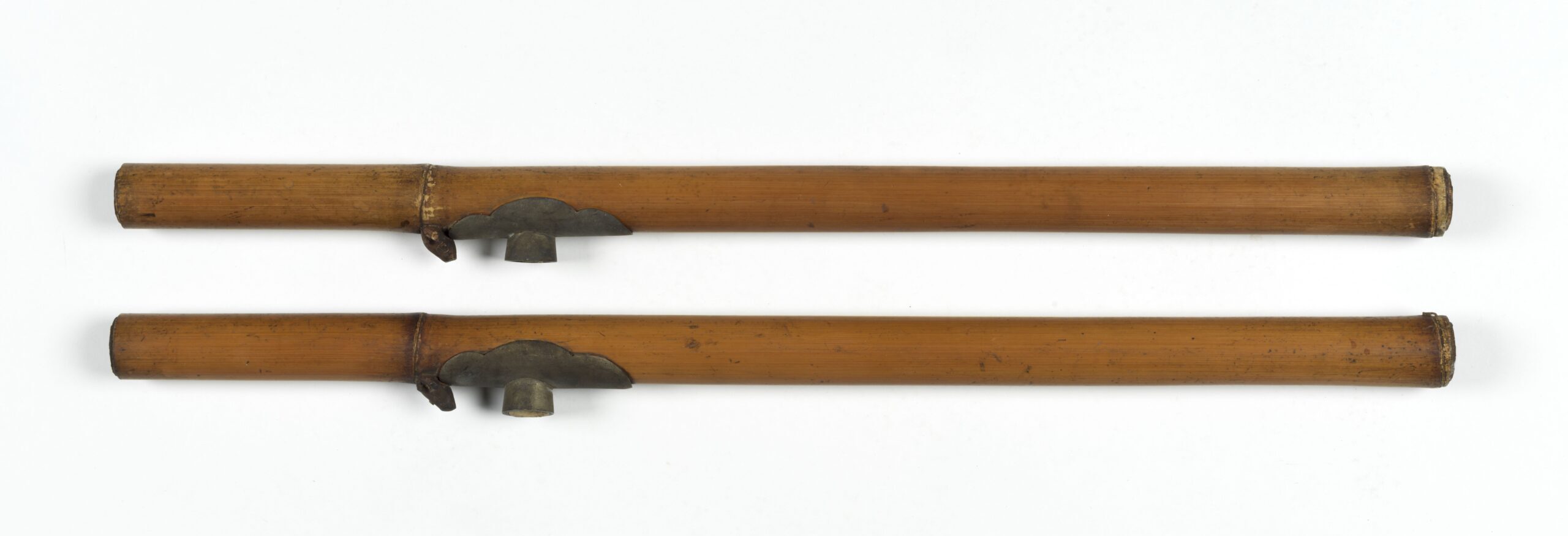
B009759.5: Two Traditional Chinese Opium Pipes
Two large opium pipes. The stem is made from wood, probably bamboo and has a metal saddle. One pipe has a Chinese character inscribed under the metal saddle. Opium had long been valued in China as a medicine that could ease pain, assist sleep and reduce stress. By the mid 19th century however, there were millions of addicts across the country, largely sustained by illegal British imports from India. The Chinese were keen to put a stop to the imports and destroy the stocks of opium. This caused outrage among the British, and was the spark that ignited the Opium Wars during the mid-19th century.
"If you want to see the underlying cause of China's - and indeed much of Asia's - conflicts of the last several centuries, look no further than opium. When used in the right capacity, it has had a profoundly positive effect on modern medicine. But along with that has come many social ills, including addiction, drug trafficking and wars. And unfortunately, these ill effects now span far beyond China's borders. Still, it is a very interesting piece of history that we are better off learning than shying away from."
Stephen Lam, Project Participant
Take the 3D Tour
Carved Snuff Box
BELUM.C33.1911
© Image courtesy of National Museums NI
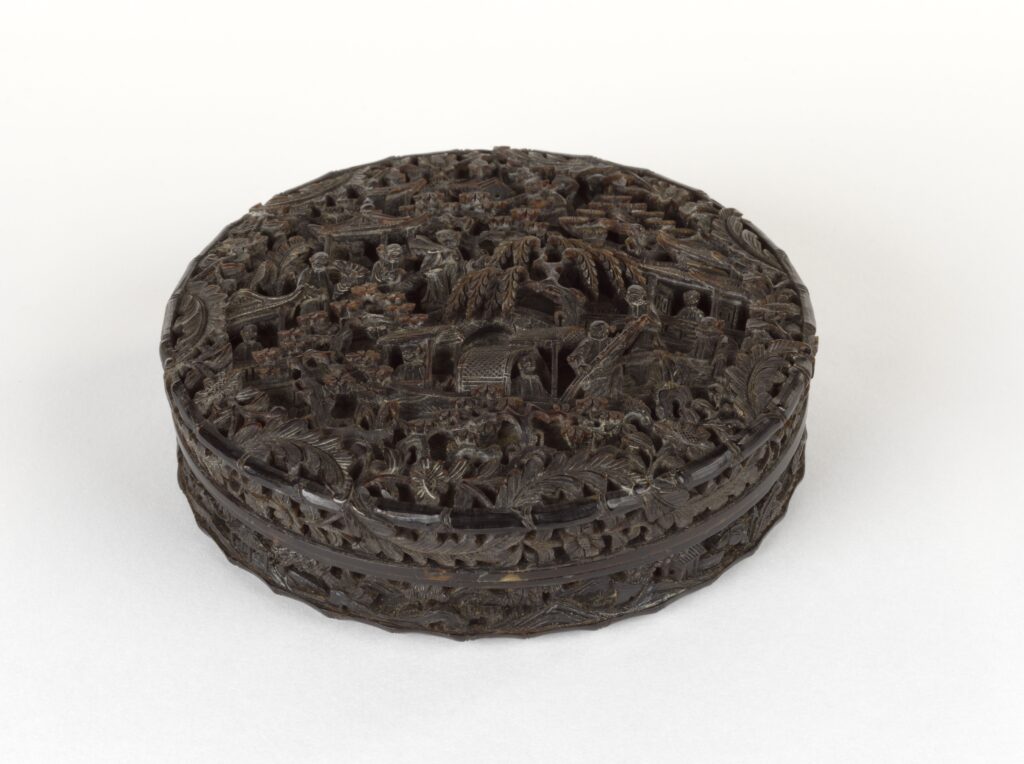
BELUM.C33.1911: Traditional Chinese Snuff Box
Material: Tortoise Shell | Culture: Chinese | Location Collected: China
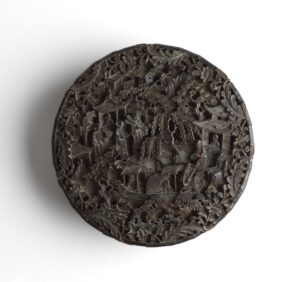
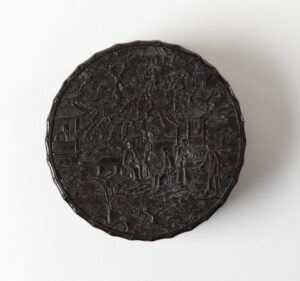
Tortoise shell snuff box with carved decoration in relief with figures, trees, plant life, boats, pagodas, and islands. The use of narrative landscapes on small luxury objects embodied an educated ideal, where portable objects like snuff boxes became vehicles for aesthetic appreciation and social distinction. Snuff is a finely ground or shredded tobacco inhaled through the nose or rubbed on the gums. It was introduced to China by Europeans and at that point was believed to have healing powers. It became fashionable and a status symbol in later years. Probably produced for export market in the 19th century. A snuff box such as this would be very prized among both the Chinese elites and European collectors, reflecting the cross-cultural appeal of Chinese decorative arts during the height of the Canton export trade. Qing dynasty.
"From a tribute of the Qing Dynasty imperial court to a timeless treasure, this tortoise shell round box holds the code of cultural integration between China and the West from a century ago. Its elaborate and exquisite full-relief carving technique is not only a concrete embodiment of the pinnacle craftsmanship of Qing Dynasty artisans, but also a precious witness to the collision and mutual learning of Eastern and Western aesthetics."
Wei Deng, Project Participant
Take the 3D Tour
Jade Buckle
BELUM.C265.1949
© Image courtesy of National Museums NI
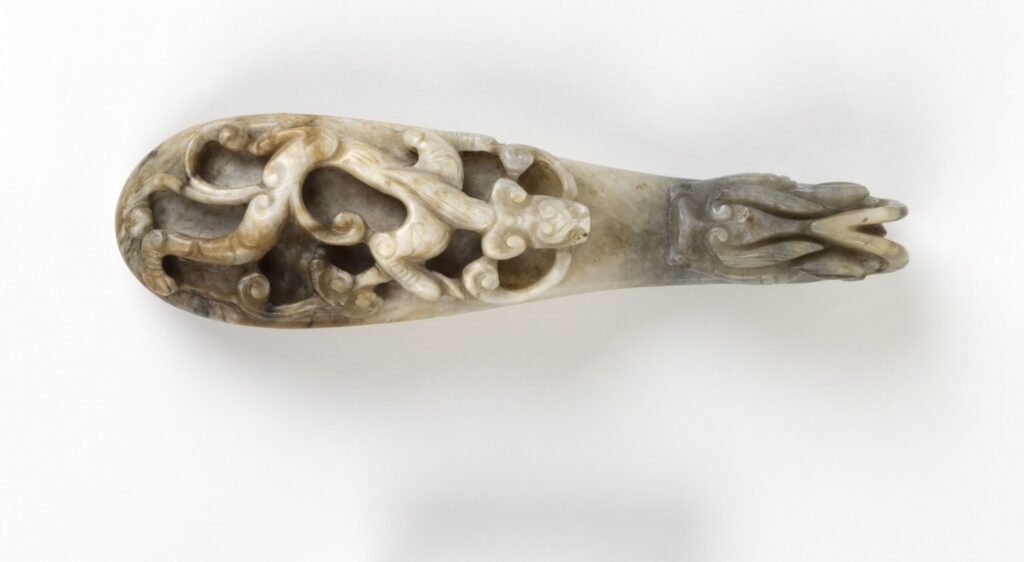
BELUM.C265.1949: Jade belt buckle depicting dragon motifs
Material: Jade | Culture: Chinese | Place of Collection: China
Grey jade carved ornament based on archaic belt hook design. It has a hook or protrusion on the back to attach a belt. Dragon motifs on the design. The hooked section depicts a mature dragon (long) and the relief on the shaft a ‘baby’ dragon (chi long), symbolising good fortune.
“What I like is how the two dragons seem connected, almost like one growing out of the other. It feels protective, as if the object is carrying a wish for strength and good fortune across generations.”
Sharon Fan, Project Participant
Take the 3D Tour
Horsehead Tobacco Pipe
BELUM.C5887
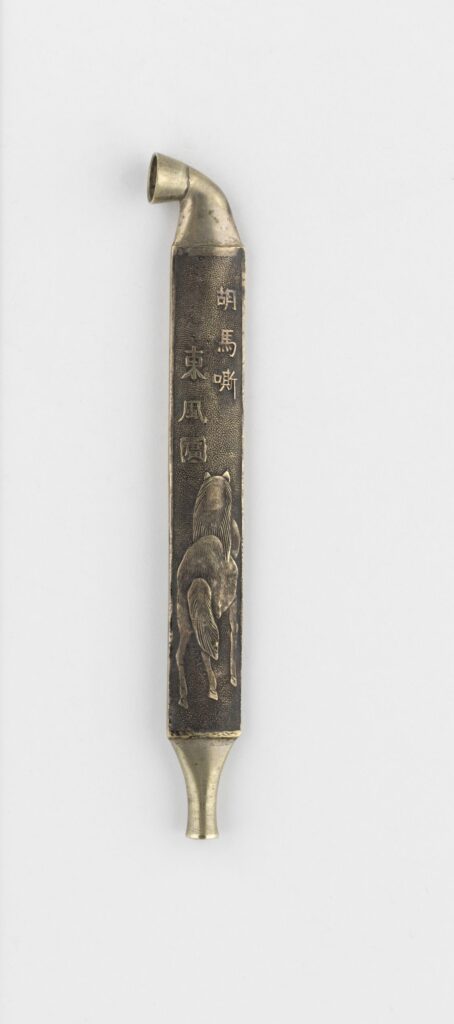
© Image courtesy of National Museums NI
BELUM.C5887: Traditional Chinese Tobacco Pipe
"The structure of the final character resembles the character 廣 (simplified 广, guǎng, meaning “broad,” “wide,” or “vast”) enclosed within 囗 (wéi), which denotes an enclosing border. At first glance, this combination does not appear to relate directly to the meaning of 'east wind'. However, it is possible that 囗 functions purely as a framing or enclosing element, rather than contributing semantic meaning. In that case, the inner component may represent a name, brand, or maker’s mark, rather than a standard character used for its lexical meaning."Liang Wang, Queen's University Belfast
I feel such a powerful connection to this little ‘horse-head tobacco pipe'. Every word engraved on it seems to speak directly to me. I can almost picture a soldier alone in a remote, frozen wilderness, sitting atop his horse exhaling puffs of smoke into the night — while his heart overflows with an intense longing for home. I have left Hong Kong now for 35 years. I missed my Dad’s funeral - separated from my love ones by thousands of miles, the regrets and ache are something only my own heart could truly feel.Sally Gillespie, Project Participant
Take the 3D Tour