
Opium Pipes
B009759.5
© Image courtesy of National Museums NI
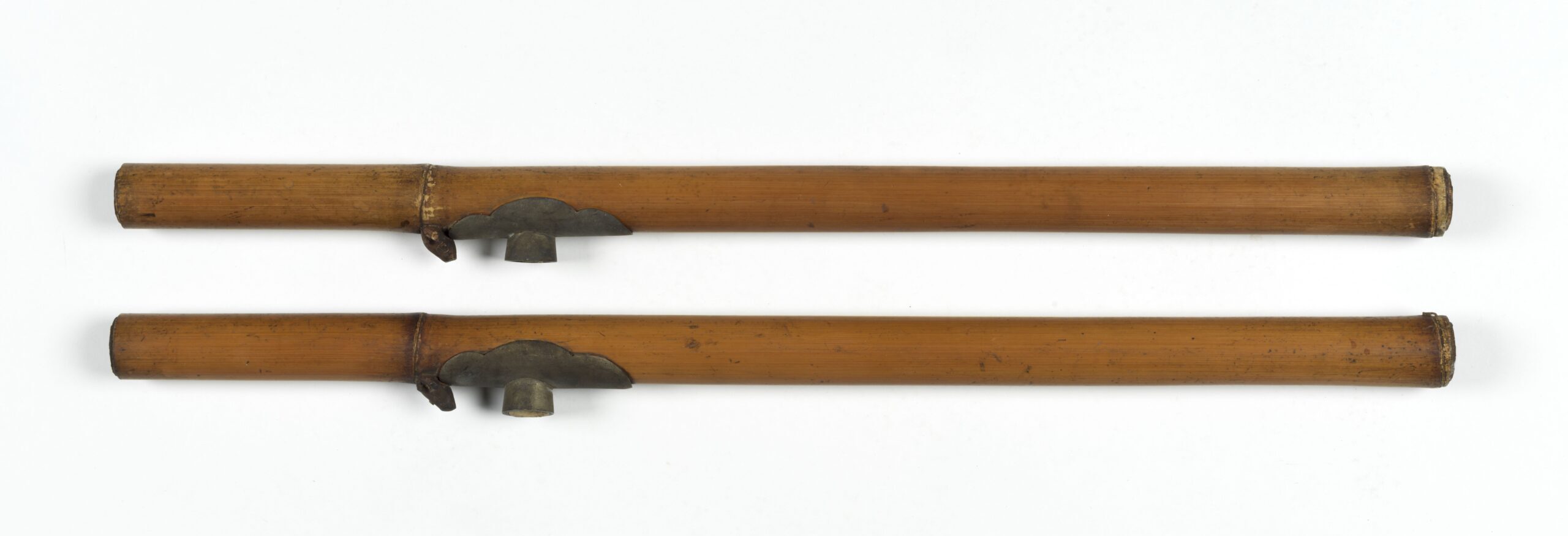
B009759.5: Two Traditional Chinese Opium Pipes
Two large opium pipes. The stem is made from wood, probably bamboo and has a metal saddle. One pipe has a Chinese character inscribed under the metal saddle. Opium had long been valued in China as a medicine that could ease pain, assist sleep and reduce stress. By the mid 19th century however, there were millions of addicts across the country, largely sustained by illegal British imports from India. The Chinese were keen to put a stop to the imports and destroy the stocks of opium. This caused outrage among the British, and was the spark that ignited the Opium Wars during the mid-19th century.
"If you want to see the underlying cause of China's - and indeed much of Asia's - conflicts of the last several centuries, look no further than opium. When used in the right capacity, it has had a profoundly positive effect on modern medicine. But along with that has come many social ills, including addiction, drug trafficking and wars. And unfortunately, these ill effects now span far beyond China's borders. Still, it is a very interesting piece of history that we are better off learning than shying away from."
Stephen Lam, Project Participant
Take the 3D Tour

Carved Snuff Box
BELUM.C33.1911
© Image courtesy of National Museums NI
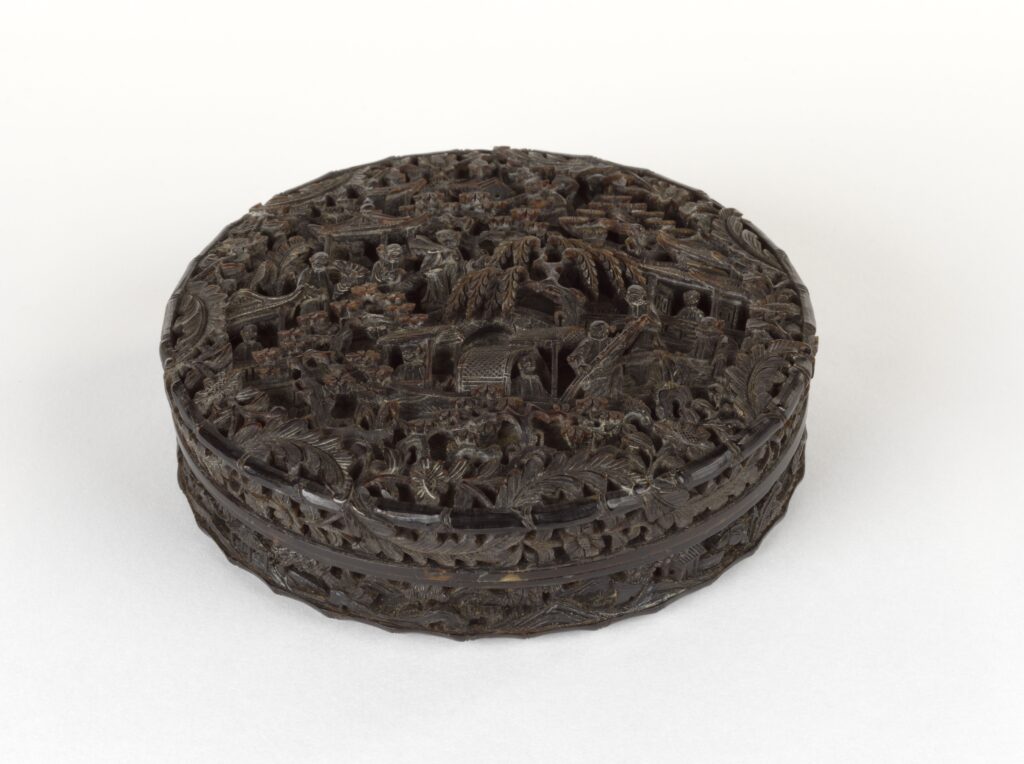
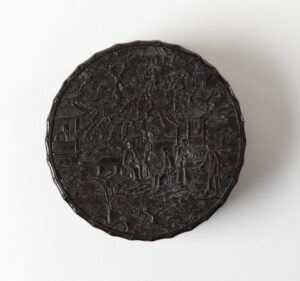
BELUM.C33.1911: Traditional Chinese Snuff Box
Material: Tortoise Shell | Culture: Chinese | Location Collected: China
Tortoise shell snuff box with carved decoration in relief with figures, trees, plant life, boats, pagodas, and islands. The use of narrative landscapes on small luxury objects embodied an educated ideal, where portable objects like snuff boxes became vehicles for aesthetic appreciation and social distinction. Snuff is a finely ground or shredded tobacco inhaled through the nose or rubbed on the gums. It was introduced to China by Europeans and at that point was believed to have healing powers. It became fashionable and a status symbol in later years. Probably produced for export market in the 19th century. A snuff box such as this would be very prized among both the Chinese elites and European collectors, reflecting the cross-cultural appeal of Chinese decorative arts during the height of the Canton export trade. Qing dynasty.
"From a tribute of the Qing Dynasty imperial court to a timeless treasure, this tortoise shell round box holds the code of cultural integration between China and the West from a century ago. Its elaborate and exquisite full-relief carving technique is not only a concrete embodiment of the pinnacle craftsmanship of Qing Dynasty artisans, but also a precious witness to the collision and mutual learning of Eastern and Western aesthetics."
Wei Deng, Project Participant
Take the 3D Tour
Jade Buckle
BELUM.C265.1949
© Image courtesy of National Museums NI
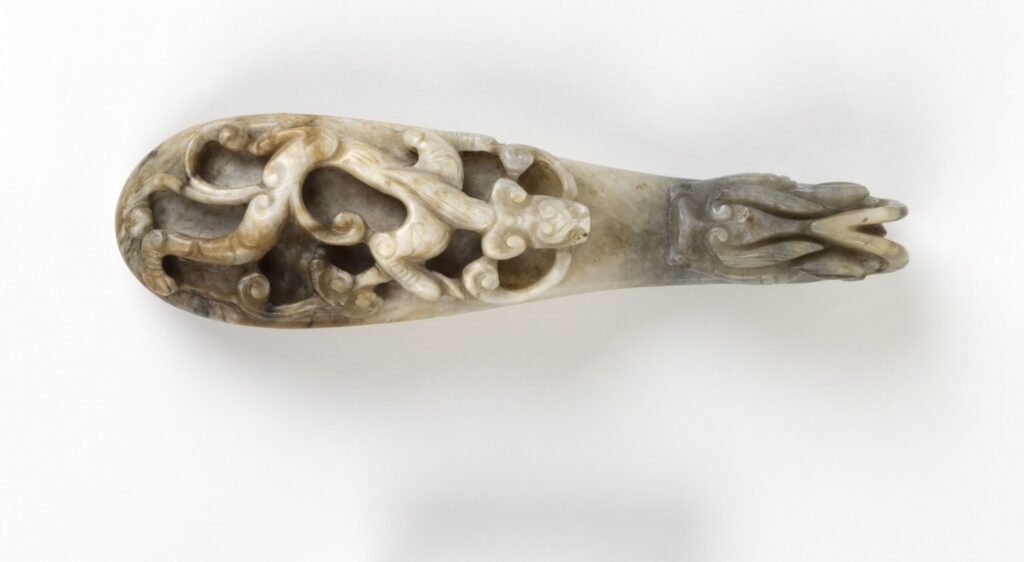
BELUM.C265.1949: Jade belt buckle depicting dragon motifs
Material: Jade | Culture: Chinese | Place of Collection: China
Grey jade carved ornament based on archaic belt hook design. It has a hook or protrusion on the back to attach a belt. Dragon motifs on the design. The hooked section depicts a mature dragon (long) and the relief on the shaft a ‘baby’ dragon (chi long), symbolising good fortune.
“What I like is how the two dragons seem connected, almost like one growing out of the other. It feels protective, as if the object is carrying a wish for strength and good fortune across generations.”
Sharon Fan, Project Participant
Take the 3D Tour
Horsehead Tobacco Pipe
BELUM.C5887
© Image courtesy of National Museums NI
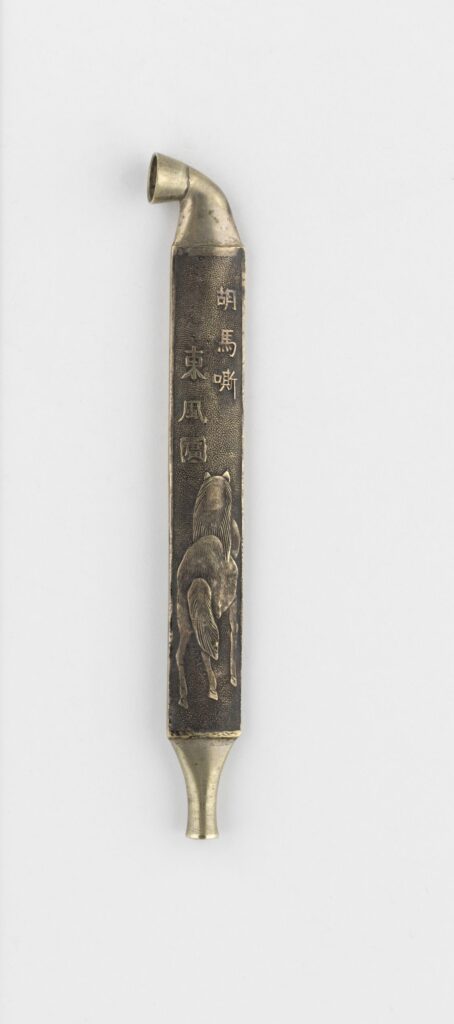
BELUM.C5887: Traditional Chinese Tobacco Pipe
"The structure of the final character resembles the character 廣 (simplified 广, guǎng, meaning “broad,” “wide,” or “vast”) enclosed within 囗 (wéi), which denotes an enclosing border. At first glance, this combination does not appear to relate directly to the meaning of 'east wind'. However, it is possible that 囗 functions purely as a framing or enclosing element, rather than contributing semantic meaning. In that case, the inner component may represent a name, brand, or maker’s mark, rather than a standard character used for its lexical meaning."Liang Wang, Queen's University Belfast
I feel such a powerful connection to this little ‘horse-head tobacco pipe'. Every word engraved on it seems to speak directly to me. I can almost picture a soldier alone in a remote, frozen wilderness, sitting atop his horse exhaling puffs of smoke into the night — while his heart overflows with an intense longing for home. I have left Hong Kong now for 35 years. I missed my Dad’s funeral - separated from my love ones by thousands of miles, the regrets and ache are something only my own heart could truly feel.Sally Gillespie, Project Participant
Take the 3D Tour