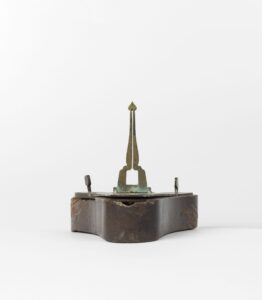
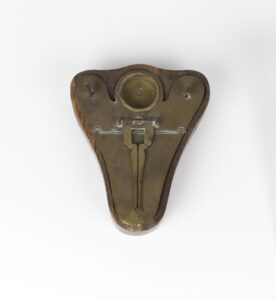
BELUM.C814.1914
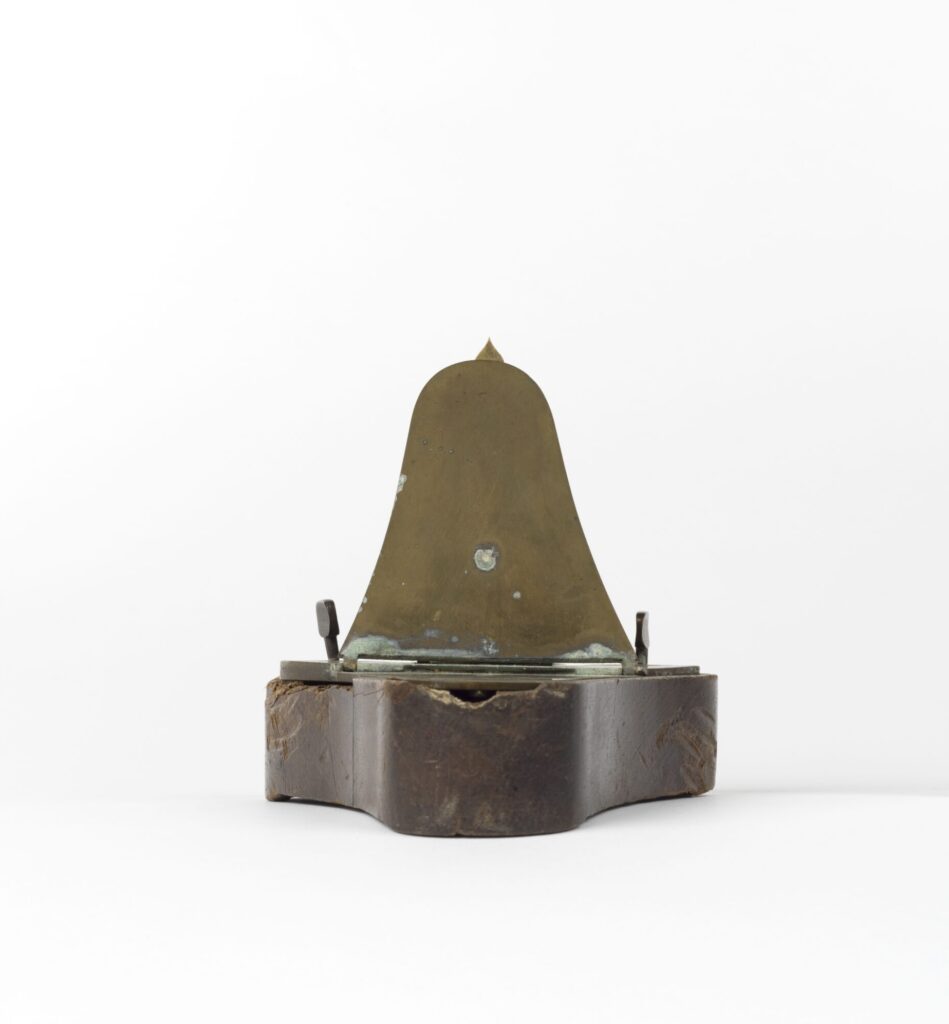
© Image courtesy of National Museums NI
BELUM.C814.1914: Traditional sundial with gnomon
Chinese portable hybrid timekeeping device with sun dial (for reading time by the shadow cast by the sun during the day) and possible water clock (for reading the time made by water drips at night) made of wood and brass with moveable pieces including a gnomon. The upper section represents the day, divided into 12 equal units (2hrs each), named after the twelve earthly branches. The lower section is based on the Chinese solar calendar and uses the 24 solar terms/ cycles to describe seasonal changes. It reflects the ancient Chinese people’s profound understanding of the sun’s movement patterns. Instruments such as this one were very important to astronomical observation, timekeeping, ritual scheduling, and for work which relied on seasonal change such as farming. Probably Qing dynasty.
“This Chinese equatorial sundial with a 24-solar-term dial wasn’t just for telling the time — it also helped people keep track of the seasons. By combining astronomy, geometry, and careful craftsmanship, ancient Chinese scholars transformed their observations of the sky into practical tools that supported farming and daily life.
Instruments like this show how advanced China was in science and technology at an early stage. Long before similar devices appeared in other parts of the world, they were already being used to measure time accurately and track the 24 solar terms—key to organising farming and community life. They offer a powerful reminder of the depth and ingenuity of traditional Chinese scientific knowledge.”
Lili Li, Project Participant
Take the 3D Tour